The pea puffer (Carinotetraodon travancoricus), also called the dwarf puffer, is a pufferfish that grows only about an inch long. It’s curious, expressive and fun to watch. It’s also a predator with a big attitude: it nips fins, usually won’t eat flakes and benefits from a diet that includes small snails. Pea puffers are rewarding, but they’re not a typical community fish. This guide is part of our list of 25 small fish for freshwater aquariums.
Pea Puffer Quick Facts
| Trait | Pea puffer |
|---|---|
| Scientific name | Carinotetraodon travancoricus (also called dwarf or Malabar puffer) |
| Adult size | About 1 in (25 mm) standard length |
| Temperature | 72–82°F (22–28°C) |
| pH | 6.8–8.0 |
| Hardness | 5–25 dGH |
| Water type | Freshwater only, not brackish |
| Tank-size guidance | About 5 gallons for one, plus about 3 gallons per extra puffer |
| Temperament | Aggressive for its size; nips fins |
Where Pea Puffers Come From
Pea puffers are found only in Kerala in southwestern India, in slow, heavily vegetated inland waters. Unlike many puffers, they’re strictly freshwater fish, so don’t add salt.
Tank Setup
- Tank size: tank-size advice for pea puffers varies a lot. A good rule of thumb is about 5 gallons for the first puffer and 3 more for each additional one, but more space, dense planting and stable water matter more than any formula.
- Buying and quarantine: choose captive-bred fish when you can, quarantine new arrivals, and keep puffers submerged when moving them rather than lifting them out of the water.
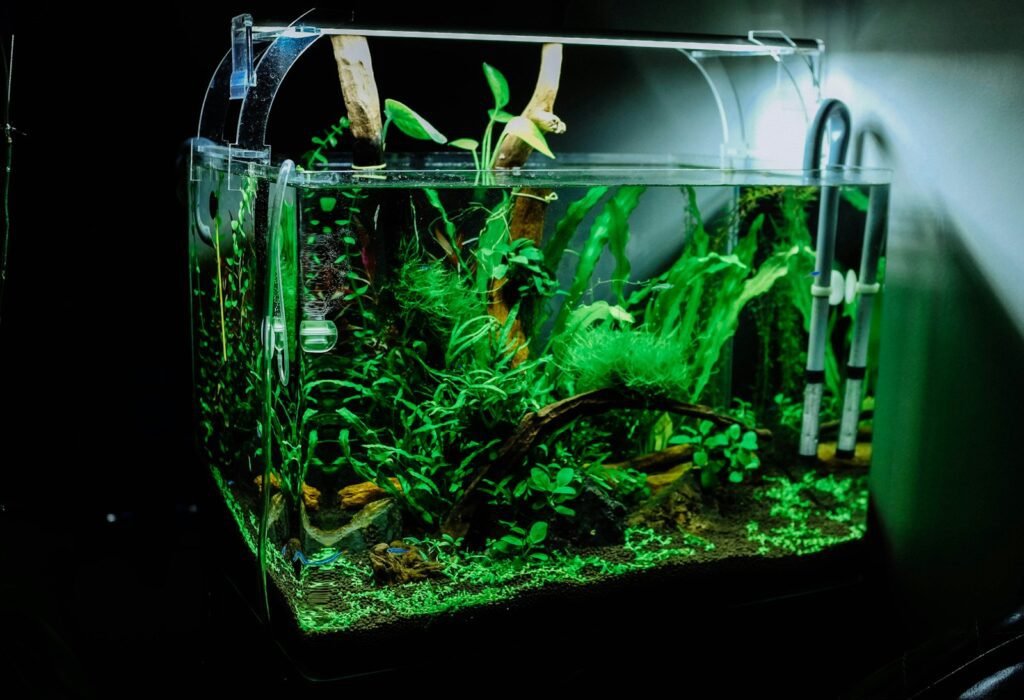
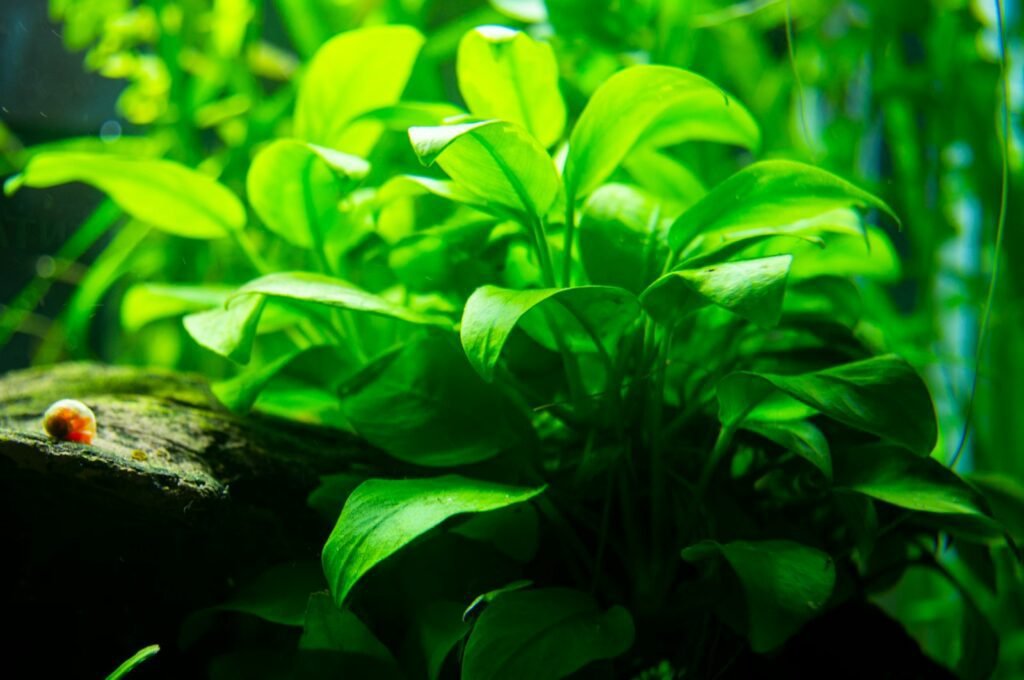
- Dense planting and broken sightlines: pea puffers are territorial. Thick plants, wood and decor that block their view of each other cut down on fights.
- Gentle filtration and clean water: they eat messy, meaty foods, so good filtration and regular water changes matter. Add them only to a fully cycled tank; see our cycling guide.
Feeding Pea Puffers
Feeding is the part new owners most often get wrong. Pea puffers usually refuse dried foods, so flakes and most pellets won’t work. Offer:
- Small snails, shell on, regularly for variety. Many keepers raise ramshorn or bladder snails in a separate container as a food supply.
- Frozen foods such as bloodworms and brine shrimp.
- Live foods such as blackworms or daphnia.
Offer small snails regularly alongside varied live and frozen foods. Snails are often recommended to help wear down their teeth, though pea puffers don’t usually have the overgrown-teeth problems of larger puffers, so going without live snails now and then isn’t a dealbreaker. Remove uneaten meaty food so it doesn’t foul the water.
How Many Pea Puffers Should Be Kept Together?
Opinions differ. Many keepers have success with a single pea puffer on its own, and up to six or seven can share a 20-gallon tank with no other fish if there’s lots of cover. Puffer specialists, though, increasingly treat them as a shoaling fish and advise against keeping them alone, suggesting at least six in no less than 60 liters (about 15.8 gallons) with plenty of horizontal space and dense cover. If you keep a group, remember that rival males may fight to the death, so keep more females than males, plant heavily and be ready to separate fish. Juveniles are hard to sex, so watch new groups closely.
What Can Live With a Pea Puffer?
A species-only tank is the safest setup, since pea puffers usually aren’t suited to community tanks. They nip slow-moving or long-finned fish and may eat smaller tankmates.
- Possible: otocinclus, one of the few fish that often works with them.
- Mixed results: shrimp. Some keepers report success, but small shrimp are often eaten.
- Avoid: bettas, guppies, gouramis such as the honey gourami, and any slow or long-finned fish.
Males vs. Females
Mature males have a dark line along the underside and wrinkle-like lines behind the eye. Females lack the belly line and are often rounder.
Frequently Asked Questions
Are pea puffers hard to care for?
They’re more demanding than most small fish because they need live or frozen foods and snails, clean water, and careful tankmate choices. They suit keepers who can maintain stable water, provide specialized foods and watch social behavior closely.
Can I keep a pea puffer in a 2.5-gallon tank?
It’s not recommended. About 5 gallons is a sensible minimum for a single pea puffer, and a larger tank gives more stable water and room to explore.
How many pea puffers should be together?
You can keep one alone, but many specialists prefer groups. A common rule is about 5 gallons for the first puffer and 3 gallons for each extra one, with more females than males, dense planting and close monitoring.
What can I put in a tank with a pea puffer?
A species-only tank is safest. Otocinclus may coexist in some established, well-sized tanks, but it’s not guaranteed. Shrimp are often eaten, and slow or long-finned fish get nipped.
Do pea puffers need brackish water?
No. They’re freshwater fish. Don’t add aquarium salt.
The Bottom Line
Pea puffers are tiny fish with big personalities. They’re best in a species-only, well-planted tank with a steady supply of snails and frozen foods. If you’d rather have a peaceful community fish, see our full list of small freshwater fish for gentler options.

Dr. Johnson Coleman is a dedicated veterinary expert with over 10 years of hands-on experience in animal health and wellness. His mission is to help pets live longer, happier lives through compassionate care, practical guidance, and a genuine love for animals.
After earning his Doctor of Veterinary Medicine (DVM) degree, Dr. Coleman spent a decade working in both private clinics and community shelters, where he gained deep expertise in preventive medicine, pet nutrition, and behavioral care.
He believes that pet owners deserve reliable, easy-to-understand information about their companions’ health. Through his writing, Dr. Coleman breaks down complex veterinary topics into friendly, actionable advice that helps readers make informed decisions for their pets.
Outside of his professional work, Dr. Coleman volunteers with local animal rescue groups and enjoys spending time outdoors with his two golden retrievers. His lifelong dedication to animal welfare continues to inspire his work and connect with pet lovers around the world.