Fish & Aquatic Pets

Branded Aquarium Sizes

Branded Aquarium Sizes: Kit & Reef-Ready Tank Dimensions

This is a companion reference to “A Cheat Sheet to Fish Tank Gallon Sizes and Dimensions” (see our complete aquarium sizes and dimensions chart). That guide covers standard and specialty-shaped tank sizes that have stayed essentially unchanged for decades. This page covers something different: specific branded kits and reef-ready/drilled tanks, where dimensions are tied to a manufacturer’s current product line and can change when a company updates a mold, discontinues a SKU, or a retailer misquotes a spec sheet. Because of that, treat this page as needing a refresh check more often than the core sizing guide, and always confirm against the manufacturer’s current listing before buying a stand, lid, or sump. Mid-Sized Branded Aquarium Kits (20–46 Gallon) Beyond generic “standard” dimensions, many aquariums in this size range are also sold as branded kits, and dimensions can vary by brand, model, and shape. Kit Dimensions (L × W × H, in) Shape 20 gallon high (Marineland / Tetra / Aqueon standard) 24 × 12 × 16 High rectangular 26 gallon Aqueon Bow Front LED Kit 24.125 × 14.75 × 20.875 Bow front 26 gallon Marineland Bow Front 24.125 × 14.75 × 20.875 Bow front 29 gallon standard kit 30.25 × 12.5 × 18.75 Standard rectangular 36 gallon Aqueon Bow Front 30.25 × 15.5 × 20.875* Bow front 40 gallon breeder 36.25 × 18.25 × 17 Breeder rectangular 46 gallon Aqueon / Marineland Bow Front 36.375 × 16.375 × 20.875 Bow front The 26- and 46-gallon figures above match Aqueon’s own current (2023) product catalog exactly. *The 36-gallon bow front does not appear in that current catalog, so it may be an older or discontinued size still sold through retailer inventory — the figure here is sourced independently (Aqueon’s product page plus one retailer), not from Aqueon’s current official spec sheet. Confirm it’s still in production before ordering fitted equipment. Aqueon Critical Dimensions specifications (official 2023 PDF) Aqueon Bow Front Aquariums (product page) NAFB Aquarium — Aqueon 36-gallon bow front spec Large Branded Aquariums: Reef-Ready Tanks At 65+ gallons, a meaningful share of what’s sold are reef-ready drilled tanks built for sump filtration — worth listing separately since a drilled overflow box changes usable footprint and setup requirements versus a plain glass tank of the same listed size. The figures below are based on Aqueon’s own published manufacturer specifications rather than retailer listings. Because product lines and catalogs update over time, verify the exact SKU against Aqueon’s current listing before ordering fitted equipment. Size Dimensions (L × W × H, in) Type 65 gallon 36.375 × 18.375 × 25 Drilled, sump-ready 75 gallon 48.5 × 18.5 × 21.125 Drilled, sump-ready 90 gallon 48.5 × 18.5 × 25.375 Drilled, sump-ready 125 gallon 72.5 × 18.5 × 23.375 Drilled, sump-ready 150 gallon 72.5 × 18.5 × 29.5 Drilled, sump-ready 210 gallon 72.5 × 24.5 × 29.625 Drilled, sump-ready Important: don’t assume a standard Aqueon aquarium and an Aqueon Reef-Ready aquarium of the same gallon capacity share identical dimensions. For the 90- and 125-gallon sizes specifically, Aqueon’s standard (undrilled) tank runs about a quarter-inch shorter than the Reef-Ready version of the same gallon count — the drilled overflow chamber appears to add a small amount of height. Always confirm which product line a listing is describing, and verify the exact SKU, before ordering a stand, lid, or plumbing. Bluefish Aquarium — 125 Gallon Reef-Ready (MegaFlow) spec A reef-ready tank of the same length and width as a standard version isn’t a plug-and-play swap — it needs a sump, plumbing, and a stand designed around that plumbing. Aqueon Critical Dimensions specifications (official 2023 PDF) Aqueon Reef-Ready Aquariums (product page) Why Branded Aquarium Dimensions Need to Be Verified Note: Last fact-checked September 2026 against Aqueon’s own official Critical Dimensions PDF (linked above). If you’re maintaining this page, that document is the fastest way to re-verify every branded Aqueon figure here in one pass — recheck it, and the Marineland-branded rows against Marineland’s own spec sheet, on a regular refresh schedule. Johnson ColemanDr. Johnson Coleman is a dedicated veterinary expert with over 10 years of hands-on experience in animal health and wellness. His mission is to help pets live longer, happier lives through compassionate care, practical guidance, and a genuine love for animals. After earning his Doctor of Veterinary Medicine (DVM) degree, Dr. Coleman spent a decade working in both private clinics and community shelters, where he gained deep expertise in preventive medicine, pet nutrition, and behavioral care. He believes that pet owners deserve reliable, easy-to-understand information about their companions’ health. Through his writing, Dr. Coleman breaks down complex veterinary topics into friendly, actionable advice that helps readers make informed decisions for their pets. Outside of his professional work, Dr. Coleman volunteers with local animal rescue groups and enjoys spending time outdoors with his two golden retrievers. His lifelong dedication to animal welfare continues to inspire his work and connect with pet lovers around the world.

Branded Aquarium Sizes: Kit & Reef-Ready Tank Dimensions Read Post »
Aquarium Sizes Explained

Aquarium Sizes Explained: Dimensions, Weights, and Which Size Fits Your Space

If you’ve ever stood in the fish aisle staring at two tanks that both say “20 gallons” but look nothing alike, you’re not imagining it. Aquarium sizes aren’t just about how much water a tank holds — the exact shape of that gallon count changes everything from which fish you can keep to whether your floor can handle it. This guide breaks down standard and specialty-shaped aquarium dimensions and weights by size, and helps you figure out which size actually fits your space and your fish. Why Aquarium Dimensions Matter More Than the Gallon Number Two tanks holding the same 20 gallons can be very different environments. A 20 gallon high is tall and narrow; a 20 gallon long is short and wide. Same water volume, different living space. Common Rectangular Aquarium Sizes and Approximate Dimensions These are common dimensions for traditional rectangular glass aquariums, cross-referenced against manufacturer and major retailer specifications. Exact measurements vary by manufacturer and model — “standard” is useful shorthand, not a guarantee that every 15-gallon or 30-gallon tank on the market matches these numbers exactly. Small aquariums (2.5–15 gallon) Aquarium Size Dimensions (L × W × H, in) Shape 2.5 gallon 12.25 × 6.25 × 8.13 Standard rectangular 5 gallon 16 × 8 × 10 Standard rectangular 5.5 gallon 16.25 × 8.38 × 10.5 Standard rectangular 10 gallon 20.25 × 10.5 × 12.63 Standard rectangular 15 gallon 24.25 × 12.5 × 12.75 Standard rectangular 15 gallon tall 20.25 × 10.5 × 18.75 Tall rectangular The 5 gallon aquarium dimensions above are one of the most common nano sizes. 15 gallon aquarium dimensions vary more than most sizes because standard and tall 15-gallon configurations are genuinely different shapes — check which one you’re looking at before ordering a stand or lid. Mid-size aquariums (20–45 gallon) Aquarium Size Dimensions (L × W × H, in) Shape 20 gallon high 24.25 × 12.5 × 16.75 High rectangular 20 gallon long 30.25 × 12.5 × 12.75 Long rectangular 29 gallon 30.25 × 12.5 × 18.75 Standard rectangular 30 gallon 36.25 × 12.63 × 16.75 Standard rectangular 38 gallon 36.25 × 12.63 × 19.75 Standard rectangular 40 gallon breeder 36.25 × 18.25 × 17 Breeder rectangular (wide) 45 gallon 36.25 × 12.63 × 23.75 Tall rectangular 30 gallon aquarium dimensions are worth double-checking against manufacturer specs, since multiple 30-gallon configurations exist — don’t order a stand, canopy, or lid from the label alone. The 40 gallon breeder’s wider 18.25-inch depth (versus the standard tank’s roughly 12.6 inches) is exactly why it’s a popular choice for aquascaping and fry-raising: more usable floor space, not just more volume. Large aquariums (55–210 gallon) Aquarium Size Dimensions (L × W × H, in) Shape 55 gallon 48.25 × 12.75 × 21 Standard rectangular 60 gallon breeder 48.5 × 18.5 × 16 Breeder rectangular 65 gallon 36.38 × 18.38 × 25 Standard rectangular 75 gallon 48.5 × 18.5 × 21.13 Standard rectangular 90 gallon 48.5 × 18.5 × 25.13 Standard rectangular 125 gallon 72.5 × 18.5 × 23.13 Standard rectangular 150 gallon 72.5 × 18.5 × 29.5 Standard rectangular 210 gallon 72.5 × 24.5 × 29.63 Standard rectangular A note on 50-gallon tanks specifically: this size isn’t standardized enough to state one universal measurement. Some rectangular 50-gallon models run around 36 × 18 inches of footprint, but manufacturers vary meaningfully here — check the exact model’s spec sheet before buying a stand or lid, rather than assuming a single “50 gallon” figure applies. A note on the 60-gallon breeder’s empty weight: Aqueon’s own published spec sheet lists it at 43 lb empty (about 543 lb filled), but Aqueon’s product listing on Petco states the empty tank actually weighs closer to 74.8 lb and flags the lighter figure as an error on their information sheet. The 48.5 × 18.5 × 16-inch dimensions are consistent everywhere; only the empty-weight figure is genuinely disputed between the manufacturer’s own documents. Use the heavier estimate when planning a stand. Sources: Aqueon Standard Tank Sizes specifications (PDF) Petco Aquarium Sizes, Weights & Dimensions Guide Same Gallons, Different Shape: Three Direct Comparisons Gallon capacity alone hides how a tank is actually built. These comparisons make the pattern concrete. 20 High vs. 20 Long   20 High 20 Long Length ~24.25 in ~30.25 in Width ~12.5 in ~12.5 in Height ~16.75 in ~12.75 in Same nominal capacity, roughly six extra inches of horizontal length in the Long, versus more volume concentrated vertically in the High. 40 Breeder vs. 55 Gallon vs. 75 Gallon (footprint only) Tank Footprint (L × W) 40 Breeder 36.25 × 18.25 in 55 gallon 48.25 × 12.75 in 75 gallon 48.5 × 18.5 in The 55 holds more nominal water than the 40 Breeder but is considerably narrower front-to-back. The 75 combines roughly four feet of length with substantially more depth than the 55 — which matters for aquascaping room, but also means a stand built for a 55 shouldn’t be assumed to fit a 75. Neither shape is “better” in general — the right one depends on the fish you’re keeping, your aquascaping plans, and the space you have. Beyond Rectangular: Hexagon, Bow Front, Cube & Corner Aquarium Dimensions Standard rectangular tanks aren’t the only shape on the market, and gallon-per-shape confusion is even worse here than with rectangular tanks — a 20-gallon hexagon and a 20-gallon rectangular tank share almost nothing in common footprint-wise. Hexagon aquariums Size Dimensions (W × H, in) Shape 10 gallon 14.5 × 18.375 Hexagon 20 gallon 18.75 × 20.625 Hexagon 20 gallon (deluxe) 15 × 24 Hexagon (tall) 28 gallon 21 × 20 (footprint 21 × 18) Hexagon 35 gallon 23.25 × 24.75 Hexagon 60 gallon 27.25 × 29.5 Hexagon Hexagon tanks trade swimming length for a small footprint and a distinctive display shape, which is exactly why they’re popular for corners and tight rooms — but that same shape means less usable horizontal swimming room than a rectangular tank of equal volume, and light has to penetrate a taller water

Aquarium Sizes Explained: Dimensions, Weights, and Which Size Fits Your Space Read Post »

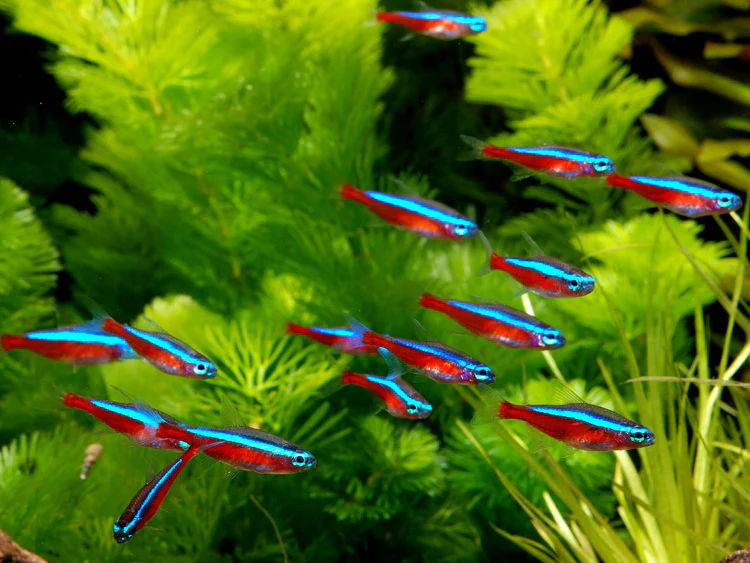
School of Cardinal Tetras (Paracheirodon axelrodi) with full-length red stripe in a planted aquarium

Cardinal Tetra Care Guide: Water Parameters, Tank Setup, Size, and Lifespan

Cardinal Tetras are easy to mistake for Neon Tetras, especially in a busy fish-store tank. The two are similar enough that plenty of keepers never realize which one they actually have — and similar enough that generic “tetra care” advice glosses over where Cardinals genuinely differ. Here’s what’s actually specific to this fish: where it comes from, what it needs to thrive, and where the differences from a Neon actually matter. What Is a Cardinal Tetra? The Cardinal Tetra (Paracheirodon axelrodi) is a small freshwater shoaling fish from the Characidae family, native to the blackwater tributaries of the Rio Negro and upper Orinoco basins in Brazil, Colombia, and Venezuela. It’s easy to confuse with the Neon Tetra — more on that below — but the giveaway is the red stripe: on a Cardinal, it runs the entire length of the body, from the eye all the way to the tail, giving the fish a look of one continuous ribbon of red beneath an iridescent blue-green line. A significant proportion of the Cardinal Tetras sold in stores are still wild-caught, particularly fish originating from the Rio Negro region, though the species is also commercially bred on a large scale today (SeriouslyFish). The wild fishery has been studied since 1991 by Project Piaba, which found that the cardinal tetra makes up roughly 80% of the ornamental fish trade coming out of the Rio Negro region around Barcelos, Brazil. That income gives local communities a direct financial reason to keep the surrounding rainforest and rivers intact rather than clearing land for farming or logging — summed up by the project’s own line, “Buy a fish, save a tree.” Worth knowing: that conservation benefit applies specifically to wild-caught, Rio Negro–sourced fish, not to every Cardinal Tetra on the market — a captive-bred fish from an unrelated supplier doesn’t carry the same story. Cardinal Tetra vs. Neon Tetra: Telling Them Apart Since the confusion starts at the store, it’s worth settling it here before going further. The fastest visual tell is the red: on a Cardinal it runs the fish’s entire length, eye to tail; on a Neon it only covers the back half of the body.  Particular Cardinal Tetra Neon Tetra Red stripe Full body length (eye to tail) Only back half of body Standard length About 1.4 in (3.5 cm) About 1.2 in (3 cm) Temperature 73–84°F (23–29°C) 70–77°F (21–25°C) Water sensitivity Wider tolerance than often assumed, but wild-caught stock prefers soft, acidic, stable water Also needs stable, cycled water; less commonly wild-caught Sourcing Significant proportion wild-caught (Rio Negro), plus large-scale commercial breeding Mostly farm-bred worldwide Both species should only be added to a fully cycled aquarium with stable water quality. Cardinal Tetras, especially wild-caught specimens, deserve particular attention to water chemistry and acclimation. If your tank is established and you want the more saturated color and a slightly bigger presence in a school, Cardinals are worth that step up in care — and the rest of this guide is about exactly what it involves. Cardinal Tetra Size and Lifespan Cardinal Tetras are small. SeriouslyFish lists an adult standard length of about 1.4 inches (3.5 cm), measured without the tail fin. Some aquarium references quote larger figures approaching 2 inches, which may reflect different measurement methods — total length rather than standard length — though not every source specifies which one it’s using. Either way, Cardinals run very slightly larger than Neon Tetras, though in a mixed school the difference is subtle. Lifespan is a case where a single clean number oversimplifies things. Cardinal Tetra lifespan varies substantially between wild and captive conditions. SeriouslyFish describes the species as virtually annual in nature, with individuals older than one year rarely encountered. Aquarium sources commonly report roughly 3 to 5 years in captivity, but that figure isn’t backed by one definitive study — it’s a convergence across many secondary sources rather than a single confirmed number that applies to every captive Cardinal Tetra. Cardinal Tetra Water Temperature and Parameters This is the section most people search for, and for good reason — water chemistry is where Cardinal Tetra care actually diverges from a lot of “easy” community fish. Parameter Range Temperature 73–84°F (23–29°C) pH 3.5–7.5 (wild-caught fish generally do best toward the acidic end) General hardness (GH) 1–12 dGH (softer water for wild-caught fish or breeding) Ammonia / nitrite 0 ppm, as with any established tank These figures reflect SeriouslyFish’s published aquarium range, which is wider than some care sheets suggest. That doesn’t mean any number in that range works equally well — wild-caught fish in particular do better toward the softer, more acidic end — but it does mean there’s no single “non-negotiable” number to chase. The bigger risk is instability: a tank that swings from 74°F to 80°F overnight because of a drafty room stresses Cardinals more than sitting steadily at 75°F. Avoid rapid changes in temperature or water chemistry in general. A reliable heater, thermometer, and routine water testing make it easier to maintain the stable conditions Cardinals actually need. Tank Setup and Tank Size Cardinal Tetras are a shoaling species that becomes visibly stressed, pale, and skittish in small groups. SeriouslyFish recommends a mixed-sex group of at least 8–10 specimens and a tank footprint of 60 × 30 cm (24 × 12 inches) or larger — roughly 14 US gallons at that footprint. A 20-gallon tank is a comfortable, slightly more generous starting point for a school that size. Skip the mental math of a fixed “gallons per fish” ratio beyond that — what actually matters is horizontal swimming room, stable water quality, and not adding more fish than your filter and maintenance routine can realistically support. Because they come from densely vegetated, tannin-stained blackwater streams, Cardinals feel most secure — and show their best color — in a tank that echoes that environment: One note on that last point: don’t rely on leaves or driftwood as a dependable way to soften or acidify your water — treat them as

Cardinal Tetra Care Guide: Water Parameters, Tank Setup, Size, and Lifespan Read Post »

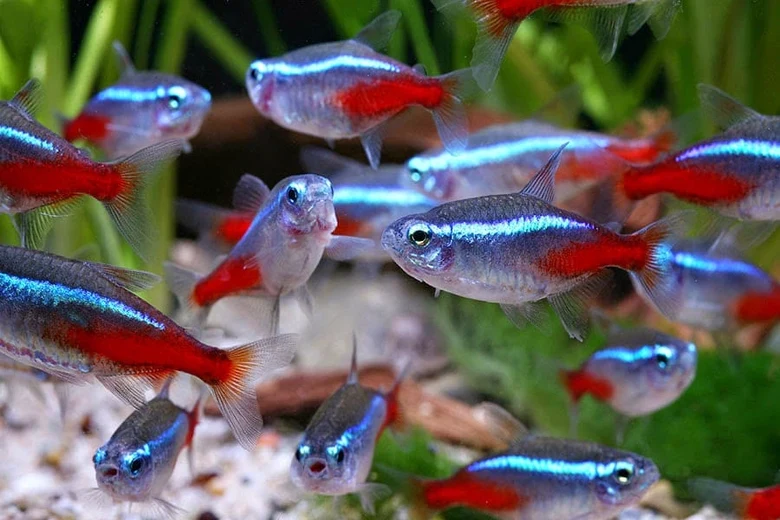
School of neon tetras showing bright blue and red coloration

Neon Tetra Care Guide: Tank, Feeding, Water & Breeding

If you’ve ever stood in front of a fish store tank and watched a school of tiny blue-and-red fish flash past like glitter, you’ve met the neon tetra. They’re one of the most popular freshwater fish in the hobby — and also one of the most misunderstood. Half the advice out there treats them like a “beginner fish you can’t kill,” and the other half insists they’re impossibly fragile. The truth sits in the middle, and this guide walks through it: tank setup, feeding, breeding, and why so many people lose their neon tetras in the first few weeks. Neon Tetra Care Sheet (Quick Reference) Parameter Information Scientific name Paracheirodon innesi Adult size 1.2–1.6 in (3–4 cm) Lifespan (aquarium) Commonly cited around 2–5 years; individual results vary a lot with genetics, sourcing, and care Water temperature 70–79°F (21–26°C) pH 6.0–7.0 (tolerates roughly 5.0–7.5) Hardness (GH) 1–12 dGH Minimum group size 6, ideally 8–12+ Minimum tank size 10 gallons; 20-gallon long recommended for a larger school Diet Omnivore — micro pellets, flakes, live/frozen brine shrimp and daphnia Breeding difficulty Advanced Heater required In most homes, yes What Is a Neon Tetra? A Quick Snapshot The neon tetra (Paracheirodon innesi) is a small freshwater fish from the Amazon basin — specifically the clearwater and blackwater streams of Peru, Colombia, and Brazil, as detailed in Seriously Fish’s species profile. It’s one of the most popular aquarium fish in the world, according to FishBase, and is bred commercially at scale for the aquarium trade — enough that University of Florida researchers have studied how to make that farming more efficient. They’re not endangered or protected — FishBase currently lists the species as IUCN “Least Concern,” largely thanks to their wide natural range. Neon Tetra Size and Lifespan: What to Actually Expect How Big Do Neon Tetras Get? A fully grown neon tetra reaches roughly 1.2 to 1.6 inches (3–4 cm) in length, depending on whether a source measures standard length or total length. They stay small their entire lives, which is exactly why they’re so easy to overcrowd — it’s tempting to cram “just a few more” into a tank when each fish is barely the size of your fingernail. Neon Tetra Lifespan: How Long Do Neon Tetras Live? This is a spot where care guides tend to overstate what’s actually known. Lifespan figures for this species vary quite a bit from source to source — you’ll see aquarium references citing anywhere from about 2 to 5 years in captivity, occasionally longer, and figures for wild populations that go as high as 8–10 years. None of these numbers come from rigorous population studies, so it’s more honest to treat them as commonly-repeated estimates than as a guarantee for any individual fish. What’s more consistently agreed on is why neons vary so much in how long they live: genetics and sourcing, disease exposure, diet, and water quality all play a role, and poor water quality in particular is something you have direct control over. Fish that experience frequent ammonia or nitrite spikes, wide temperature swings, or long stretches without water changes tend to decline early — often from stress-related illness rather than simple old age. Neon Tetra Fish Tank Setup and Water Parameters What Water Temperature Do Neon Tetras Need? Neon tetras are tropical fish and need consistently warm water, generally cited in the 70–79°F (21–26°C) range. Sudden temperature swings are more dangerous than a temperature that sits a degree or two outside the ideal range, since rapid changes stress their immune system and open the door to illnesses like ich. Do Neon Tetras Need a Heater? In most homes, yes. Unless your house consistently sits within their preferred range year-round, an aquarium heater with a thermostat is the simplest way to keep the water stable. If your aquarium’s room naturally stays warm and steady without a heater, one may not be strictly necessary — but for most keepers, a heater is standard equipment, because a stable 74°F beats a room-temperature tank that drifts between 65°F at night and 78°F during the day. pH, Hardness, and General Water Quality Neon tetras come from soft, slightly acidic water, and their commonly cited ideal parameters reflect that: A common cause of early neon tetra losses is adding a school to a brand-new aquarium before its biological filter has established itself. Rather than judging your tank “ready” by a calendar, test the water and confirm that ammonia and nitrite are both holding at 0 ppm before adding a full school — a tank isn’t necessarily cycled just because a few weeks have passed. Tank Size and How Many Neon Tetras to Keep Together Neon tetras are social shoaling fish and should be kept in groups rather than alone or in pairs — most sources recommend at least 6, ideally 8–12 or more. A 10-gallon tank is the commonly cited minimum for a small school of 6. A 20-gallon long is an excellent option if you want a larger school — the extra horizontal footprint gives them more room for the fast, darting bursts they naturally use, and dilutes waste more effectively. Rather than relying on a fixed “gallons per fish” formula, prioritize a longer, shallower footprint with good filtration and stocking that matches your maintenance routine — tank shape, filtration capacity, and the other fish sharing the space all matter more than any single ratio. What Do Neon Tetras Eat? Diet and Feeding Guide Neon tetras are omnivores. In the wild, they eat small insects, worms, tiny crustaceans, and plant matter, per FishBase’s species record. In captivity, offer a quality staple food along with appropriately sized frozen or live foods for variety. A solid neon tetra diet includes: Feed only what they can finish in about 1–2 minutes, once or twice a day. Neon tetras have tiny mouths, so overfeeding doesn’t just waste food — it fouls the water fast, which circles right back to the water-quality factors that affect their lifespan. Neon Tetra Breeding: Step-by-Step Breeding

Neon Tetra Care Guide: Tank, Feeding, Water & Breeding Read Post »

regal angelfish with bright yellow and blue stripes swimming near coral in a saltwater aquarium

Top 10 Reef Safe Angelfish for Your Aquarium

Choosing the right angelfish for a reef tank is one of the most exciting and risky decisions a saltwater aquarist can make. Angelfish bring incredible color, movement, and personality to marine aquariums, but many species naturally feed on coral polyps, sponges, clams, and invertebrates in the wild. Selecting the wrong angelfish can quickly lead to coral damage, stressed tank mates, and expensive losses. Fortunately, several angelfish species are far more reef-safe when kept in well-established aquariums with proper feeding and habitat conditions. These species provide algae control, vibrant coloration, and active behavior without posing major threats to coral health. This guide explores the top 10 reef safe angelfish most likely to coexist peacefully with corals and invertebrates, backed by practical reef-keeping experience, marine biology insights, and hobbyist reports. What Makes an Angelfish Reef Safe? In the wild, angelfish (family Pomacanthidae) are omnivores that feed on: • sponges• tunicates• coral polyps• algae• mollusks• plankton Many species have specialized mouths designed for scraping coral surfaces. This natural feeding behavior is why most large angelfish such as Emperor, Queen, and Blueface angelfish are considered high-risk for reef tanks. Why Many Angelfish Nip Corals Angelfish are more likely to nip when: • underfed• lacking algae or live rock grazing surfaces• bored• establishing territory• competing for food• sampling new textures Experienced reef keepers report that coral nipping often starts as “investigative biting” rather than hunger, especially with fleshy LPS corals like Acanthophyllia or Trachyphyllia. What Increases Reef Safety? Captive reef-safe behavior improves when: ✅ multiple daily feedings are provided✅ tanks include mature live rock✅ angelfish have grazing areas✅ territory stress is minimized✅ the species naturally prefers plankton or algae Even with reef-safe species, personality differences exist, so always monitor individual behavior. Key Factors When Choosing Reef Safe Angelfish Before adding any angelfish to a reef aquarium, consider: Tank Size Most reef-safe angelfish require: • 55–125 gallons• stable rockwork with swim-throughs• areas to graze algae Smaller tanks may increase aggression and coral picking. Feeding Frequency Feeding 2–4 times per day reduces the chance of coral nipping. Ideal foods include: • spirulina• nori• mysis shrimp• sponge-based angelfish formulas• copepods Live Rock Availability Live rock supports: • natural grazing• biofilm feeding• territory structure Angelfish kept in sterile environments are more likely to nip corals. Aggression & Territory Some species defend territories aggressively, especially dwarf angelfish. Individual Personality Even the safest species may develop a taste for coral. Quick Comparison Table: Top Reef Safe Angelfish Species Reef Safety Minimum Tank Aggression Swallowtail Angelfish Excellent 90 gal Low Coral Beauty Moderate-Good 55 gal Moderate Fisher’s Angelfish Good 55 gal Low Potter’s Angelfish Moderate 75 gal Moderate Pearlback Angelfish Excellent 70 gal Low Cherub Angelfish Good 55 gal Moderate Lemonpeel Angelfish Moderate 70 gal High Flame Angelfish Moderate-Good 70 gal Moderate Eibl’s Angelfish Moderate 75 gal Moderate Masked Angelfish Excellent 125 gal Low Top 10 Reef Safe Angelfish Species Swallowtail Angelfish (Genicanthus melanospilos) ✅ Reef safety rating: Excellent Unlike most angelfish, Swallowtails are planktivores, meaning they feed in open water rather than grazing corals or rock surfaces. According to marine aquaculture studies, this makes them among the safest angelfish for reefs. • Best tank size: 90+ gallons• Diet: plankton foods, mysis, enriched brine, pellets• Coral compatibility: very high• Aggression: low ✅ Practical advice: Keep in pairs or harems for natural behavior. Coral Beauty Angelfish (Centropyge bispinosa) ✅ Reef safety rating: Moderate-Good One of the most popular dwarf angelfish due to its color and availability. Many reef keepers successfully keep Coral Beauties in mixed reefs, especially when well-fed. • Best tank size: 55+ gallons• Diet: algae, spirulina, marine pellets, sponge-based diets• Coral compatibility: mostly safe, caution with LPS and zoanthids• Aggression: moderate ✅ Tip: Provide abundant live rock to reduce coral sampling. Fisher’s Angelfish (Centropyge fisheri) ✅ Reef safety rating: Good This smaller species is less commonly seen but reported by hobbyists to be less coral-focused. • Best tank size: 55+ gallons• Diet: algae and small meaty foods• Aggression: low• Coral compatibility: generally safe ✅ Works well in peaceful community reef tanks. Potter’s Angelfish (Centropyge potteri) ✅ Reef safety rating: Moderate Known for striking orange and blue patterns but also for variability in behavior. • Best tank size: 75+ gallons• Diet: sponge-based diets, algae, mysis• Coral compatibility: caution with LPS and clams• Aggression: moderate ✅ Advice: Only add to mature, stable tanks. Pearlback Angelfish (Centropyge joyceae) ✅ Reef safety rating: Excellent A highly reef-safe dwarf species with strong algae-grazing habits and low coral interest. • Best tank size: 70+ gallons• Diet: algae-rich diets, spirulina, nori• Aggression: low• Coral compatibility: very high ✅ One of the best choices for SPS-dominant tanks. Cherub Angelfish (Centropyge argi) ✅ Reef safety rating: Good Small but feisty, the Cherub Angelfish is a hardy reef resident. • Best tank size: 55+ gallons• Diet: algae, pellets, mysis• Coral compatibility: generally safe• Aggression: moderate to high toward small fish ✅ Ideal for tanks with confident tankmates. Lemonpeel Angelfish (Centropyge flavissimus) ✅ Reef safety rating: Moderate Beautiful but known coral nipper. • Best tank size: 70+ gallons• Diet: algae, sponge-based foods• Coral compatibility: risky for LPS and zoanthids• Aggression: high ✅ Only recommended for experienced reef keepers. Flame Angelfish (Centropyge loricula) ✅ Reef safety rating: Moderate-Good One of the most iconic reef fish, but behavior varies widely. • Best tank size: 70+ gallons• Diet: algae, mysis, sponge diets• Coral compatibility: mostly safe, monitor clams and LPS• Aggression: moderate ✅ Well-fed individuals are far less likely to nip. Eibl’s Angelfish (Centropyge eibli) ✅ Reef safety rating: Moderate • Best tank size: 75+ gallons• Diet: algae, prepared foods• Aggression: moderate• Coral compatibility: can nip soft corals ✅ Works best in soft coral tanks or mixed reefs. Masked Angelfish (Genicanthus personatus) ✅ Reef safety rating: Excellent A rare, highly sought-after angelfish with outstanding reef behavior. • Best tank size: 125+ gallons• Diet: planktonic foods• Aggression: low• Coral compatibility: very high ✅ One of the safest angelfish available for coral tanks. Tips to Reduce Coral Nipping Practical methods reef keepers successfully use: ✅ Feed

Top 10 Reef Safe Angelfish for Your Aquarium Read Post »

Choosing the Perfect Saltwater Angelfish: Reef-Safe Options, Tank Size Guide & Expert Tips

Choosing the right saltwater angelfish is one of the most important decisions a marine aquarist can make. While these fish are stunning and full of personality, not all species are suitable for every tank. Size, temperament, coral compatibility, diet, and care level vary significantly between angelfish species, and selecting the wrong one can lead to aggression, coral damage, or long-term health issues. Understanding these differences helps ensure your angelfish thrives and becomes a beautiful, healthy addition to your marine environment without causing stress to its tank mates or your corals. Understanding Saltwater Angelfish Saltwater angelfish belong to the family Pomacanthidae and include over 80 recognized species found mainly in tropical Indo-Pacific reefs and the Caribbean. Although they share general traits like laterally compressed bodies and vibrant coloration, their behavior and care needs differ greatly. Dwarf angelfish (Centropyge spp.) are popular for smaller reef tanks, but many are known for nipping at corals. Larger species such as Emperor and Regal angelfish grow significantly and require spacious tanks with mature live rock. According to marine aquaculture guidelines, wild-caught large angelfish often struggle when introduced to young or unstable aquariums, making species selection essential for long-term success. Key Factors to Consider Before Buying Adult Size and Tank Requirements One of the most common mistakes beginners make is choosing a juvenile angelfish without considering its adult size. Many species are sold at 2–3 inches but can reach 10–15 inches when fully grown. General tank size guidelines: If your tank is under 75 gallons, most large-bodied angelfish should be avoided. Temperament and Aggression Levels Angelfish often develop territorial behavior, especially in smaller tanks or when competing for hiding spots. Common aggression triggers: Many species do best as the only angelfish in the tank unless kept in very large systems (200+ gallons). Coral Safety and Diet Habits Coral compatibility is one of the most debated topics in angelfish care. Coral nipping risk categories: ✅ Generally reef-safe with caution⚠️ Moderate nippers❌ High coral risk Species that naturally graze sponges and polyps are more likely to damage coral colonies. Care Difficulty Beginner-friendly species are hardy, adapt to captive diets, and tolerate stable tank conditions. Advanced species often require mature reef systems, specialized diets, and expert handling. Sustainability and Ethical Sourcing Whenever possible, purchase: Captive-bred specimens adapt better to aquarium environments and support sustainable reefBest Saltwater Angelfish by Tank Size Small Tanks (55–75 gallons) Best for beginners:Coral Beauty – hardy, adaptable, less coral risk Avoid:Lemonpeel Angelfish in coral tanks due to high nipping behavior Medium Tanks (90–125 gallons) These species are active swimmers and need space to move. Large Tanks (180 gallons+) These fish require: Popular Angelfish Species Profiles Flame Angelfish (Centropyge loricula) Size: 4 inchesTemperament: Semi-aggressiveCoral Compatibility: Moderate nipperCare Level: IntermediateIdeal Tank Size: 70 gallons+ Flame angelfish are among the most popular dwarfs thanks to their vibrant red-orange coloration. They often nip at LPS corals, clams, and zoanthids. Provide ample algae grazing surfaces and hiding spots to reduce aggression. Lemonpeel Angelfish (Centropyge flavissima) Size: 5 inchesTemperament: Semi-aggressiveCoral Compatibility: High coral riskCare Level: IntermediateIdeal Tank Size: 75 gallons+ Highly active and curious, Lemonpeels frequently nip at coral polyps and fleshy LPS, making them unreliable for reef tanks. These fish need a mature system with plenty of natural algae growth. Swallowtail Angelfish (Genicanthus melanospilos) Size: 7 inchesTemperament: PeacefulCoral Compatibility: Generally reef-safeCare Level: Beginner–IntermediateIdeal Tank Size: 90 gallons+ Unlike most angelfish, Swallowtails are planktivores and rarely nip corals. They are excellent choices for reef keepers wanting a safe angelfish option. Black and White Bandit Angelfish (Apolemichthys arcuatus) Size: 7 inchesTemperament: Peaceful to semi-aggressiveCoral Compatibility: Moderate riskCare Level: AdvancedIdeal Tank Size: 120 gallons+ This Hawaiian species has specialized dietary needs, feeding heavily on sponges. Many individuals refuse prepared foods, making them challenging to keep. Regal Angelfish (Pygoplites diacanthus) Size: 10 inchesTemperament: Shy, sensitiveCoral Compatibility: High coral riskCare Level: AdvancedIdeal Tank Size: 150 gallons+ Regal angelfish have notoriously poor survival rates in captivity unless sourced from the Red Sea or captive-bred. They require mature tanks full of natural sponge growth and stable water parameters. Emperor Angelfish (Pomacanthus imperator) Size: 15 inchesTemperament: AggressiveCoral Compatibility: Not reef-safeCare Level: AdvancedIdeal Tank Size: 220 gallons+ Known for dramatic color changes from juvenile to adult, Emperor angelfish become dominant tank inhabitants and require very large systems. Best Practices for Introducing Angelfish to Your Tank Aggressive species like Emperor Angelfish should always be added last in large systems. Feeding Tips for Healthy Angelfish Angelfish thrive on varied diets that mimic their natural feeding patterns. Recommended foods: Feeding Tips: Frequently Asked Questions Are saltwater angelfish reef-safe? Some are, but many species nip corals. Swallowtail and Lamarck’s are generally the safest options. How many angelfish can I keep together? Most tanks should house only one angelfish unless 200+ gallons. Do angelfish need live rock? Yes, they rely on rockwork for grazing, shelter, and behavioral enrichment. Are captive-bred angelfish better? Yes, captive-bred fish adapt more easily to aquariums and support sustainability. What water parameters do angelfish need? Ideal conditions: Always consult a marine specialist for species-specific concerns. Conclusion Choosing the best saltwater angelfish for your aquarium requires understanding size, temperament, coral compatibility, diet, and tank needs. Beginner-friendly dwarf species like Coral Beauty and Swallowtail Angelfish succeed in most setups, while advanced species such as Emperor and Regal angelfish require large, mature systems and expert care. Selecting sustainably sourced or captive-bred angelfish supports healthier oceans and provides better long-term outcomes for hobbyists. With the right planning and responsible purchasing, your angelfish can become a stunning, thriving centerpiece in your marine aquarium. Johnson ColemanDr. Johnson Coleman is a dedicated veterinary expert with over 10 years of hands-on experience in animal health and wellness. His mission is to help pets live longer, happier lives through compassionate care, practical guidance, and a genuine love for animals. After earning his Doctor of Veterinary Medicine (DVM) degree, Dr. Coleman spent a decade working in both private clinics and community shelters, where he gained deep expertise in preventive medicine, pet nutrition, and behavioral care. He believes that pet

Choosing the Perfect Saltwater Angelfish: Reef-Safe Options, Tank Size Guide & Expert Tips Read Post »

Bronze Corydoras: Fish Species Profile

The Bronze Corydoras is one of the most beloved bottom-dwelling catfish in the freshwater aquarium hobby. Known for its peaceful nature, constant activity, and social personality, this hardy species fits beautifully into most community tanks. Aquarists appreciate their gentle temperament, unique appearance, and ability to keep the substrate clean without disrupting the ecosystem. With the right environment and care, Bronze Corydoras thrive for many years and become enjoyable, interactive members of the aquarium. Species Overview Characteristics Bronze Corydoras stand out for their armored plates, known as scutes, which give them both protection and a distinctive appearance. Instead of scales, their body is covered in overlapping bony plates. They possess paired barbels near the mouth, which they use to sense food hidden in the substrate. These fish are incredibly peaceful and rarely show signs of stress or aggression toward tankmates. A unique trait of Corydoras species is their ability to gulp atmospheric air from the surface using a modified intestine that absorbs oxygen. This behavior is normal and not a sign of poor water quality unless it becomes excessive. Bronze Corydoras are social fish and thrive in groups of at least six, where they show natural schooling patterns and more confident behavior. Origin and Natural Habitat In the wild, Bronze Corydoras inhabit slow-moving rivers, shallow streams, floodplains, and muddy-bottomed areas throughout northern and central South America. These waters often contain leaf litter, fallen branches, and soft, shaded substrate filled with microorganisms. Most habitats feature: During rainy seasons, these fish migrate into temporary floodwaters where cooler temperatures and increased food availability trigger spawning. They naturally sift through soft substrate for worms, insect larvae, and organic detritus, behaviors that continue in the home aquarium. Colors and Markings The Bronze Corydoras gets its name from the metallic brown, bronze, or green sheen that covers its body. The base color ranges from golden brown to shimmering olive or green, depending on light and genetics. Some individuals appear almost black in certain lighting. Variations include: A healthy Bronze Cory shows: Avoid fish with damaged or shortened barbels, as this often indicates previous poor substrate conditions or bacterial issues. Never purchase artificially dyed variants. Dyed fish go through harmful chemical processes that reduce lifespan. Ideal Tankmates Bronze Corydoras are peaceful bottom dwellers that coexist with nearly all non-aggressive community fish. They do best with species that share similar water parameters and temperaments. Good tankmates include: They are also compatible with: Tankmates to avoid: Always keep Bronze Corydoras in groups of at least six. A proper school provides comfort and reduces stress. Habitat and Care Requirements A well-designed environment leads to healthier, more active Corydoras. Their barbels are delicate, so substrate choice and water quality are essential. Substrate Use smooth sand as the primary substrate. Rough gravel can cause barbel erosion, infection, and stress. Sand allows them to sift naturally and reduces injury. Water Parameters They are sensitive to sudden changes, so stable parameters matter more than perfection. Filtration Choose a filter that provides gentle to moderate flow. Sponge filters, hang-on-back filters, and canister filters with flow control work well. Ensure high oxygenation because Corydoras naturally inhabit oxygen-rich waters. Lighting Provide dim or low to medium lighting. They prefer shaded areas and will be more active with soft illumination. Decor Add: These items create hiding places and mimic natural habitats. Salt Sensitivity Do not use aquarium salt unless absolutely necessary. Corydoras are sensitive to salt and many harsh medications. Handling Avoid netting whenever possible. If moving is required, use a container instead of a mesh net to prevent barbel injury. Diet and Feeding Guide Bronze Corydoras are omnivorous bottom feeders that rely on food sinking to their level. They do not survive on leftover scraps alone. Ideal diet includes: Feeding Tips Avoid overfeeding fatty foods like bloodworms every day, as this can cause digestive issues. Signs of poor diet include: Gender Differences Males and females are similar in coloration, but shape differences help identify them. Females: Males: During breeding season, females appear fuller due to developing eggs. Breeding Bronze Corydoras Bronze Corydoras are one of the easiest species to breed, making them popular among hobbyists. Step 1: Conditioning Feed high-quality foods for 2 weeks, including: Maintain a ratio of 2 males for every 1 female to encourage proper spawning behavior. Step 2: Water Triggers Perform a cool water change roughly 5 to 10 degrees cooler than the tank. This simulates the rainy season and stimulates spawning. Step 3: Courtship Males pursue females and perform quick darting motions. The pair forms the iconic T-position, where the male fertilizes the eggs held between the female’s pelvic fins. Step 4: Egg Laying Females deposit sticky eggs on: A healthy female may lay between 150 and 300 eggs over several sessions. Step 5: Protecting Eggs Remove adults or remove eggs to a separate hatching tank. Adults will eat eggs if left unattended. To prevent fungus: Step 6: Hatching Timeline Step 7: Fry Feeding Start with: Perform small daily water changes to maintain water quality. Common Breeding Mistakes Further Research and Similar Species to Explore If you enjoy Bronze Corydoras, explore these related species: Panda Corydoras Small, black and white markings, excellent for smaller community tanks. Peppered Corydoras Speckled pattern with a hardy nature and peaceful temperament. Sterbai Corydoras Bright orange pectoral fins and white spotting, ideal for warmer tanks. Three Stripe Corydoras Recognized by its horizontal stripes and lively behavior. Emerald Corydoras Larger bodied, with a beautiful metallic green sheen. FAQ Section What do Bronze Corydoras eat? They eat sinking pellets, wafers, frozen foods, live foods, and soft vegetables. They should never rely only on leftover food. How many Bronze Corydoras should be kept together? A minimum group of six provides comfort, natural behavior, and reduced stress. Are Bronze Corydoras good for beginners? Yes. They are hardy, peaceful, and forgiving of minor mistakes, making them excellent starter fish. How can I prevent barbel damage? Use sand substrate, maintain excellent water quality, and avoid sharp gravel or rough decorations. Can Bronze Corydoras

Bronze Corydoras: Fish Species Profile Read Post »

How to Clean Aquarium Sand the Right Way for a Healthier Tank

Keeping aquarium sand clean is essential for maintaining a healthy and stable aquatic environment. Sand substrates can trap debris more easily than gravel, and without regular care, they can affect water quality and the well-being of your fish. Routine cleaning prevents compaction, reduces algae buildup, and keeps harmful gases from forming beneath the surface. With the right techniques, cleaning aquarium sand becomes simple, safe, and part of a healthy aquarium maintenance routine. Why Cleaning Aquarium Sand Is Important Aquarium sand may look smooth and natural, but it quickly collects fish waste, uneaten food, mulm, and organic debris. Unlike gravel, where debris settles between larger gaps, sand holds waste on the surface, making the tank look dirty more quickly. Routine cleaning prevents organic matter from breaking down and causing ammonia spikes, cloudy water, and unpleasant smells. It is normal for aquarium sand to develop discoloration, especially brown shades caused by diatoms or light algae growth. This is usually harmless and occurs most often in new tanks or tanks with high silicate levels. However, heavy buildup can become unsightly and may indicate that the substrate needs cleaning or better maintenance. If sand is neglected for long periods, compacted layers begin to trap decaying material. Over time, this affects water chemistry, stresses fish, and promotes harmful pockets of anaerobic bacteria. Clean, aerated sand supports beneficial bacteria, improves water clarity, and helps fish behave naturally, especially burrowing or bottom-dwelling species. How Sand Compaction Happens and Why It Is Dangerous Sand compaction occurs when fine grains settle tightly over time, leaving little space for water flow or oxygen to circulate. When oxygen cannot reach lower layers, those parts of the sand become anaerobic. Anaerobic zones promote the growth of bacteria that produce hydrogen sulfide, a gas with a rotten egg smell that can be dangerous to fish in high concentrations. Small hydrogen sulfide pockets can form beneath compacted sand, especially in deep sand beds, tanks with minimal stirring from livestock, and aquariums with poor water flow. If these pockets are suddenly released, the gas can cause fish stress, shock, or even death. Lightly aerating or turning sand during routine cleaning helps prevent deep anaerobic zones from forming. For tanks with intentionally deep sand beds, such as certain aquascapes or biological setups, regular maintenance and proper circulation are even more important. When tanks rely on deep sand layers, a hands-off approach can be harmful if waste accumulates beneath the surface. Tools and Materials You Need to Clean Aquarium Sand Before you start cleaning, gather the tools that make sand maintenance easier and safer. The following equipment is recommended for beginners and experienced aquarists alike. Essential Tools: • Siphon or gravel vacuum• Wide-mouth gravel vacuum attachment• Bucket dedicated for aquarium use• Algae scraper or aquarium-safe sponge• Soft turkey baster or pipette• Aquarium-safe gloves (optional) Why vacuum width matters:Wide gravel vacuums allow sand to gently rise in the tube while debris gets pulled upward. Narrow tubes create stronger suction that tends to remove sand instead of lifting it temporarily. Choosing a siphon with an adjustable flow helps beginners control suction strength. Optional Maintenance Helpers:• Fine mesh net for sifting debris• Magnetic glass cleaner for viewing panels• Circulation pump to reduce dead spots in low-flow tanks New aquarists often find it easier to start with a simple manual siphon rather than an electric one, which may pull sand too aggressively. Look for tools designed specifically for sand substrates, such as those recommended by Fluval, Aqueon, or FishLab maintenance guides. Step-by-Step Guide on How to Clean Aquarium Sand Safely Cleaning sand requires a different technique than cleaning gravel, because sand is lighter and can be pulled out of the tank if suction is too strong. Follow this detailed method to clean sand without disturbing beneficial bacteria or removing too much substrate. Step 1: Remove tank decor gently Lift ornaments, rocks, and driftwood slowly to prevent buried debris from floating into the water all at once. Place decor in a container temporarily if you want to clean them separately. Step 2: Start your siphon Place the wide gravel vacuum tube into the tank and start the siphon. Keep the bucket lower than the tank so gravity helps regulate the flow. Adjust suction strength by controlling the angle or partially pinching the hose if needed. Step 3: Position the vacuum slightly above the sand Hold the vacuum just above the sand surface. The top layer of sand will rise slowly into the tube. Allow it to fall back down naturally while debris is carried through the siphon. This “hovering method” is the safest way to clean sand without removing it. Step 4: Work in small sections Divide the tank into a grid or mental sections. Move the vacuum slowly across each area. Sand cleaning takes longer than gravel cleaning, so be patient. Slow passes remove fine debris and mulm effectively. Step 5: Let sand rise and fall Do not press the vacuum deep into the sand. Instead, let the top layer lift gently. Sand particles should swirl upwards and fall back while waste rises into the bucket. If sand begins to travel too far up the tube, lift the vacuum slightly. Step 6: Perform your water change As the bucket fills, empty it and resume siphoning until you reach your target water change percentage, usually between 20 and 40 percent depending on tank size and stocking. Step 7: Use waste water to rinse filter media This is one of the most overlooked beginner tips. Rinse mechanical filter media (such as sponges) in the siphoned tank water rather than tap water. This prevents chlorine exposure and preserves beneficial bacteria, improving water clarity and filtration efficiency. Step 8: Gently re-level the sand Once cleaning is complete, use your hand, a clean tool, or a gloved finger to lightly smooth the sand. This prevents compaction and helps distribute oxygen. Step 9: Return decor and refill the tank Place decor back carefully to avoid stirring debris. Add conditioned water slowly to keep the sand bed

How to Clean Aquarium Sand the Right Way for a Healthier Tank Read Post »

12 Best Corydoras Catfish Species for a Peaceful Community Aquarium

Corydoras catfish are among the most cherished freshwater fish in the aquarium hobby. Their peaceful nature, fun schooling behavior, and gentle sand-sifting habits make them perfect additions to community tanks. Choosing the right species matters because each Cory has its own temperature needs, size, personality, and care level. This guide is designed for beginner to intermediate hobbyists wanting expert-backed, practical advice for keeping Corydoras happy and healthy. What Are Corydoras Catfish? Corydoras are small, peaceful freshwater catfish native to South America, commonly found in slow, shallow jungle streams. According to FishBase, there are 170+ recognized Corydoras species, with many more yet to be described. They naturally sift through soft sand using their sensitive barbels to locate food. They’re loved by hobbyists because they are: Corydoras are bottom-dwellers but will frequently dart to the surface to “gulp” air, a natural behavior using their modified intestine for oxygen absorption. They thrive best in: Key Care Requirements for All Corydoras Tank Size Water Parameters Some species prefer cooler water (Pepper, Panda), while others enjoy warmer conditions (Sterbai). Substrate Corydoras require soft sand to protect their barbels. Sharp gravel causes cuts, infections, and eventual barbel loss. Safe sand types: Diet Corys are omnivores and enjoy: Feed 1 to 2 small meals per day. School Size Minimum 6, ideally 10 – 12. Tankmates Great with: Avoid aggressive or fin-nipping species. Common Beginner Mistakes 12 Popular Corydoras Species Below are the top Corydoras species, including 5 newly added species for a fresh, more informative guide. 1. Bandit Cory Corydoras metae Size: 2 – 2.5 inTank Size: 20 gallonsTemperature: 72 – 78°FpH: 6.2 – 7.4 Features:Black “bandit mask” across the eyes. Calm, schooling, adaptable. Care Notes:Hardier than similar species. Best kept in groups of 8+. 2. Bronze Cory Corydoras aeneus Size: 2.5 – 3 inTank Size: 20 gallonsTemperature: 72 – 80°FpH: 6.0 – 7.6 Features:Extremely hardy, widely available, and perfect for beginners. Care Notes:Highly adaptable; great in peaceful community setups. 3. Panda Cory Corydoras panda Size: 2 inTank Size: 20 gallonsTemperature: 68 – 75°FpH: 6.2 – 7.4 Features:Cute panda-like patches. Prefers cooler water. Care Notes:A bit sensitive; requires clean, oxygen-rich water. 4. Pepper Cory Corydoras paleatus Size: 2.5 – 3 inTank Size: 20 – 30 gallonsTemperature: 68 – 75°FpH: 6.2 – 7.5 Features:Speckled body; thrives in cooler aquariums. Care Notes:Excellent for unheated tanks; very hardy. 5. Sterbai Cory Corydoras sterbai Size: 2.6 – 3 inTank Size: 30 gallonsTemperature: 75 – 82°FpH: 6.2 – 7.5 Features:Dark body with bright white spots. Care Notes:One of the few warm-water Corydoras; ideal for Discus tanks. 6. Pygmy Cory Corydoras pygmaeus Size: 1 – 1.2 inTank Size: 10 gallonsTemperature: 72 – 78°FpH: 6.4 – 7.4 Features:A true dwarf Cory that swims mid-water more than bottom. Care Notes:Needs large schools (10 – 20). Great for nano tanks. 7. Albino Cory Corydoras aeneus – albino variety Size: 2.5 – 3 inTank Size: 20 gallonsTemperature: 72 – 80°FpH: 6.0 – 7.6 Features:Snow-white body with pink eyes; identical care to Bronze Corys. Care Notes:Very hardy; ideal starter fish. 8. Adolfoi Cory Corydoras adolfoi Size: 2 – 2.5 inTank Size: 20 gallonsTemperature: 72 – 79°FpH: 6.0 – 7.2 Features:White body, black eye stripe, and striking orange patch on the head. Care Notes:Needs very clean, soft water. More delicate than Bronze or Pepper Corys. 9. Black Venezuelan Cory Corydoras venezuelanus “Black” Size: 2.5 – 3 inTank Size: 20 gallonsTemperature: 72 – 79°FpH: 6.2 – 7.4 Features:Deep velvety black coloration; stunning in planted tanks. Care Notes:Hardy, active, and great for community tanks. 10. Emerald Cory Brochis splendens Size: 3.5 – 4 inTank Size: 30 gallonsTemperature: 72 – 78°FpH: 6.0 – 7.2 Features:Large, armored-looking Cory with iridescent green shine. Care Notes:Needs more space due to size. Very hardy and beginner-friendly. 11. Similis Cory (Violet Cory) Corydoras similis Size: 2 inTank Size: 20 gallonsTemperature: 72 – 79°FpH: 6.0 – 7.4 Features:Fine spotted pattern with a dark dorsal patch. Care Notes:Peaceful and active; loves planted setups with soft sand. 12. Melini Cory (False Bandit Cory) Corydoras melini Size: 2 – 2.4 inTank Size: 20 gallonsTemperature: 72 – 78°FpH: 6.0 – 7.4 Features:Bold diagonal black stripe pattern similar to Bandit Corys. Care Notes:Calm, hardy, and excellent for community aquariums. Which Corydoras Species Are Best for Beginners? Top Recommendations: These species are hardy, adaptable, widely available, and forgiving of minor mistakes. Avoid delicate species like Adolfoi and Similis Corys if you’re just starting. Frequently Asked Questions 1. How many Corydoras should I buy? Corydoras are schooling fish and feel safest when kept in groups. Aim for at least 6 of the same species, but larger groups of 8–12 encourage natural behavior, better activity, and reduced stress. 2. Do Corydoras eat algae? Corydoras are not algae eaters. They prefer leftover fish food, worms, and sinking pellets. You still need an actual algae eater like Otocinclus or Amano shrimp if algae control is a priority. 3. Do Corydoras need sand? Yes, soft sand is essential because Corydoras use their barbels to sift and search for food. Sharp gravel can damage their barbels, making feeding difficult and increasing the risk of infections. 4. What tank size is best for Corydoras? Most Corydoras do well in a 20-gallon tank, which gives them enough room to school and explore. Dwarf species like Pygmy Corys can live in a 10-gallon, while larger species like Emerald Corys need 30 gallons or more. 5. How long do Corydoras live? With proper care, Corydoras typically live 5 to 10 years, and hardy species like Bronze Corys can exceed 12 years. Consistent water quality, a healthy diet, and correct stocking greatly extend their lifespan. 6. Are Corydoras safe with shrimp? Yes, Corydoras are peaceful and won’t harm adult shrimp. They may eat tiny newborn shrimplets, but this usually isn’t a concern in well-planted tanks where baby shrimp can hide. 7. Do Corydoras clean the tank? They help by eating leftover food on the bottom, which reduces waste buildup. However, they do not replace vacuuming or algae cleaners, regular tank maintenance is still important.

12 Best Corydoras Catfish Species for a Peaceful Community Aquarium Read Post »

Winter Fish Tank Guide: Keep Your Aquarium Warm and Healthy

Winter can be challenging for aquarium hobbyists, especially in regions where temperatures drop significantly or fluctuate throughout the day. Cold weather affects fish metabolism, water chemistry, oxygen levels, and overall immunity. Even indoor aquariums can experience rapid temperature drops at night, which can stress fish if not properly controlled. This complete winter care guide will help you understand how cold weather affects your aquarium and outline practical steps to keep your fish healthy, active, and stress-free all season long. Why Winter Care Matters for Aquariums Winter brings sudden changes in room temperature, reduced sunlight, and dryness caused by indoor heating. Each of these environmental shifts impacts aquarium conditions. How Cold Affects Fish Tropical vs. Cold-Water Fish According to FishBase.org and multiple aquaculture studies: Winter aquarium care ensures that your water temperature, quality, and environment remain stable despite external weather challenges. Keywords: winter aquarium care, cold weather fish stress, fish health in winter Maintaining a Stable Water Temperature (Most Critical Step) Temperature stability is the #1 factor that determines how well your fish survive the winter. Ideal Temperature Ranges Why Sudden Drops Are Dangerous Fish experience thermal shock when temperatures fall rapidly even a 2 – 3°C drop within hours can: Choosing the Right Heater (Wattage Guide) General rule from Aqueon & Aquarium Co-Op: Heater Size Guide: Thermometer Placement Place the thermometer opposite the heater for an accurate reading of the entire tank. Night-Time Heat Loss Most temperature drops occur between 2 AM – 6 AM.If your home gets very cold at night: Proper Lighting During Short Winter Days Winter days bring shorter daylight hours and weaker sunlight, which influence fish behavior and circadian rhythm. Why Lighting Matters Use Timers for Light Consistency Set your aquarium lights to 8 to 10 hours per day.Digital timers prevent irregular light cycles that may stress fish. Avoid Direct Sunlight Winter sunlight changes direction and can hit spots normally shaded in summer. Direct light causes: Keep the tank in a stable, indoor-lit area. Water Quality & Filtration During Winter Months As temperatures drop, fish metabolism slows, but this does NOT mean waste disappears. How Cold Affects Water Chemistry Recommended Winter Water Change Schedule Filter Maintenance Tips Watch for Evaporation Indoor heaters reduce room humidity and increase tank evaporation. Always: Winter Feeding: Nutrition for Slow Metabolism Cold water = slow digestion. Overfeeding becomes dangerous. Why Fish Need Digestible Food in Winter With low metabolic rates: Best Foods for Winter Boost Immunity With Vitamins Aquarium research shows vitamin C and E support immune function in colder months. Feeding Guidelines Overfeeding in winter is one of the leading causes of water quality issues. Insulated Tank Covers & Heat Retention Tricks Keeping heat inside the aquarium reduces heater strain and stabilizes water temperature. Easy Insulation Techniques Ventilation Matters Do NOT fully seal the tank fish still need gas exchange.Leave small gaps for air movement. Avoid Overcrowding During Winter Overcrowded tanks become more unstable in cold months. Why Overcrowding Is Dangerous If you notice winter aggression: Managing Humidity & Evaporation Indoors Indoor heaters dry the air and increase evaporation. Problems Caused by Increased Evaporation Winter Evaporation Tips Monitoring Fish Behaviour & Early Signs of Winter Stress Cold stress can be fatal if ignored. Observe your fish daily. Signs Your Fish Is Affected by Cold Temperature Shock Symptoms When to Quarantine Move a fish to a heated quarantine tank if: When to Consult a Vet Final Winter Preparation Tips These checklist items help prevent emergencies during the coldest months. 1. Keep a Backup Heater Always have an extra heater stored winter failures are common. 2. Use a Power Backup A power-outage backup keeps heaters and filters running. 3. Double-Check Lids Prevent heat loss and jumping fish. 4. Weekly Winter Care Checklist Frequently Asked Questions 1. How cold is too cold for aquarium fish? Tropical fish become stressed below 22°C, and many species cannot survive long below 18°C. 2. Can fish survive winter without a heater? Only cold-water fish like goldfish or white clouds can handle unheated tanks but even they need stable temperatures. 3. Why is my fish less active in winter? Lower temperatures slow metabolism, making fish move less and eat less. 4. Why does ammonia rise faster in winter? Cold slows beneficial bacteria slightly, allowing waste to build up. 5. Should I turn up the heater at night? A properly sized heater will maintain temperature automatically, no adjustments needed. Conclusion Winter can be challenging for aquariums, but with the right preparation, stable temperature, proper feeding, consistent lighting, and good water quality your fish will stay healthy and stress-free all season long. By understanding how cold weather affects metabolism, immunity, and water chemistry, you can prevent common winter problems before they occur. Johnson ColemanDr. Johnson Coleman is a dedicated veterinary expert with over 10 years of hands-on experience in animal health and wellness. His mission is to help pets live longer, happier lives through compassionate care, practical guidance, and a genuine love for animals. After earning his Doctor of Veterinary Medicine (DVM) degree, Dr. Coleman spent a decade working in both private clinics and community shelters, where he gained deep expertise in preventive medicine, pet nutrition, and behavioral care. He believes that pet owners deserve reliable, easy-to-understand information about their companions’ health. Through his writing, Dr. Coleman breaks down complex veterinary topics into friendly, actionable advice that helps readers make informed decisions for their pets. Outside of his professional work, Dr. Coleman volunteers with local animal rescue groups and enjoys spending time outdoors with his two golden retrievers. His lifelong dedication to animal welfare continues to inspire his work and connect with pet lovers around the world.

Winter Fish Tank Guide: Keep Your Aquarium Warm and Healthy Read Post »

A Complete Guide to Fish Food Types, Pros & Best Choices

Feeding your fish isn’t just about sprinkling flakes into the tank; it’s the cornerstone of keeping your aquatic pets vibrant, active, and disease-free. The right nutrition enhances coloration, growth, and breeding success while preventing digestive issues and water pollution. In this guide, you’ll learn the science behind fish diets, explore food types, and discover expert recommendations to match your species’ needs, whether you keep Bettas, Goldfish, Tetras, or Clownfish. Understanding Fish Nutrition Just like land animals, fish need a balanced mix of macronutrients and micronutrients to thrive. However, each species’ diet varies depending on its natural feeding behavior. Macronutrients: Micronutrients: Fish nutrition studies, including data from Smithsonian Ocean and FishBase.org, confirm that balanced nutrient intake improves survival rates and coloration intensity. Diet Categories by Feeding Habit Comparing Freshwater vs Saltwater Fish Diets The nutritional requirements of freshwater fish and marine fish differ due to their distinct environments and natural prey. Environment Diet Focus Example Fish Key Nutrients Freshwater Insects, crustaceans, algae Goldfish, Discus, Tetras Plant fiber, vitamins, moderate protein Saltwater Plankton, small fish, marine algae Clownfish, Damselfish, Tangs Marine proteins, omega-3s, iodine For example: The osmotic differences between freshwater and saltwater fish also influence how their bodies process minerals, requiring diet adjustments. Marine diets typically have more omega-3 fatty acids to mimic ocean prey composition. Major Types of Fish Food Explained Here’s an overview of the most common types of aquarium fish food and their typical uses: Pros and Cons of Each Fish Food Type Type Pros Cons Best For Flakes Widely available, easy to feed, nutritionally balanced Lose nutrients quickly in water; not ideal for bottom dwellers Guppies, Tetras, Mollies Pellets Dense nutrition, less mess, longer-lasting Can sink too fast or bloat fish if overfed Bettas, Goldfish, Cichlids Freeze-Dried Convenient, safe alternative to live food Can cause constipation if not soaked Bettas, Gouramis Frozen High in nutrients, promotes natural behavior Requires freezer storage and thawing Marine fish, Discus Live Food Stimulates natural instincts, high in protein Risk of parasites and bacteria Predatory fish, Betta fry Algae Wafers Great fiber and plant nutrition Can cloud water if uneaten Plecos, Shrimp, Snails Medicated Food Targets internal infections Must use under guidance; can harm biofilter Sick or quarantined fish Gel Food Customizable, high moisture Short shelf life Discus, Koi, Goldfish Choosing the Right Food for Your Fish Species Selecting food based on species behavior and feeding level ensures every fish gets the right nutrients. Surface Feeders These fish feed from the top layer of the aquarium. Mid-Level Feeders They hunt suspended food particles. Bottom Dwellers Feed on tank substrate and algae. Species Examples Feeding Frequency and Portion Control Overfeeding is one of the most common causes of poor water quality.Follow the “two-minute rule” — only feed what your fish can consume within two minutes. Feeding Frequency Guidelines: Signs of proper feeding: Avoid Overfeeding:Excess food decays into ammonia, spiking nitrate levels and harming fish. Uneaten food also fuels algae growth and depletes oxygen. Expert Tips for Healthy Feeding Observation from Experience: Many aquarists note that Bettas show brighter coloration when fed a varied mix of pellets and thawed bloodworms instead of flakes alone. Common Feeding Mistakes to Avoid Conclusion Feeding your fish the right food in proper portions is one of the most rewarding aspects of fishkeeping. A balanced diet doesn’t just enhance color and energy — it strengthens immunity, encourages breeding, and keeps your aquarium’s ecosystem stable. Whether you care for a vibrant school of Neon Tetras or a pair of Clownfish, remember that thoughtful feeding reflects good aquarist care. Always consult a certified aquarist or aquatic veterinarian before making significant changes to your fish’s diet. Johnson ColemanDr. Johnson Coleman is a dedicated veterinary expert with over 10 years of hands-on experience in animal health and wellness. His mission is to help pets live longer, happier lives through compassionate care, practical guidance, and a genuine love for animals. After earning his Doctor of Veterinary Medicine (DVM) degree, Dr. Coleman spent a decade working in both private clinics and community shelters, where he gained deep expertise in preventive medicine, pet nutrition, and behavioral care. He believes that pet owners deserve reliable, easy-to-understand information about their companions’ health. Through his writing, Dr. Coleman breaks down complex veterinary topics into friendly, actionable advice that helps readers make informed decisions for their pets. Outside of his professional work, Dr. Coleman volunteers with local animal rescue groups and enjoys spending time outdoors with his two golden retrievers. His lifelong dedication to animal welfare continues to inspire his work and connect with pet lovers around the world.

A Complete Guide to Fish Food Types, Pros & Best Choices Read Post »

10 Most Unique and Rare Saltwater Aquarium Fish (Beginner-Friendly Guide)

You may fond of both – saltwater and freshwater fishes. But if you’re dreaming of a saltwater tank that truly stands out, this guide spotlights 10 extraordinary marine fish that hobbyists rarely see in home aquariums. You’ll learn what makes each species special, realistic care requirements, minimum tank sizes, and pro tips that come from years around reef systems. Wherever a species is advanced or limited-availability, I’ll say so plainly and offer beginner-safe alternatives or setup tweaks to help you succeed. Always consult a professional for specific cases. What counts as “unique and rare” and why it matters Simple definition: Fish that are Rarity doesn’t always equal difficulty but it often brings premium care demands and ethical sourcing considerations. Why you should care: Knowing the realities (tank size, temperament, diet, legal/ethical constraints) saves you time, money, and livestock losses while helping you plan a sustainable, beautiful display. Key Takeaways Benefits of learning about rare saltwater fish Mistakes to Avoid Step-by-Step: How to approach rare fish successfully The 10 Most Unique & Rare Saltwater Aquarium Fish 1) Peppermint Angelfish Overview: Legendary deep-reef dwarf angel with candy-stripe red-white pattern; extremely scarce and expensive.Tank Setup: Mature reef or FOWLR with heavy rockwork, low-stress hiding, and high water quality; reported minimums vary from ~50 gal/190 L and up; cooler, stable temps 22 – 26 °C.Care Tips: Offer frequent small feedings; include algae-rich foods (e.g., Spirulina). Avoid boisterous tankmates. Expert Insight: Deep-reef acclimation and dimmer lighting help shy angels settle; an acclimation box reduces early stress. Species Overview: 2) “Dr. Seuss” Soapfish Overview: Cartoon-like red/orange spots on a pale body; cryptic, rare, and predatory.Tank Setup: Peaceful tankmates of equal size or larger; caves/overhangs; moderate light; minimum ~30 gal suggested, larger preferred.Care Tips: Strictly meaty diet; may consume small fish/shrimp. Soapfishes can release grammistin toxin when severely stressed – use strong skimming and carbon.Expert Insight: Keep stocking density low, maximize oxygenation, and avoid aggressive cohabitants to reduce stress/toxin risk. Species Overview: 3) Masked Angelfish Overview: Ethereal white angelfish with “mask”; endemic to Hawaii; very scarce.Tank Setup: Open swimmers that appreciate pristine water and strong flow; provide planktonic fare and algae. Maximum TL ~21 – 25 cm (sex-changing species). WikipediaCare Tips: Genicanthus angels are among the more reef-compatible angels (planktivores), but still monitor for nipping; cooler end of tropical is often favored. Expert Insight: Keep in harems or stable pairs only in large systems; introduce all Genicanthus at once to limit hierarchy stress. Species Overview: 4) Candy Basslet Overview: A jeweled nano predator from Curacao/Caribbean; famous for neon orange-lavender striping.Tank Setup: Rock-heavy aquascape with caves and shaded ledges; mature reef; minimums reported from 10 to 30+ gal – err larger if mixing with assertive fish.Care Tips: Carnivore; will eat small ornamental crustaceans; shy at first, then bold with routine feedings. Max length ~4.8 – 6 cm. Smithsonian Tropical Research InstituteExpert Insight: Add first (or use acclimation box) so it can claim a cave; low, frequent feedings (mysis/copepods) bring it out. Species Overview: 5) Wrought Iron Butterflyfish Overview: Japanese endemic with metallic black cross-hatch and yellow trim; rare exports, high price. Max ~15 cm.Tank Setup: Strong swimming space; cooler end of tropical; some sources recommend ~100 gal (380 L) or 25 – 500 L; typically not reef-safe. Care Tips: Provide ample live rock for grazing; feed mixed fare; keep in FOWLR if you value your corals.Expert Insight: This species ships best to advanced keepers – consider admiring at public aquaria if your system isn’t tailored to it. Species Overview: 6) Clarion Angelfish Overview: Iconic orange angelfish from Mexico’s Revillagigedo; protected/regulated; very limited legal availability.Tank Setup: Large, robust FOWLR; heavy rockwork; strong filtration; not reef-safe – nips corals and inverts. Max length reported ~20 – 30 cm. WikipediaCare Tips: Feed varied diet (algae + sponge/meaty items) and keep well-fed to reduce nipping. Expert Insight: Single centerpiece fish works best; avoid mixing with other large angels unless you have very large systems and a clear plan. Species Overview: 7) Gem Tang Overview: Spotted, jet-black tang with yellow tail; southwestern Indian Ocean; highly coveted.Tank Setup: High-oxygen, high-flow system with constant nori supply; plan for 125 gal+ and 4 – 6 ft length (bigger thrives). Max length ~22 cm. Care Tips: Grazer – daily algae sheets plus varied herbivore fare; watch for surgeonfish territoriality.Expert Insight: Introduce tangs together in larger tanks to diffuse aggression; use multiple feeding clips. Species Overview: 8) Interruptus (Japanese Pygmy) Angelfish Overview: Spectacular orange body with blue/purple spotting; among the largest Centropyge; limited export.Tank Setup: Algae-rich rockwork; pair/harem only in very large systems; minimum around 75 gal suggested given adult size. Max length ~15 cm. Care Tips: Frequent feedings redirect nipping; semi-reef-safe with caution.Expert Insight: Add to mature reefs where microalgae and sponges are abundant; use nori stations even for dwarf angels. Species Overview: 9) Resplendent Angelfish Overview: Deep blue dwarf angel with yellow mask and tail; endemic to Ascension Island; historically one of the rarest, with limited culture successes.Tank Setup: Dwarf-angel-appropriate reef with ample hideouts; stable temps ~23 – 27 °C; max size ~6 cm. Care Tips: Offer small pellets, mysis, and frequent micro-feeds; watch coral nipping.Expert Insight: If you ever acquire one, keep it as a single Centropyge specimen to avoid inter-genus conflict. Species Overview: 10) Lennardi Wrasse Overview: Australian blue-and-yellow wrasse; striking adult pattern; sensitive shipper and advanced-keeper fish.Tank Setup: Large (≈500 L / 130 gal+), sandbed for sleeping/burying, tight lid, and mature rockwork; max size ~25 – 28 cm. Care Tips: Peaceful but delicate; needs frequent small meaty feeds and impeccable water quality; jump-proof the tank.Expert Insight: Add to established systems only; consider a “wrasse ramp” aquascape with open sand and multiple bolt-holes. Species Overview: Real-Life Examples (experience & practical value) Frequently Asked Questions 1) Are any of these fish beginner-friendly? The Candy Basslet is the most forgiving on this list (if tankmates are chosen carefully). The Gem Tang is hardy but needs a large tank. Others (Clarion, Masked Angel, Wrought Iron) are best for advanced keepers due to size, cost, or rarity.

10 Most Unique and Rare Saltwater Aquarium Fish (Beginner-Friendly Guide) Read Post »

25 Small Fish Species – Perfect for Your Freshwater Aquarium

Discover colorful, peaceful, and beginner-friendly fish that thrive in small community tanks. Small freshwater fish species add color, movement, and natural behaviors without demanding huge aquariums. They’re typically peaceful, offer incredible variety, and let you build balanced communities in modest spaces. Lower bioload can mean easier maintenance, but responsible care still matters: match species to water parameters, aquascape for their behavior, and keep up with testing, partial water changes, and quarantine. If you are new to filtration and bacteria, learn more about aquarium cycling. Key Takeaways Advantages of Small Freshwater Fish Breeding interest: many microfish spawn readily with cover and fine foods (e.g., CPD, Endlers). Lower bioload per fish -> feasible in modest volumes with strict maintenance. Natural schooling behavior in planted aquascapes; large shoals create movement without overstocking. Lower aggression risk when you match species by size/temperament (e.g., Boraras, ember tetra, pygmy corys). Below are 25 peaceful community fish and beginner fish for aquariums I’ve personally kept – organized to flow from classic schooling tetras and rasboras into nano oddballs, livebearers, and gentle centerpieces. 1. Neon Tetra Overview: Iconic, neon-blue schools that pop against plants. Great small freshwater fish species for calm communities and low-stress aquascapes.Tank Setup: 10+ gal, 72 – 78°F (22–26°C), pH 6.0 – 7.0; dim lighting, tannins optional. Ideal tankmates: small rasboras, dwarf corydoras, peaceful gouramis.Care Tips: Offer micro-pellets, fine flakes, frozen daphnia. Keep in groups of 8 – 12+. Stable, clean water prevents “neon tetra disease.”Expert Insight: In softer, slightly acidic water, color saturation improves and schooling is tighter. Species Overview: 2. Cardinal Tetra Overview: Deeper red stripe than neons; striking in blackwater-style setups. Excellent peaceful community fish.Tank Setup: 15+ gal, 78 – 82°F (25 – 28°C), pH 5.5 – 6.8, soft water. Tankmates: ember tetras, pygmy corys, otos.Care Tips: Frozen baby brine, cyclops, and quality micro-pellets. Sensitive to swings; acclimate slowly.Expert Insight: Wild-caught cardinals settle best in mature, well-cycled tanks with leaf litter. Species Overview: 3. Ember Tetra Overview: Tiny, fiery-orange shoalers that glow in planted nano tanks. Easy freshwater fish for first-timers.Tank Setup: 10+ gal, 72 – 80°F (22 – 27°C), pH 5.5 – 7.0. Tankmates: chili rasboras, pygmy corydoras, shrimp (with cover).Care Tips: Small foods only. Add botanicals for comfort.Expert Insight: A dense group (15- 20) makes embers bolder and color richer. pecies Overview: 4. Glowlight Tetra Overview: Copper “neon” line; calm schooling behavior and great contrast with darker substrates.Tank Setup: 15+ gal, 74 – 82°F (23 – 28°C), pH 5.5 – 7.5. Tankmates: rasboras, small corys, peaceful gouramis.Care Tips: Prefers dimmer light and plants. Feed fine flakes, micro-pellets, frozen mysis.Expert Insight: Add a dark background to intensify the glowing stripe. Species Overview: 5. Harlequin Rasbora Overview: Peaceful, hardy schooling rasbora with signature black wedge. One of my top beginner fish for aquariums.Tank Setup: 15+ gal, 72 – 80°F (22 – 27°C), pH 6.0 – 7.5. Tankmates: tetras, corys, honey gouramis.Care Tips: Keep 8 – 12+. Enjoys swimming room and floating plants.Expert Insight: They display best in midwater when the background is clutter-free and plants frame the sides. Species Overview: 6. Chili Rasbora Overview: Ruby-tinted nano fish that thrives in plant-heavy aquascapes.Tank Setup: 5 – 10+ gal, 75 – 82°F (24 – 28°C), pH 5.0 – 7.0, soft water. Tankmates: shrimp, snails, other micro-rasboras.Care Tips: Microworms, live baby brine, powdered foods. Gentle flow.Expert Insight: In my experience, tannins (catappa leaves) reduce stress and enhance red hues. Species Overview: 7. Celestial Pearl Danio (Galaxy Rasbora) Overview: Spangled “galaxy” pattern with orange fins; shy at first but rewarding.Tank Setup: 10+ gal, 72 – 78°F (22 – 26°C), pH 6.5 – 7.5. Tankmates: shrimp, pygmy corys, small rasboras.Care Tips: Dense cover, moss, and fine foods. Avoid boisterous species.Expert Insight: Cooler end of the range keeps males’ colors crisp and reduces breeding aggression. Species Overview: 8. Zebra Danio Overview: Fast, hardy stripers that do best in longer tanks. Great for cooler rooms.Tank Setup: 20+ gal, 64 – 75°F (18 – 24°C), pH 6.5 – 7.5. Tankmates: white clouds, corys, barbs (peaceful).Care Tips: High oxygen and current; feed quality flakes and frozen foods.Expert Insight: Zebra danios thrive better in cooler tanks than most small species – avoid warm, stagnant setups. Species Overview: 9. White Cloud Mountain Minnow Overview: Underrated, colorful, and cold-tolerant – excellent for unheated indoor tanks.Tank Setup: 10+ gal, 64 – 72°F (18 – 22°C), pH 6.0 – 8.0. Tankmates: zebra danios, shrimp, small rasboras.Care Tips: Provide flow and clean water; they appreciate algae snacks.Expert Insight: Gold and longfin strains show beautifully against dark hardscape. Species Overview: 10. Endler’s Livebearer Overview: Micro livebearers with neon spangles; active and endlessly entertaining.Tank Setup: 10+ gal, 72 – 80°F (22 – 27°C), pH 7.0 – 8.2 (harder water). Tankmates: shrimps, small rasboras, peaceful tetras.Care Tips: Breed readily – plan population control. Feed varied micro foods and veggies.Expert Insight: Keep a higher female-to-male ratio (2-3:1) to reduce male pestering. Species Overview: 11. Guppy Overview: Classic beginner fish; colorful, peaceful community fish that are always on the move.Tank Setup: 10+ gal, 72 – 82°F (22 – 28°C), pH 7.0 – 8.2, a little hardness. Good with corys, endlers, small tetras.Care Tips: Hearty appetites; include plant-based foods. Watch for overpopulation.Expert Insight: For stable genetics and health, buy from reputable breeders and quarantine. See our guide on guppy care. Species Overview: 12. Variatus Platy Overview: Calm, colorful livebearers that tolerate a wide range of conditions.Tank Setup: 15+ gal, 68 – 78°F (20 – 26°C), pH 7.0 – 8.2; light current helps. Tankmates: mollies, guppies, corys.Care Tips: Algae wafers and blanched veggies benefit digestion. Manage fry numbers.Expert Insight: Variatus handle cooler rooms better than many livebearers, ideal for non-heated spaces. Species Overview: 13. Pygmy Corydoras Overview: Tiny catfish that school midwater and perch on leaves – adorable nano bottom dwellers.Tank Setup: 10+ gal, 72 – 79°F (22 – 26°C), pH 6.0 – 7.5. Soft sand is best.Care Tips: Feed micro-sinking foods; keep groups of 8 – 12+.Expert Insight: They’re more confident with leaf litter and gentle flow to browse biofilm. Species Overview:

25 Small Fish Species – Perfect for Your Freshwater Aquarium Read Post »

Before You Add Fish: Freshwater Fish Tank Cycling for Stress-Free Starts

Setting up a brand-new aquarium is exciting but before you add fish, you need to build a healthy ecosystem. Life doesn’t thrive in “pristine” sterile water; it flourishes when beneficial bacteria, plants, and animals live in balance together. In this guide, you’ll learn how to properly cycle your tank so your new fish arrive in a safe, thriving environment. What Is the Aquarium Nitrogen Cycle? “Cycling” means establishing the biological filtration that keeps fish safe. In simple terms, fish produce waste (ammonia), then bacteria convert that into nitrite, then other bacteria convert nitrite into nitrate. Nitrate is far less toxic but still needs management. Without this system in place, fish can suffer from “new tank syndrome.” For a trusted explanation of this process, see this overview of aquarium water quality and the nitrogen cycle by the Florida Department of Agriculture and Consumer Services. Beneficial bacteria live on surfaces, filter media, substrate, decorations, and plants. You’re not just buying a tank, you’re building a mini ecosystem. How to Know When Your Tank Is Fully Cycled A fully-cycled tank means: According to Fish Handbook, once both ammonia and nitrite read 0 and nitrate is present, the tank is considered cycled but you should still add fish slowly, introducing only a few individuals at a time and waiting several days between additions so the bacterial colony can adjust to the increased bioload. Typical cycle times vary from 3–4 weeks for small tanks up to 6–8 weeks for larger setups. Fish-In Cycling (Step-by-Step Guide) When to use: Best for beginners who can monitor water closely. Then, gradually add more fish, allowing the bacterial colonies to expand naturally. Cycling with Live Plants (Plant-Driven Cycle) Live plants accelerate cycling while making the aquarium more natural and stable. Extension and aquaculture resources explain that aquatic plants actively use nitrogen compounds such as ammonium and nitrate as nutrients, helping remove these wastes from the water and supporting a more stable nitrogen cycle. Plants not only help complete the cycle but also keep nitrates lower and create a more self-sustaining environment. Fishless Cycling (For the Patient or Experienced) Fishless cycling uses an ammonia source instead of live fish. This method avoids stressing fish but takes patience and precision. Using Test Kits & Understanding Readings Testing helps track your progress: During the cycle: How to Speed Up the Cycle Common Mistakes and Troubleshooting Frequent beginner errors: Troubleshooting tips: Post-Cycle Maintenance Cycling is only the start – long-term stability needs routine care: FAQs Q1: How long does cycling take? Most freshwater aquariums take around 3 to 6 weeks to fully cycle, depending on tank size, temperature, and whether you’ve used seeded media or bottled bacteria. A heavily planted tank or one seeded from an established aquarium may stabilize faster, while brand-new setups with no help can take longer. Always rely on test results (ammonia, nitrite, nitrate), not just the calendar. Q2: Can I cycle a small tank or betta tank? Yes, even a 5-gallon betta tank needs to be cycled because waste still turns into toxic ammonia in small volumes of water. In fact, smaller tanks are less forgiving, so stable bacterial colonies and regular testing are even more important. A properly cycled small tank will keep your betta or nano fish much healthier in the long run. Q3: What if I already added fish to an uncycled tank? Don’t panic, but act quickly. Start by testing the water and doing a 25 – 50% water change if ammonia or nitrite are detectable, then feed very lightly and retest daily. Add bottled bacteria or seeded media if possible, and be prepared to repeat partial water changes until the tank finishes cycling and your readings stabilize. Q4: Can bottled bacteria skip cycling? Bottled bacteria can shorten the cycling period dramatically, but they don’t let you skip the process entirely. You still need to give those bacteria time to colonize your filter and surfaces, and you must test the water regularly to confirm that ammonia and nitrite stay at 0 ppm. Think of them as a “head start,” not an instant pass. Conclusion Cycling your aquarium isn’t optional, it’s what keeps your fish alive and thriving. Whether you choose fish-in, plant-based, or fishless cycling, patience and testing are key. By allowing bacteria and plants to establish balance first, you’ll enjoy a low-stress, vibrant aquarium where your fish can live long, healthy lives. Johnson ColemanDr. Johnson Coleman is a dedicated veterinary expert with over 10 years of hands-on experience in animal health and wellness. His mission is to help pets live longer, happier lives through compassionate care, practical guidance, and a genuine love for animals. After earning his Doctor of Veterinary Medicine (DVM) degree, Dr. Coleman spent a decade working in both private clinics and community shelters, where he gained deep expertise in preventive medicine, pet nutrition, and behavioral care. He believes that pet owners deserve reliable, easy-to-understand information about their companions’ health. Through his writing, Dr. Coleman breaks down complex veterinary topics into friendly, actionable advice that helps readers make informed decisions for their pets. Outside of his professional work, Dr. Coleman volunteers with local animal rescue groups and enjoys spending time outdoors with his two golden retrievers. His lifelong dedication to animal welfare continues to inspire his work and connect with pet lovers around the world.

Before You Add Fish: Freshwater Fish Tank Cycling for Stress-Free Starts Read Post »

Neon tetras schooling in a lush planted tank.

Neon Tetra Care Essentials: From Tank Setup to Disease Prevention

Neon Tetras are among the most beloved freshwater fish in the aquarium world. Their dazzling blue-and-red shimmer, peaceful nature, and small size make them perfect for community tanks. Though they’re considered beginner-friendly, understanding their needs is key to keeping them healthy for years. This guide explains everything you need to know about Neon Tetra care from ideal water parameters and compatible tank mates to breeding, lifespan, and disease prevention. Species Summary Scientific name: Paracheirodon innesiOrigin: Amazon Basin (Peru, Colombia, Brazil)Adult Size: 1.5 inches (3.8 cm)Temperament: Peaceful schooling fishLifespan: 5 – 10 yearsDifficulty Level: Easy to Moderate Neon Tetras naturally inhabit shaded blackwater streams filled with leaf litter and decaying organic matter. These soft, acidic environments shape how we recreate their comfort at home dim lighting, stable warmth, and gentle flow. Appearance, Size & Growth Their glowing neon-blue horizontal stripe runs from eye to tail, complemented by a vivid red band from mid-body to tail base and a silvery-white belly. This iridescence acts as a visual cue in dim waters to help them stay together. In captivity, they grow to about 1.2 – 1.5 inches, while wild individuals can reach up to 2 inches. Healthy Tetras display bright coloration, smooth fins, and tight schooling behavior. Neon Tetra Lifespan A well-kept Neon Tetra can live 5 to 10 years, sometimes longer in large, mature aquariums. Factors that shorten their lifespan include unstable parameters, temperature swings, poor diet, and overstocking. Stability, not expensive gear, is the real secret to longevity. Ideal Tank Size & Stocking Although small, Neon Tetras are schooling fish, not solitary pets. A group of 10 to 15+ promotes natural behavior and reduces stress. Avoid nano tanks under 5 gallons crowding leads to aggression, stress, and shortened lifespan. Water Parameters & Tank Conditions To mimic their Amazonian origins: Parameter Ideal Range Temperature 70 – 81 °F (21 – 27 °C) pH 6.0 – 7.0 (soft acidic water) Hardness ≤ 10 dGH Use a heater and thermometer for consistency, and test weekly. Always add new fish to a fully cycled tank, as Neon Tetras are sensitive to ammonia or nitrite spikes. Aquascape & Habitat Setup Recreate a calm, shaded environment: Their natural habitat is still, so keep water flow gentle. Sponge or baffled filters work best. Filtration & Maintenance A simple sponge filter or a quiet hang-on-back model is ideal. Neon Tetras produce little waste but rely on clean, stable water. Routine: Never add them to a freshly cycled tank the chemical fluctuations can be fatal. Food & Diet Neon Tetras are omnivores that thrive on variety. Staples: High-quality micro pellets or flake food.Supplements: Frozen or live brine shrimp, daphnia, or bloodworms (1/2 times a week). Feed juveniles twice daily in tiny portions; adults once daily. Overfeeding causes cloudy water and stress. Remove uneaten food promptly. Common Diseases Neon Tetra Disease (NTD) A fatal parasitic infection introduced via new fish or contaminated live food. Symptoms: color fading, body curvature, cysts, and difficulty swimming. No cure exists; remove infected fish immediately to protect others. False Neon Tetra Disease Bacterial infection mimicking NTD symptoms; equally lethal. Prevention is key: quarantine all new arrivals for 2 weeks and maintain spotless water quality. Other common ailments: Ich (white spot) and fin rot. Stable temperature and clean water drastically reduce risk. Best Practices to Keep Them Safe Consistency is your best preventive medicine. Behavior & Temperament Neon Tetras are gentle and social, happiest in schools of their kind. They swim mostly mid-level, forming a shimmering cloud of color. When isolated, they may hide or lose brightness. During spawning, males may chase females but rarely harm them. Outside breeding, they are calm and community-friendly. Compatible Tank Mates Neon Tetras coexist well with peaceful species sharing similar parameters: Combine species occupying different tank zones: Neons in the middle, Corys at the bottom, for harmony. Breeding Neon Tetras Breeding is rewarding but tricky. You’ll need patience and precise control. 1. Conditioning Pairs Feed live foods for a week to stimulate spawning instincts. Identify pairs of males that are slimmer with straighter stripes; females are slightly rounder. 2. Breeding Tank Setup Place conditioned pairs at night; gradually increase the light the next morning to trigger spawning. 3. After Spawning Remove adults immediately to avoid egg eating. Eggs hatch in ~24 hours. Fry feed on their yolk sac for a few days, then start on infusoria or liquid fry food. Introduce brine shrimp after a week. Only about a third of eggs hatch. Keep lighting low and avoid sudden changes. FAQs Q1: How many Neon Tetras in a 10-gallon tank? Up to 6 is safe, but 10+ in a 20-gallon is better for schooling. Q2: Can Neon Tetras live with Bettas? Usually not Betta temperament varies, and bright colors may provoke aggression. Q3: Why are my Neon Tetras fading in color? Stress from poor water, wrong lighting, or too few companions. Q4: Do they need a heater? Yes, they are tropical fish and require steady warmth. Conclusion Neon Tetras combine beauty, peacefulness, and ease of care, which is why they remain a staple of the aquarium hobby. Give them clean, warm, stable water and a comfortable school of friends, and they’ll reward you with years of colorful activity. If you enjoy keeping these fish, share your experience and tips with other hobbyists, it’s how the community keeps growing stronger. Johnson ColemanDr. Johnson Coleman is a dedicated veterinary expert with over 10 years of hands-on experience in animal health and wellness. His mission is to help pets live longer, happier lives through compassionate care, practical guidance, and a genuine love for animals. After earning his Doctor of Veterinary Medicine (DVM) degree, Dr. Coleman spent a decade working in both private clinics and community shelters, where he gained deep expertise in preventive medicine, pet nutrition, and behavioral care. He believes that pet owners deserve reliable, easy-to-understand information about their companions’ health. Through his writing, Dr. Coleman breaks down complex veterinary topics into friendly, actionable advice that helps readers make informed decisions for

Neon Tetra Care Essentials: From Tank Setup to Disease Prevention Read Post »

error

Enjoy this blog? Please spread the word :)

Pinterest
Instagram
Scroll to Top