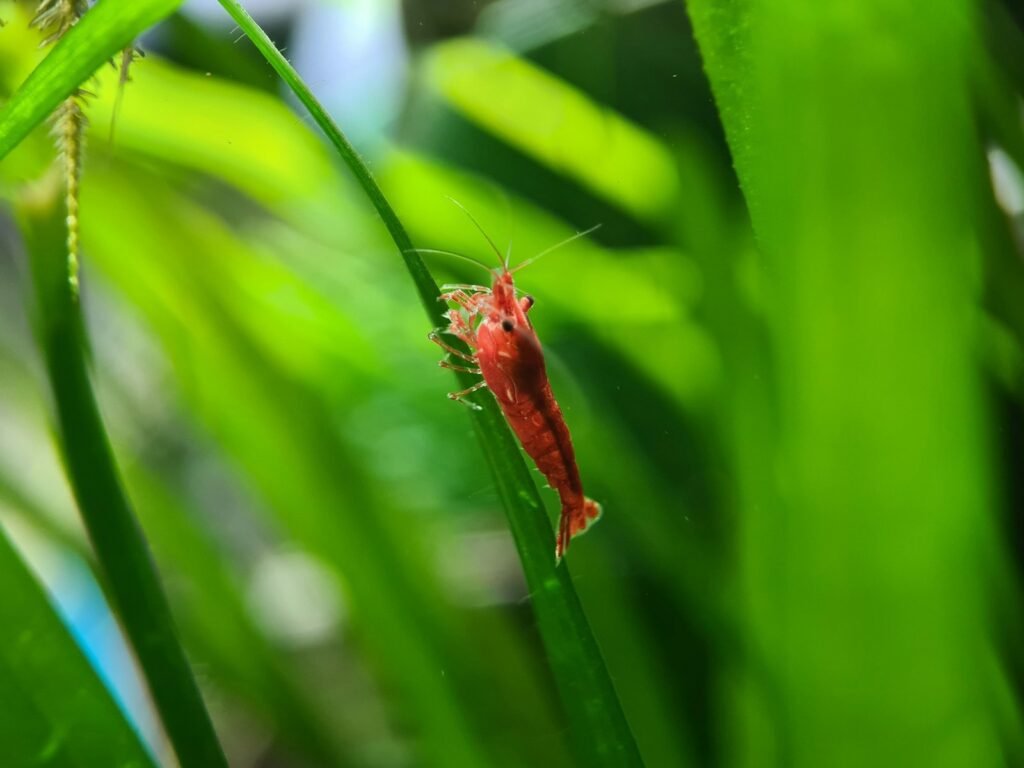
Cherry shrimp (Neocaridina davidi) are tiny, colorful freshwater shrimp that spend their days picking at algae, biofilm and leftover food. They’re one of the easiest invertebrates to keep, they breed readily in a healthy tank, and they come in red and a rainbow of other colors. The keys to success are a cycled, planted tank, stable water and peaceful tankmates that won’t eat them.
Cherry Shrimp Quick Facts
| Trait | Cherry shrimp |
|---|---|
| Scientific name | Neocaridina davidi |
| Adult size | About 1–1.5 in (2.5–4 cm); females are larger |
| Lifespan | About 1–2 years |
| Temperature | 65–80°F (18–27°C), with about 70–76°F a comfortable target |
| pH | 6.5–8.0 |
| General hardness (GH) | About 4–8 dGH, though they adapt to a wider range |
| Carbonate hardness (KH) | About 2–8 dKH |
| Minimum tank | 5 gallons; 10 gallons is more stable |
| Group size | Start with at least 10 |
Are Cherry Shrimp Easy to Care For?
Yes, as long as the tank is ready before they arrive. Cherry shrimp tolerate a wide range of water conditions, but they don’t handle sudden changes, ammonia or nitrite well. Most beginner losses happen in brand-new tanks or after a big, sudden water change, not because the shrimp are fragile.
Setting Up a Cherry Shrimp Tank
- Cycle the tank first. Ammonia and nitrite must read 0 ppm. A tank that has been running for a few weeks with a layer of biofilm and some algae is ideal, because that’s what shrimp graze on. Our tank cycling guide explains how.
- Cover the filter intake. A sponge filter is the safest choice. If you use a hang-on-back or canister filter, put a fine sponge over the intake so baby shrimp don’t get pulled in.
- Add plants and moss. Java moss, Christmas moss, floating plants and fine-leaved stem plants give shrimp food surfaces and hiding spots, especially after molting.
- Choose the substrate with care. Inert gravel or sand works well. Some active planted-tank soils lower pH and KH, so test the water and make sure it stays in range if you use one. See our planted tank substrate guide for options.
- Avoid copper. Higher copper levels are toxic to shrimp. Skip copper-based medications, and use fertilizers and water treatments labeled safe for freshwater shrimp.
A heater isn’t always required, since cherry shrimp handle room temperature in most homes. Still, a steady temperature is better than a swinging one, and slightly warmer water speeds up growth and breeding.
Water Parameters and Molting
Shrimp grow by shedding their old shell, which is called molting. GH matters here, because it reflects the calcium and magnesium they need to build a new shell. If GH is very low, or if the water chemistry changes suddenly, a shrimp can get stuck partway through a molt, which is usually fatal. Hobbyists often call this the “white ring of death,” after the pale band that shows between the old and new shell.
To keep molting smooth:
- Test GH and KH along with ammonia, nitrite and nitrate.
- Change 10–20% of the water weekly instead of doing occasional large changes.
- Match the temperature and treat new water with a dechlorinator.
- Leave molted shells in the tank for a day or two; shrimp often eat them to recover minerals.
A shed shell that looks like a whole, empty shrimp is normal and not a sign of death.
What Do Cherry Shrimp Eat?
In a mature tank, cherry shrimp spend most of their time grazing on algae and biofilm. Supplement that with:
- Shrimp pellets or algae wafers
- Blanched vegetables such as zucchini, spinach or cucumber
- Dried leaves like Indian almond leaves, which grow biofilm as they break down
Feed a small amount every day or two, and remove leftovers after a few hours. In a tank with fish, shrimp also pick up leftover fish food. Overfeeding is the most common way to foul a shrimp tank, so start small.
How Many Cherry Shrimp Should You Keep Together?
Start with at least 10. A group that size gives you a good mix of males and females, so a breeding colony can get going, and shrimp are bolder and easier to see when there are more of them. In a 5- or 10-gallon tank, a starting group of 10–20 is common, and the colony will grow from there.
Breeding Cherry Shrimp
Cherry shrimp breed on their own in a stable tank. You can tell the sexes apart as adults:
- Females are larger, more colorful and have a curved underside. Many show a yellow or green “saddle” behind the head, which is developing eggs.
- Males are smaller, slimmer and usually paler.
After mating, a female carries 20–30 eggs under her tail and fans them constantly. She’s then called “berried.” The eggs hatch in about 30 days into tiny, fully formed shrimp. There’s no larval stage, so the babies need no special food, just a mature tank with moss and biofilm and a covered filter intake.
Best Tank Mates for Cherry Shrimp
Almost any fish will eat baby shrimp, and many will eat adults. The safest setup is a shrimp-only tank. If you want fish, choose very small, peaceful species and add plenty of moss for cover:
- Otocinclus catfish
- Pygmy corydoras, or other small corydoras
- Tiny schooling fish such as chili rasboras or ember tetras
- Snails such as nerites and mystery snails
Even these fish may pick off some babies. Avoid cichlids, larger tetras and barbs, gouramis and loaches. Pea puffers will hunt shrimp.
How to Tell If Cherry Shrimp Are Happy
Healthy, comfortable shrimp:
- Graze constantly on plants, glass and decor
- Show strong color (stressed shrimp often turn pale)
- Molt regularly and breed
- Stay out in the open during the day
Warning signs include shrimp swimming frantically around the tank right after a water change, lying still on their sides, or several shrimp dying over a few days. Test the water right away and look for anything new you added recently, such as a medication, fertilizer or decoration.
Frequently Asked Questions
Can cherry shrimp live with a betta?
Sometimes. Some bettas ignore shrimp, and others hunt them. If you try it, use a well-planted tank of at least 10 gallons with plenty of moss, and expect to lose some babies.
How long do cherry shrimp live?
About 1–2 years. Cooler, stable water tends to support a longer life, while warmer water speeds up growth and breeding.
Why are my cherry shrimp dying?
The usual causes are an uncycled tank, sudden changes during water changes, copper in a treatment or fertilizer, and failed molts from very low GH. Test the water and review what changed recently.
Do cherry shrimp clean the tank?
They help by eating algae, biofilm and leftover food, but they don’t replace water changes or gravel cleaning. For other helpers, see our guide to freshwater fish that clean the tank.
Why are my cherry shrimp losing color?
Stress, a bare tank or a light-colored substrate can make them look pale. Shrimp often color up once they settle in a planted tank with a dark substrate and background.
The Bottom Line
Cherry shrimp are an easy, rewarding first invertebrate. Give them a mature, cycled tank with plenty of moss, steady water with moderate hardness, small regular water changes and no copper, and keep them with fish too small to eat them. Do that, and a starter group of ten can grow into a busy, colorful colony.

Dr. Johnson Coleman is a dedicated veterinary expert with over 10 years of hands-on experience in animal health and wellness. His mission is to help pets live longer, happier lives through compassionate care, practical guidance, and a genuine love for animals.
After earning his Doctor of Veterinary Medicine (DVM) degree, Dr. Coleman spent a decade working in both private clinics and community shelters, where he gained deep expertise in preventive medicine, pet nutrition, and behavioral care.
He believes that pet owners deserve reliable, easy-to-understand information about their companions’ health. Through his writing, Dr. Coleman breaks down complex veterinary topics into friendly, actionable advice that helps readers make informed decisions for their pets.
Outside of his professional work, Dr. Coleman volunteers with local animal rescue groups and enjoys spending time outdoors with his two golden retrievers. His lifelong dedication to animal welfare continues to inspire his work and connect with pet lovers around the world.