Tiny white spots that look like grains of salt sprinkled over your fish usually mean one thing: ich. It’s one of the most common diseases in freshwater aquariums, and it can wipe out a tank surprisingly fast. The good news is that ich is very treatable when you catch it early and treat it the right way, which mostly comes down to understanding its life cycle.
Quick answer: Treat the whole aquarium, not just the spotted fish. Use a commercial ich medication or an aquarium salt treatment that your fish can tolerate, follow the dosing directions exactly, remove carbon from the filter, and complete the product’s full treatment schedule, including repeat doses and water changes. Don’t stop just because the visible spots disappear. Raising the temperature gradually can speed up the parasite’s life cycle so treatment works faster, but only if every species in the tank can handle it.
What Is Ich?
Ich (also spelled “ick”) is short for Ichthyophthirius multifiliis, a single-celled parasite that causes white spot disease in freshwater fish. Every freshwater species can catch it, from neon tetras to goldfish to catfish. The parasite can’t survive without live fish, so it usually enters an aquarium with new fish, plants or equipment from an infected tank.
Ich is a true emergency. A single parasite can multiply into hundreds, and in some cases more than a thousand, new parasites in one generation. Left untreated, an outbreak can kill every fish in the tank.
Symptoms of Ich in Fish
- White spots about the size of a grain of salt or sugar on the body, fins and gills
- Flashing: fish rubbing or scratching themselves against rocks, decorations or the substrate
- Clamped fins held tight against the body
- Rapid breathing or gasping near the surface, which may point to gill involvement, low oxygen or poor water quality
- Lethargy and hiding
- Loss of appetite
Gill infections can be serious even when you only see a few spots on the body, because the parasites damage the tissue fish use to breathe.
Is It Really Ich?
Not every white spot is ich. Other causes include breeding tubercles on male goldfish, fungal growth (fluffy, cotton-like patches), bacterial infections and lymphocystis (larger, cauliflower-like growths). Ich spots are small, evenly sized and spread across the body. A very fine, gold-colored dusting may be velvet disease instead, and raised, irregular lesions can have other causes. The wrong treatment can delay the care your fish actually needs. Only a microscope can confirm it for certain, so if the spots look different or the fish doesn’t respond to treatment, ask an aquatic veterinarian or an experienced fish store.
The Ich Life Cycle: Why Treatment Takes Time
Understanding the life cycle is the key to beating ich, because medications only work on one stage of it.
- On the fish (trophont): The parasite burrows under the skin or gill tissue and feeds. Each white spot is a parasite. Here it’s covered by the fish’s skin and mucus, so medication can’t reach it.
- In the tank (tomont): When mature, the parasite drops off the fish, attaches to the glass, plants or gravel, and forms a cyst. Inside, it divides again and again, producing up to around 1,000 new parasites.
- Free-swimming (theront): The cyst bursts, releasing infective parasites that must find a fish quickly to survive. This is the only stage treatment can kill.
Temperature controls the speed. In warm aquarium water of about 75–79°F (24–26°C), the full cycle takes roughly 3–6 days. In cooler water it can take weeks. That’s why ich keeps “coming back” when people stop treating too early: new parasites are still hatching from cysts in the tank.
How to Treat Ich: Step by Step
1. Treat the Whole Tank
Free-swimming parasites are already spread through the water, so moving one sick fish to a hospital tank won’t clear the main aquarium. Treat the display tank itself, and treat any fish you moved too.
2. Prepare the Tank
- Remove activated carbon from the filter, because it pulls medication out of the water.
- Do a partial water change and vacuum the gravel to remove some of the cysts sitting on the bottom.
- Add extra aeration. Warm water holds less oxygen, many medications lower oxygen further, and fish with damaged gills struggle to breathe.
- Check your water. Ammonia and nitrite should be 0 ppm. Poor water quality makes every disease worse.
- Test ammonia and nitrite daily during treatment. Some medications can affect beneficial filter bacteria. If levels rise, do a water change and adjust later doses according to the product instructions.
3. Choose a Treatment
Ich medication. Most commercial ich treatments sold in pet stores use ingredients such as malachite green, formalin or copper. They work well when used exactly as labeled. Read the label carefully: some are not safe for invertebrates like shrimp and snails, and some have special instructions for sensitive fish. Never automatically halve a dose for scaleless fish; follow the manufacturer’s species-specific directions, and choose another product if safety is unclear.
Check whether the treatment requires removing chemical filter media or switching off a UV sterilizer. Keep biological filtration running unless the label specifically says otherwise.
Aquarium salt. Salt (plain sodium chloride, not table salt with additives) is a common treatment for ich in fish that tolerate it. Salt tolerance varies a lot by species, and live plants, many catfish, loaches and other scaleless fish may not handle it well. If you use salt, add it gradually, dissolve it first in tank water, and use a tested dose for your specific fish rather than guessing. The salt has to stay at an effective level for the whole treatment period, so replace only the salt you remove during water changes; don’t add a full new dose each day.
Heat. Raising the temperature slowly, by about 1–2°F per day, speeds up the parasite’s life cycle so more of it reaches the free-swimming stage where treatment can kill it. Many keepers combine gradual warming with medication or salt. Only do this if every fish in the tank tolerates warmer water, and add aeration as the temperature climbs.
Avoid mixing several medications at once unless the labels say they’re compatible, and never overdose to “speed things up.”
4. Keep Treating After the Spots Are Gone
The white spots disappear when parasites drop off the fish, not when they’re dead. Complete the product’s full treatment schedule, including any repeat doses, even after the last spot is gone, and expect a longer course in cool water, so you catch every new generation as it hatches. Ending treatment too early is the most common reason ich returns.
5. Recover and Restore
Once treatment is finished, do a water change, put fresh carbon back in the filter to remove leftover medication, and return the temperature gradually to normal. Keep watching your fish for the next few weeks.
Fish That Need Extra Care During Ich Treatment
| Fish or tank type | Why it’s sensitive | What to do |
|---|---|---|
| Scaleless fish: loaches, many catfish, puffers | More sensitive to many medications and salt | Use a product explicitly labeled safe for the species, and follow its species-specific dosing instructions; never reduce the dose automatically |
| Small schooling fish like tetras and rasboras | Can be sensitive to some medications and to salt | Follow the label carefully and watch closely after dosing |
| Shrimp and snails | Copper and many ich medications are toxic to invertebrates | Use a treatment labeled safe for your invertebrates, or set up separate compatible housing before medicating. Never move possibly contaminated water or equipment into a healthy tank |
| Planted tanks | Many plants don’t tolerate salt | Prefer a plant-safe medication over salt |
| Coldwater fish like goldfish | Can’t take very high temperatures, and the cycle runs slower in cool water | Skip heavy heating and plan for a longer treatment |
How to Prevent Ich
- Quarantine new fish in a separate tank before adding them to your main aquarium. Ich often appears one to three weeks after fish are shipped, and a quarantine period of about 30 days gives it time to show up.
- Don’t share nets or equipment between tanks without disinfecting them.
- Keep the temperature stable. Sudden drops stress fish and often trigger outbreaks. A reliable heater helps, especially in cold months; see our winter fish tank guide.
- Keep water quality high with regular water changes and a properly cycled tank.
- Avoid overcrowding, which raises stress and lets parasites spread faster.
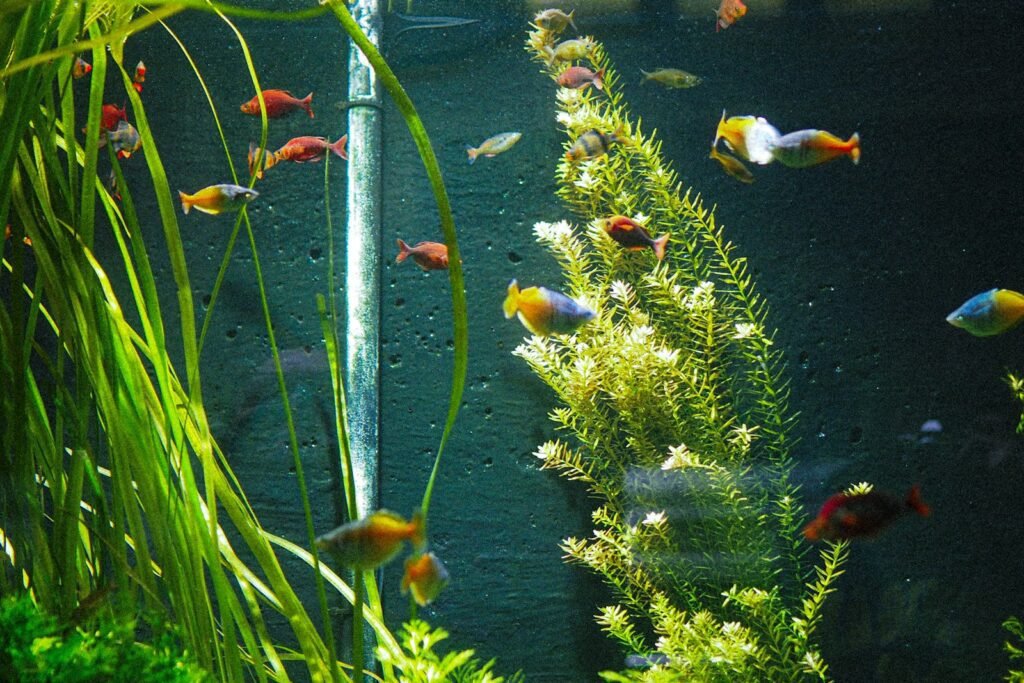
Small, sensitive species like neon tetras are often the first to show white spots after a temperature swing or a new addition to the tank.
Frequently Asked Questions
What is the best treatment for ich in freshwater fish?
There’s no single best treatment for every tank. A commercial ich medication used exactly as labeled works for most community tanks. Aquarium salt is an option for fish that tolerate it, and gradually raising the temperature can make either treatment work faster. Choose based on the fish, plants and invertebrates in your tank.
Can you save a fish with ich?
Yes, most fish recover if ich is treated early and treatment continues long enough. Fish with heavy gill infections or advanced disease are harder to save, which is why starting treatment as soon as you see spots matters.
How do I get rid of ich quickly?
Start treatment immediately, treat the entire tank, and gradually warm the water if your fish can handle it, since higher temperatures speed up the parasite’s life cycle. How long it takes depends on water temperature, the product and its dosing schedule. Follow the complete labeled course even if the spots disappear earlier; stopping early usually leads to a relapse.
Can fish get rid of ich on their own? Will it go away on its own?
Occasionally a healthy fish with a very mild case recovers, but don’t count on it. Ich multiplies fast in an aquarium, and untreated outbreaks can kill every fish in the tank.
How long can a fish survive with ich?
It varies with the fish, the water temperature and how badly the gills are infected. Severe cases can kill fish within days, while mild cases may linger longer. Treat as soon as you see spots rather than waiting to see how bad it gets.
Will aquarium salt get rid of ich?
Salt can help treat ich in fish that tolerate it, and it’s often used together with heat. It isn’t suitable for every tank, though: many plants, scaleless fish and invertebrates are sensitive to it.
What temperature kills ich?
There is no universally safe temperature that kills ich, and heat alone is unreliable. Warmer water speeds up the life cycle so a treatment can reach the parasite sooner, but only raise the temperature as far as every species in your tank tolerates, do it gradually, add aeration, and use it alongside an appropriate treatment.
How long does ich take to go away?
Spots usually start fading within a few days of treatment, but the full process depends on water temperature and the product’s dosing schedule, and takes longer in cool water. Complete the full course even after the last spot disappears.
Final Thoughts
Ich looks alarming, but it’s beatable. Treat the whole tank, match the treatment to your fish and plants, keep treating after the spots disappear, and quarantine new arrivals so it doesn’t come back. If fish keep dying or the symptoms don’t look like typical ich, get help from an aquatic veterinarian.

Dr. Johnson Coleman is a dedicated veterinary expert with over 10 years of hands-on experience in animal health and wellness. His mission is to help pets live longer, happier lives through compassionate care, practical guidance, and a genuine love for animals.
After earning his Doctor of Veterinary Medicine (DVM) degree, Dr. Coleman spent a decade working in both private clinics and community shelters, where he gained deep expertise in preventive medicine, pet nutrition, and behavioral care.
He believes that pet owners deserve reliable, easy-to-understand information about their companions’ health. Through his writing, Dr. Coleman breaks down complex veterinary topics into friendly, actionable advice that helps readers make informed decisions for their pets.
Outside of his professional work, Dr. Coleman volunteers with local animal rescue groups and enjoys spending time outdoors with his two golden retrievers. His lifelong dedication to animal welfare continues to inspire his work and connect with pet lovers around the world.