The safest setup for an axolotl is a species-only tank. Similarly sized adult axolotls can sometimes share a roomy tank, though injuries are still possible. Axolotls need cool water that most aquarium fish can’t handle, they’ll try to eat anything that fits in their mouth, and fast fish may pick at their feathery gills. If you still want some movement in the tank, a small group of white cloud mountain minnows is the option most often suggested. Here’s what to know before you add anything.
Why Axolotls Are Hard to Pair With Fish
Three things make most fish a poor match.
- Temperature. Axolotls do best at about 60–65°F (15–18°C) and should never be kept above about 72°F (22°C). Most tropical community fish need water several degrees warmer than that.
- Appetite. Axolotls are ambush eaters that snap at movement. Any fish small enough to fit in an axolotl’s mouth is at real risk of being eaten.
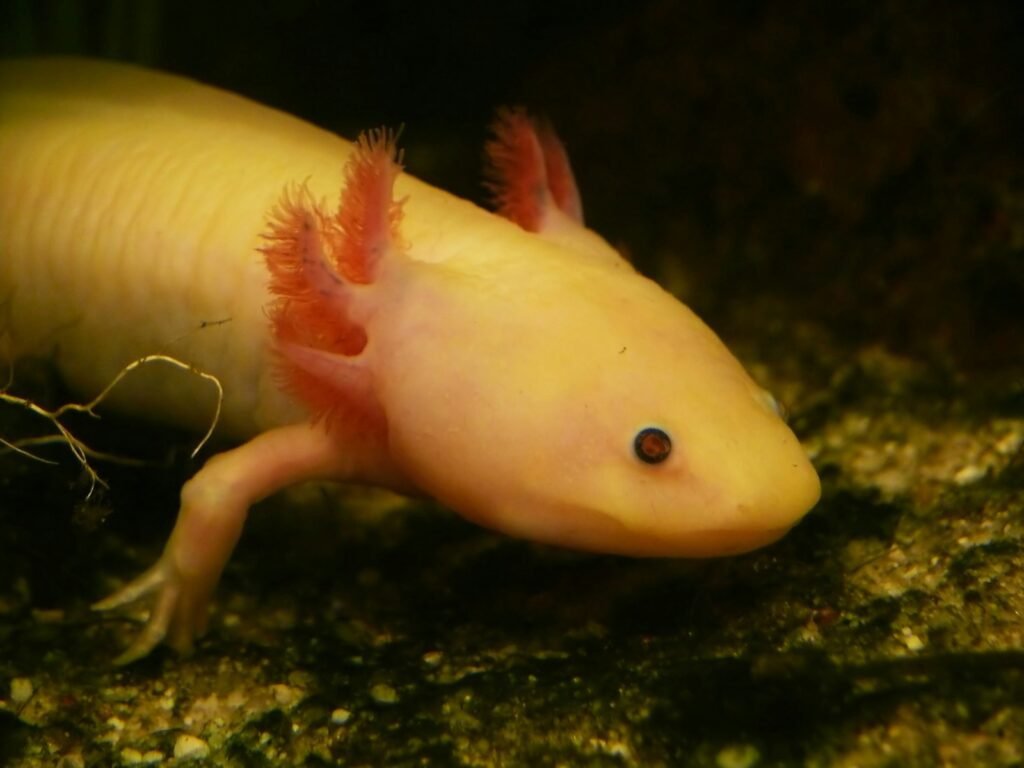
- Gills and skin. An axolotl’s gills are soft and exposed, and it has no scales. Active or nippy fish can damage them, and the axolotl can’t easily get away.
There’s also disease risk. Any live fish used as food should be aquarium-bred, since wild or pond fish can carry parasites and infections.
Fish That Can Live With Axolotls (With Caveats)
| Animal | Why it can work | Main risk | Verdict |
|---|---|---|---|
| White cloud mountain minnow | Small, peaceful, does well in cool water | May be eaten; stress and disease risk | The usual choice if you must add fish |
| Rosy red minnow | Cool-water fish with similar benefits | May be eaten, breeds readily | Possible |
| Guppies (wild-type) | Survive at the top of the axolotl’s range | Water is cool for them; usually eaten | Not recommended as a tank mate |
| Cherry and ghost shrimp | Small and peaceful | Likely eaten; can bring in disease | Optional, not needed |
| Other axolotls | Same needs | Smaller ones lose limbs | Best companion if sizes match |
White cloud mountain minnows
White cloud mountain minnows are among the few fish whose temperature needs overlap with an axolotl’s, but sharing a tank still carries risks of predation, stress, injury and disease. A species-only axolotl tank is safer. If you do add fish, this is the usual choice among experienced salamander keepers, because white clouds are small, have no defensive spines and do well in cool water.
White clouds grow to about 1.6 inches, live in water from about 57 to 72°F, are very peaceful, and should be kept in a group of at least 10. That temperature range overlaps well with an axolotl’s.
Be realistic: an adult axolotl can catch and eat a white cloud. Many keepers report losing minnows gradually. Only add them if you’re comfortable with that.
Rosy red minnows
Rosy red (fathead) minnows are another cool-water option with similar benefits. They breed readily in aquariums, and predation and disease remain concerns.
Guppies
Wild-type guppies can survive at the warm end of an axolotl’s temperature range. That’s the problem, though: a tank kept cool enough for the axolotl is at the edge of what guppies tolerate. They aren’t recommended as permanent companions, and they shouldn’t be a staple food either.
Shrimp
Small shrimp such as cherry or ghost shrimp are sometimes kept with axolotls. They may be eaten or bring in disease, and they aren’t needed to keep the tank clean. If you add them, quarantine them first and give them dense plants or moss to hide in.
Fish to Avoid With Axolotls
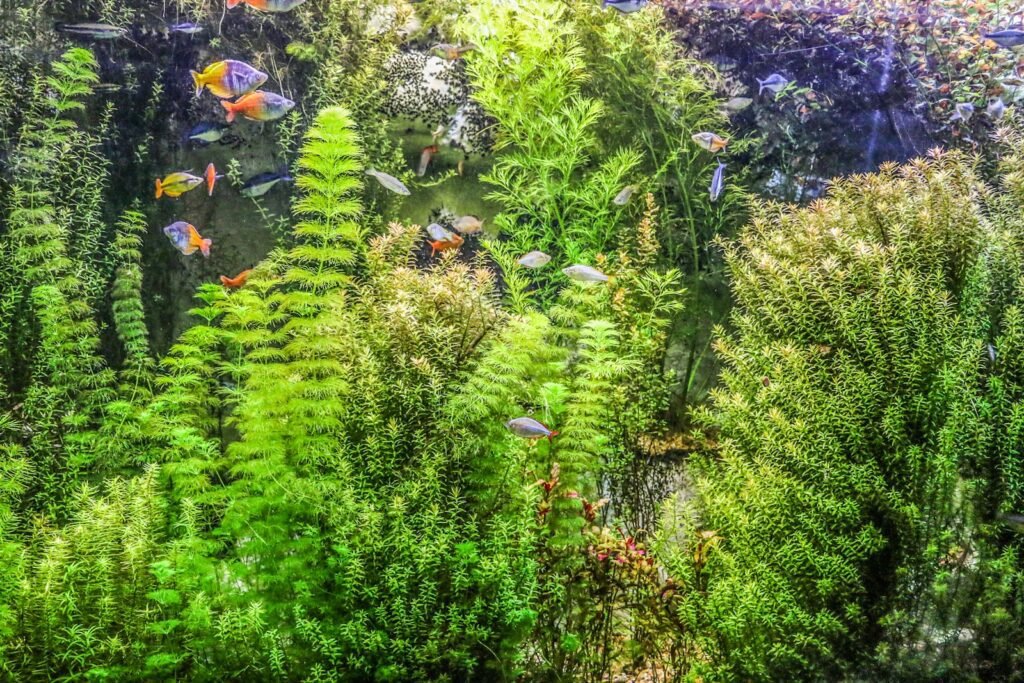
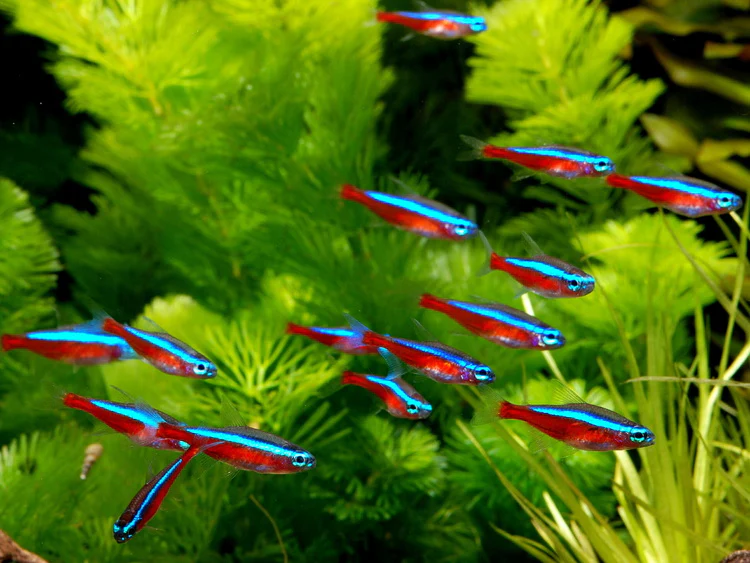
- Tropical community fish such as tetras, rasboras, bettas and most livebearers. They need warmer water than an axolotl should live in.
- Goldfish. They tolerate cool water, but common goldfish can reach about 12 inches. They produce a lot of waste and compete for food.
- Plecos and other suckermouth fish. They may latch onto an axolotl’s slime coat.
- Fin-nippers and fast, active fish like tiger barbs and most danios. Fluttering gills are an easy target.
- Anything with spines. If an axolotl swallows a spiny fish, it can be injured.
- Wild-caught or pond fish. They can bring in disease.
Can Axolotls Live With Other Axolotls?
Yes, and another axolotl is usually the best companion, as long as they’re close in size. Young axolotls snap at anything that moves. Juveniles kept together often lose toes or feet to each other, though they regrow them. Adults of similar size are generally fine together if each has enough floor space and a place to hide.
A few rules help:
- Only house axolotls together if they’re about the same size.
- Keep a male and female together only if you’re ready for eggs, because they breed readily.
- Add hides so each axolotl can get out of sight.
- Watch for missing toes, bitten gills or one axolotl not eating, and separate them if you see any of these.
How to Set Up a Shared Axolotl Tank
- Keep it cool. Aim for 60–65°F, and never let it go above about 72°F. In a warm room, you may need a fan or chiller.
- Keep the flow gentle. Fast-moving water stresses axolotls. Use a sponge filter or baffle the outflow.
- Avoid small gravel. Axolotls swallow pea-sized gravel. If you use gravel at all, it should be coarse. Many keepers use bare glass or fine sand instead.
- Cycle the tank first. Establish the tank’s nitrogen cycle before adding any animals: the filter should be turning ammonia into nitrate, with ammonia and nitrite both testing at 0 ppm. Keep testing, watch nitrate, and do partial water changes. Every extra tank mate adds waste.
- Use dechlorinated water. Remove chlorine and chloramine before water goes in, and keep pH roughly between 6.5 and 8.
- Quarantine new animals. Keep any fish or shrimp in a separate tank for a few weeks before adding them.
- Add plenty of cover. Plants, caves and wood give minnows and shrimp places to escape.
Frequently Asked Questions
Can I put any fish in my axolotl tank?
Very few. Most fish need warmer water, will nip the axolotl’s gills, or will be eaten. White cloud mountain minnows are the most commonly suggested exception because they’re peaceful and suit cool water.
What are good companions for axolotls?
Another axolotl of similar size is the best companion. If you want something different, white cloud mountain minnows, rosy red minnows and small shrimp are the usual options, though the axolotl may eat them.
Can I put 3 axolotls in one tank?
It can work, but three axolotls need a spacious, fully cycled tank with plenty of floor area, strong enough filtration and a separate hide for each one. Matching sizes helps but doesn’t prevent bites, so have a separate tank ready in case one needs to be moved.
Will my axolotl eat its tank mates?
Probably, if they’re small enough. Axolotls snap at movement, so any fish or shrimp that fits in the mouth is at risk.
Can axolotls live with snails?
Snails aren’t recommended. Small snails can be swallowed, and their hard shells may cause choking, injury or a blockage. Larger snails aren’t guaranteed safe either.
The Bottom Line
Axolotls don’t need fish companions, and keeping one on its own is the lowest-risk option. Similarly sized adults can share a tank with enough space and close monitoring, though injuries are still possible. White cloud mountain minnows are sometimes added because their temperature needs overlap, not because they’re guaranteed safe. Whatever you choose, keep the water cool and quarantine anything new.

Dr. Johnson Coleman is a dedicated veterinary expert with over 10 years of hands-on experience in animal health and wellness. His mission is to help pets live longer, happier lives through compassionate care, practical guidance, and a genuine love for animals.
After earning his Doctor of Veterinary Medicine (DVM) degree, Dr. Coleman spent a decade working in both private clinics and community shelters, where he gained deep expertise in preventive medicine, pet nutrition, and behavioral care.
He believes that pet owners deserve reliable, easy-to-understand information about their companions’ health. Through his writing, Dr. Coleman breaks down complex veterinary topics into friendly, actionable advice that helps readers make informed decisions for their pets.
Outside of his professional work, Dr. Coleman volunteers with local animal rescue groups and enjoys spending time outdoors with his two golden retrievers. His lifelong dedication to animal welfare continues to inspire his work and connect with pet lovers around the world.