If you’ve fallen down a rabbit hole of fluffy, tri-colored dog photos online, there’s a good chance you’ve come across a Bernedoodle. Their teddy-bear looks get plenty of attention, but there’s more to this mixed dog than a cute coat.
Bernedoodles can vary considerably in adult size, coat type, shedding, energy level, and even temperament. They also come with a real grooming commitment and can inherit health concerns from both sides of their family.
So before falling for a puppy photo, it helps to understand what a Bernedoodle actually is, what you can reasonably expect from one, and — just as importantly — what you can’t predict.
What Is a Bernedoodle, Exactly?
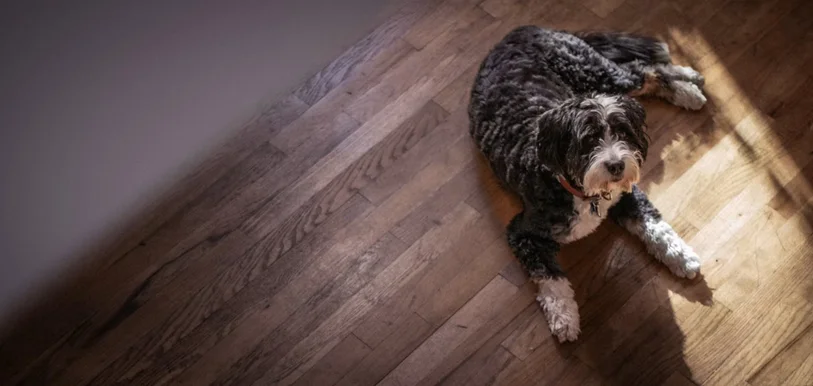
A Bernedoodle is a cross between a Bernese Mountain Dog and a Poodle. You’ll also see them described as a Bernese Mountain Dog Poodle mix or Bernese doodle.
The Poodle parent may come from Standard, Miniature, or smaller lines depending on the size breeders hope to produce.
Bernedoodles are mixed-breed dogs rather than an American Kennel Club-recognized breed. That distinction matters because there isn’t one universal Bernedoodle breed standard defining exactly how large the dog should be, what its coat must look like, or what temperament every dog should have.
That’s why two dogs both called Bernedoodles can look surprisingly different.
| Trait | What to expect |
| Parent breeds | Bernese Mountain Dog × Poodle |
| Common sizes | Toy/Tiny, Mini, and Standard; terminology varies |
| Adult weight | Can range from under 20 lb to around 100 lb depending on parentage |
| Coat | Straight-ish, wavy, or curly |
| Shedding | Variable; many shed relatively little, but not all |
| Temperament | Often affectionate, social, playful, and trainable |
| Grooming | Moderate to high |
| Cost | Varies widely by breeder, location, and size — price alone isn’t a reliable quality signal |
| AKC breed recognition | Not recognized as an official AKC breed |
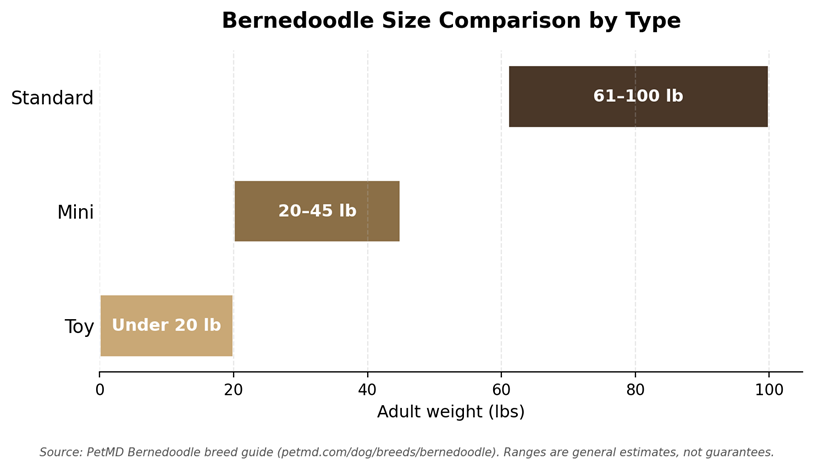
Published size categories differ because Bernedoodles don’t have a universal breed standard. PetMD, for example, lists Standard Bernedoodles at 61–100 pounds, Minis at 20–45 pounds, and Toys below 20 pounds.
The History of the Bernedoodle
Bernese Mountain Dogs and Poodles could have been crossed before anyone started calling their offspring Bernedoodles, so it’s difficult to identify the first dog of this mix.
The modern intentional Bernedoodle is commonly traced to Canadian breeder Sherry Rupke of SwissRidge Kennels, who began intentionally breeding Bernese Mountain Dogs with Poodles in 2003. According to SwissRidge’s own account, the goal was to combine the Poodle’s intelligence with the Bernese Mountain Dog’s loyal temperament, and improving on the Bernese’s relatively short average lifespan was one motivation behind the cross.
That makes the modern Bernedoodle a relatively recent development compared with its two established parent breeds. For context, purebred Bernese Mountain Dogs have an AKC-cited average lifespan of only about 7 to 10 years — a relatively short lifespan compared with many other dog breeds.
More important than who first used the name, however, is what that short breeding history means for owners: Bernedoodles don’t have generations of standardized breeding behind them in the same way established pure breeds do. As a result, there can be considerable variation from one Bernedoodle to another.
Bernedoodle Generations Explained: F1, F1B, F2, and Beyond
Start looking for a Bernedoodle puppy and you’ll quickly run into labels such as F1, F1B, and F2.
These labels describe ancestry.
| Generation | What it generally means |
| F1 | Bernese Mountain Dog × Poodle |
| F1B | F1 Bernedoodle bred back to a Poodle |
| F2 | Two F1 Bernedoodles bred together |
| Multigenerational | Bernedoodles bred from later-generation Bernedoodle lines |
For a typical F1B backcross to a Poodle, the expected ancestry averages about 75% Poodle and 25% Bernese Mountain Dog.
But don’t make the mistake of treating those percentages like a recipe.
An F1B puppy isn’t guaranteed to have a particular curl pattern, shedding level, personality, adult size, or allergy compatibility simply because it has more Poodle ancestry. Breeders may use later-generation crosses in an effort to produce particular characteristics more consistently, but generation labels describe lineage — not guarantees.
Keep that in mind especially if allergies are the reason you’re considering a Bernedoodle in the first place.
Bernedoodle Sizes: How Big Do They Get?
This is one of the most confusing parts of researching Bernedoodles because you’ll find different size categories depending on the source or breeder.
There is no universal Bernedoodle size standard. One useful reference point comes from PetMD:
- Standard Bernedoodle: about 61–100 pounds and up to 29 inches tall
- Mini Bernedoodle: about 20–45 pounds and up to 22 inches tall
- Toy Bernedoodle: under 20 pounds and roughly 12–17 inches tall
Treat these as general ranges rather than promises.
Full-Grown Standard Bernedoodle
A Standard Bernedoodle usually has Standard Poodle ancestry and sits at the large end of the Bernedoodle spectrum. PetMD places full-grown Standards at approximately 61–100 pounds.
That means you’re potentially bringing home a genuinely large dog — not simply a bigger version of a fluffy puppy. Before choosing one, consider whether you’re comfortable walking and controlling a large adolescent dog, transporting it, bathing it, and paying the grooming and food costs associated with its size.
Mini Bernedoodle Size
A Mini Bernedoodle generally has Miniature Poodle ancestry and is intended to produce a smaller adult dog. PetMD gives a broad adult range of approximately 20–45 pounds.
But “Mini Bernedoodle” isn’t an official standardized size category, so don’t assume every breeder uses the term in exactly the same way.
If adult size matters to you, ask: How big are both parents? The parents’ actual sizes tell you far more than the word “mini” alone.
Toy or Tiny Bernedoodle
Some breeders use terms such as Toy, Tiny, Micro, or Micro Mini Bernedoodle for particularly small dogs. Those aren’t interchangeable official size classifications. PetMD uses “Toy” for its smallest category, describing these dogs as weighing under 20 pounds.
If a breeder advertises a particularly small Bernedoodle, ask about the actual size and weight of both parents and, when available, the adult sizes of previous offspring from those lines.
What Can — and Can’t — Be Predicted About a Bernedoodle?
This may be the most useful thing to understand before choosing a Bernedoodle.
Crossbreeding doesn’t work like selecting features from a menu. Knowing the parents gives you useful clues about how a puppy may mature, but it doesn’t tell you exactly which traits that puppy will inherit.
You can make reasonable estimates about:
- The likely adult size range based on the parents
- Possible coat colors and textures
- General exercise and grooming needs
- Health conditions worth screening for based on both parent breeds
You shouldn’t assume you can predict exactly:
- Adult weight
- Coat curl
- Amount of shedding
- Markings
- Energy level
- Adult temperament
- Whether the dog will trigger someone’s allergies
Even puppies from the same litter can inherit different combinations of traits. If a particular characteristic is essential to you — especially adult size, shedding, or allergy compatibility — don’t rely solely on a label such as “Mini” or “F1B.”
Bernedoodle Temperament and Personality
Bernedoodles are commonly described as affectionate, playful, social, and intelligent. Those traits make sense when you look at the parent breeds, and PetMD describes Bernedoodles as loving dogs that often enjoy being around people and other animals.
But temperament isn’t determined by the mix’s name alone. Genetics matter, but so do early socialization, training, environment, health, individual personality, and experiences during puppyhood.
Statements such as “Bernedoodles are always perfect family dogs” go too far for exactly this reason. If you’re choosing a Bernedoodle puppy, look beyond its coat color. Ask about the temperaments of both parents and how the puppies are being raised and socialized.
Are Bernedoodles good with children?
Many can make excellent family companions. Their commonly reported affectionate and social tendencies can suit family life well, but any dog-child interaction still needs appropriate supervision.
Size matters too. A friendly 70-pound adolescent dog can knock over a small child simply through excitement. That isn’t aggression — it’s a reminder that training and calm behavior matter even with a friendly dog. Children should also learn to respect a dog’s food, toys, sleep, and personal space.
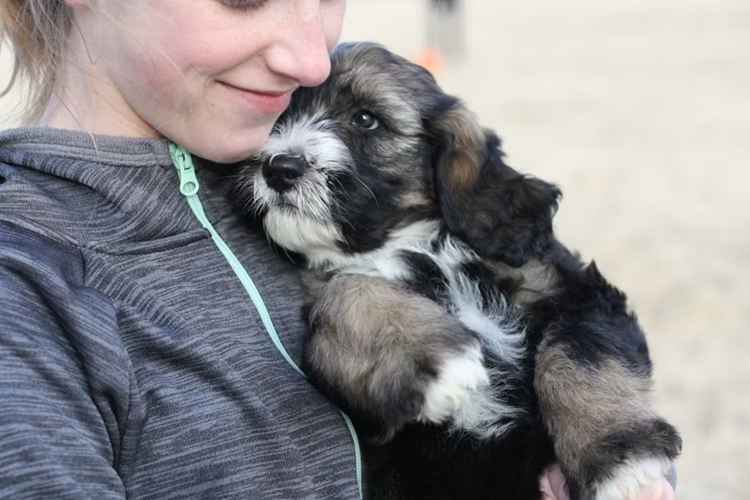
Coat, Shedding, and the “Hypoallergenic” Question
One of the biggest attractions of the Bernedoodle is its coat. Depending on which traits a dog inherits, the coat may be relatively straight, loose and wavy, or tightly curled.
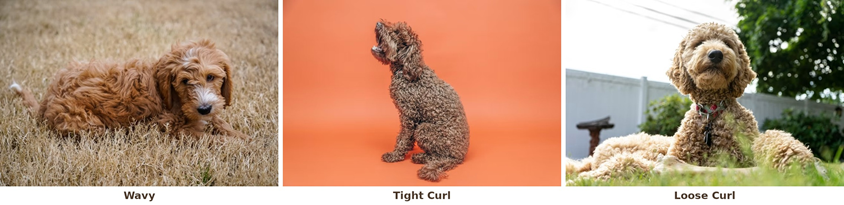
Do Bernedoodles shed?
Many Bernedoodles are relatively low-shedding compared with Bernese Mountain Dogs, particularly when they inherit a more Poodle-like coat. But low shedding isn’t the same as no shedding.
Coat characteristics vary among individual Bernedoodles, and a generation label such as F1B doesn’t guarantee a shed-free dog. There’s another trade-off people sometimes overlook: a dog that leaves less hair around the house can still require more grooming. Curly and wavy coats can hold loose hair and develop tangles close to the skin.
Are Bernedoodles hypoallergenic?
No dog is completely hypoallergenic. The American Kennel Club specifically states that there are no 100% hypoallergenic dogs, dog breeds, or mixed breeds. Allergens aren’t limited to loose hair; proteins associated with dander and saliva can also trigger reactions.
That means a curly F1B Bernedoodle shouldn’t automatically be considered safe for someone with dog allergies. Some individuals may tolerate certain dogs better than others, but there is no guarantee.
If someone in your household has significant dog allergies, don’t rely on a breeder’s “hypoallergenic” promise. Discuss the issue with an appropriate healthcare professional and, where practical, spend time around the individual dog before making a commitment.
How Much Grooming Does a Bernedoodle Need?
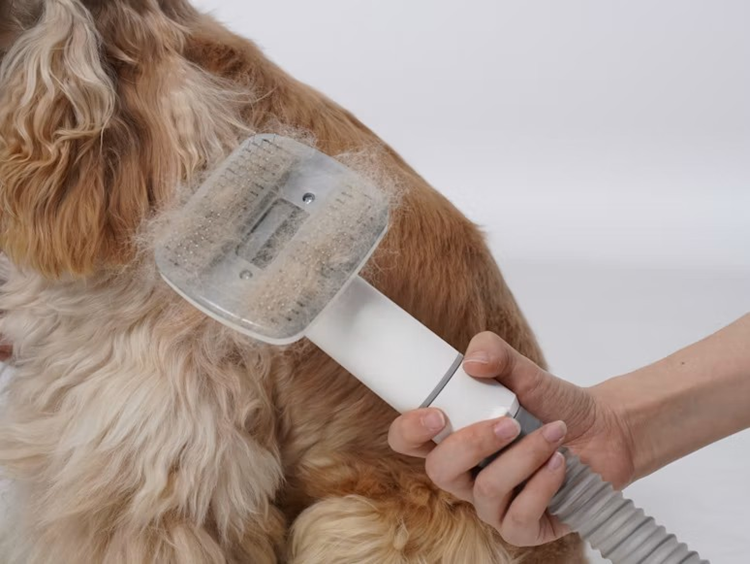
That fluffy coat requires work. Wavy and curly Bernedoodle coats can tangle and mat, particularly where hair rubs against itself or equipment.
Pay close attention to areas such as behind the ears, armpits, legs, belly, tail, and around collars and harnesses. Many Bernedoodles need regular brushing plus professional grooming. The exact schedule depends on coat length, texture, lifestyle, and how you prefer the dog to be trimmed, so there isn’t one grooming interval that fits every Bernedoodle.
Don’t wait for the first major mat before introducing grooming. Start during puppyhood with short, positive sessions involving brushing, paw handling, ear checks, and gentle mouth examination. Getting a puppy comfortable with being handled can make future grooming much easier. Routine nail and dental care should also be part of the dog’s overall care.
Bernedoodle Health and Lifespan
Bernedoodles can inherit health risks associated with either parent breed. Crossing two breeds does not automatically eliminate hereditary disease, which is why responsible parent-breed health screening matters.
How long do Bernedoodles live?
Published estimates vary. PetMD gives approximate lifespans of:
- Standard: 12–15 years
- Mini: 14–16 years
- Toy: up to 18 years
These should be treated as estimates, not promises about an individual dog. Size, genetics, veterinary care, nutrition, body condition, environment, and individual health can all influence lifespan.
Why parent-breed health testing matters
Instead of relying on a generic list of “Bernedoodle diseases,” prospective owners should look at the health screening recommended for both sides of the family.
For Bernese Mountain Dogs, the Bernese Mountain Dog Club of America’s minimum recommended testing covers hips, elbows, eyes, heart, and degenerative myelopathy, plus one additional test chosen from von Willebrand disease, thyroid, or a histiocytic sarcoma risk test.
The Poodle side needs appropriate screening too, and those recommendations differ by variety. Per the Poodle Club of America’s health statement (approved December 2024), Toy Poodles need a PRA DNA test, an annual eye exam, and a patellar luxation evaluation; Miniatures need the same three plus a hip evaluation; and Standards need a hip evaluation, an eye exam, an autoimmune thyroiditis evaluation, and DNA tests for two additional conditions, with a heart evaluation or skin biopsy as further optional tests.
What should you ask a breeder?
Don’t settle for “the parents are vet checked.” And don’t assume “DNA tested” means every relevant health screening has been completed.
Ask which breed-specific tests were performed on both parents and request the actual results. A routine veterinary examination and hereditary-disease screening are not the same thing.
The Bernese Mountain Dog Club of America also makes an important point: completion and public reporting of recommended tests doesn’t necessarily mean every result was normal. Open disclosure of results — for example through the OFA/CHIC database — allows breeders and puppy buyers to make better-informed decisions. Look for exactly that kind of transparency when you’re evaluating a breeder.
This section discusses general breed-health considerations and isn’t a substitute for veterinary advice about an individual dog.
How Much Does a Bernedoodle Cost?
Bernedoodle puppy prices vary considerably by breeder, location, parentage, size, and other factors, so there isn’t one reliable price point that by itself indicates a responsibly bred puppy.
Instead of judging a breeder by price alone, look at what the price represents. Ask for parent health-testing records, veterinary records for the puppy, information about how the litter was raised and socialized, and clear terms explaining what happens if you’re ever unable to keep the dog.
Don’t assume an expensive puppy is automatically responsibly bred, or that a lower-priced puppy is automatically poorly bred. Health testing and breeder transparency are far more meaningful indicators than price on its own.
Also budget beyond the purchase price. Bernedoodles typically need professional grooming in addition to food, preventive veterinary care, training, equipment, and the other routine costs of dog ownership — and grooming in particular tends to be an ongoing expense given how much upkeep a curly or wavy coat needs.
Caring for a Bernedoodle: Exercise, Training, and Feeding
A Bernedoodle may look like a stuffed animal, but it still needs physical activity, mental stimulation, training, and appropriate nutrition.
Exercise and mental stimulation
Most Bernedoodles benefit from daily physical activity plus opportunities to use their brains. Depending on the individual dog, activities might include walks, sniffing and exploration, fetch, swimming, hiking, obedience work, food puzzles, and trick training.
Don’t get too attached to an arbitrary “X minutes per day” rule. A dog’s appropriate exercise level depends on age, size, health, fitness, weather, and individual energy. A growing Bernedoodle puppy also shouldn’t simply follow an adult dog’s exercise routine — if you’re unsure how much is appropriate during growth, ask your veterinarian.
Training a Bernedoodle puppy
Intelligence doesn’t mean a puppy arrives knowing what humans expect. Start with useful everyday skills: toilet training, recall, loose-leash walking, calm greetings, handling for grooming, settling calmly, comfortable short periods alone, and positive exposure to everyday people, sounds, surfaces, and environments.
Positive-reinforcement training is a sensible approach. Keep sessions short and consistent, particularly with young puppies. A clever dog can learn good habits quickly — but it can become equally efficient at repeating behaviors that accidentally earn attention or rewards.
Feeding
There isn’t one ideal “Bernedoodle diet” or universal number of cups every dog should eat. Food needs vary enormously between a small Mini or Toy and a large Standard, and requirements also change with age, activity, body condition, health, and growth stage.
Choose a food described as “complete and balanced” for your dog’s life stage — the FDA explains what that labeling actually requires — and work with your veterinarian when deciding how much to feed, particularly while a large Bernedoodle puppy is growing.
Is a Bernedoodle Right for You?
Bernedoodles can make wonderful companions, but “Are Bernedoodles good dogs?” isn’t really the most useful question. A better one is: does the likely range of Bernedoodle traits fit my life?
A Bernedoodle may be a good fit if you:
- Want an affectionate, interactive companion
- Have time for training and daily activity
- Are prepared for regular coat maintenance and its cost
- Are comfortable with some uncertainty about how a mixed-breed puppy will mature
- Have space and handling ability appropriate to the size you’re considering
Think twice if you:
- Want a genuinely low-maintenance coat
- Need a dog guaranteed not to shed or not to trigger allergies
- Want an extremely predictable adult size or appearance
- Don’t have much time for training or interaction
- Aren’t prepared for the physical size — or cost — of a Standard Bernedoodle
A Mini Bernedoodle isn’t automatically an easy apartment dog, either. Smaller size can make living in a limited space more practical, but exercise, training, barking, personality, and mental stimulation still matter.
Questions to Ask Before Getting a Bernedoodle Puppy
A puppy’s coat color shouldn’t be the most important part of your decision. Before choosing a breeder, ask:
- What are the exact breeds and sizes of both parents?
- Can I see the health-testing results for both parents?
- Which Bernese Mountain Dog and Poodle health screenings were completed?
- What are the parents’ temperaments like, and how large are they?
- Have you produced previous litters from these parent lines, and how did those puppies mature?
- How are the puppies socialized before going home?
- What grooming and handling have the puppies experienced?
- Are adult sizes available for previous puppies from these lines?
- What veterinary records will come with the puppy?
- What happens if an owner can no longer keep the dog?
Pay attention to how openly those questions are answered. Statements such as “vet checked,” “genetically healthy,” “hypoallergenic,” or “guaranteed Mini” deserve follow-up questions rather than automatic acceptance.
Bernedoodle FAQs
Is a Bernedoodle the same as a Bernese Mountain Dog and Poodle mix?
Yes. A Bernedoodle is a cross between a Bernese Mountain Dog and a Poodle. You’ll also encounter terms such as Bernese Mountain Dog Poodle mix and Bernese doodle.
How big does a full-grown Bernedoodle get?
It depends heavily on parentage. PetMD lists Standards at approximately 61–100 pounds, Minis at 20–45 pounds, and Toys below 20 pounds. These are general ranges rather than an official Bernedoodle breed standard.
How big is a full-grown Mini Bernedoodle?
PetMD gives a general range of about 20–45 pounds and up to 22 inches tall. Individual dogs can fall outside published ranges, so the parents’ sizes are useful information when estimating how large a puppy may become.
How much does a Bernedoodle cost?
Prices vary substantially by breeder, location, size, and parentage. Don’t use price alone as a measure of breeder quality — health testing, transparency, and responsible puppy rearing are far more meaningful indicators than the number itself.
Do Bernedoodles shed?
Many Bernedoodles shed relatively little, especially dogs with more Poodle-like coats, but shedding varies. A Bernedoodle should not be assumed to be completely non-shedding.
Are Bernedoodles hypoallergenic?
No dog is completely hypoallergenic. Some Bernedoodles may shed less than heavily shedding breeds, but they still produce allergens, and an individual person’s reaction cannot be predicted from the Bernedoodle label.
What’s the difference between an F1 and F1B Bernedoodle?
An F1 Bernedoodle has a Bernese Mountain Dog parent and a Poodle parent. An F1B is typically an F1 Bernedoodle bred back to a Poodle. The latter generally has a higher proportion of Poodle ancestry, but that does not guarantee a particular coat, shedding level, temperament, or allergy compatibility.
Are Bernedoodles easy to train?
Many are described as intelligent and trainable, but individual dogs vary. Early socialization, consistent positive-reinforcement training, and realistic expectations are still important.
Are Bernedoodles good with kids?
Many Bernedoodles can make affectionate family companions, but no mix guarantees child-friendly behavior. The individual dog’s temperament, training, socialization, and appropriate supervision all matter.
Does a Bernedoodle need professional grooming?
Many do. Wavy and curly coats can mat without regular maintenance, so owners should expect routine brushing and, for many dogs, professional clipping and grooming.
Final Thoughts
A Bernedoodle can be an affectionate, intelligent, and engaging companion, but the name describes a mix — not a perfectly predictable package.
Adult size can range dramatically. Coats can be straighter, wavy, or curly. Some dogs shed very little while others shed more. Temperament varies, and neither “F1B” nor “doodle” guarantees an allergy-friendly dog.
That’s why choosing a Bernedoodle should involve more than deciding which puppy has the cutest markings. Look at the parents. Ask for appropriate health-testing records. Understand the grooming commitment and its cost. Think realistically about adult size, training, and exercise. And be wary of anyone promising traits that mixed-breed genetics simply can’t guarantee.
If those needs fit your lifestyle, a Bernedoodle may be a great companion. The goal isn’t to find a “perfect mix” — it’s to choose an individual dog with realistic expectations and be prepared to give it the care it actually needs.

Dr. Johnson Coleman is a dedicated veterinary expert with over 10 years of hands-on experience in animal health and wellness. His mission is to help pets live longer, happier lives through compassionate care, practical guidance, and a genuine love for animals.
After earning his Doctor of Veterinary Medicine (DVM) degree, Dr. Coleman spent a decade working in both private clinics and community shelters, where he gained deep expertise in preventive medicine, pet nutrition, and behavioral care.
He believes that pet owners deserve reliable, easy-to-understand information about their companions’ health. Through his writing, Dr. Coleman breaks down complex veterinary topics into friendly, actionable advice that helps readers make informed decisions for their pets.
Outside of his professional work, Dr. Coleman volunteers with local animal rescue groups and enjoys spending time outdoors with his two golden retrievers. His lifelong dedication to animal welfare continues to inspire his work and connect with pet lovers around the world.