

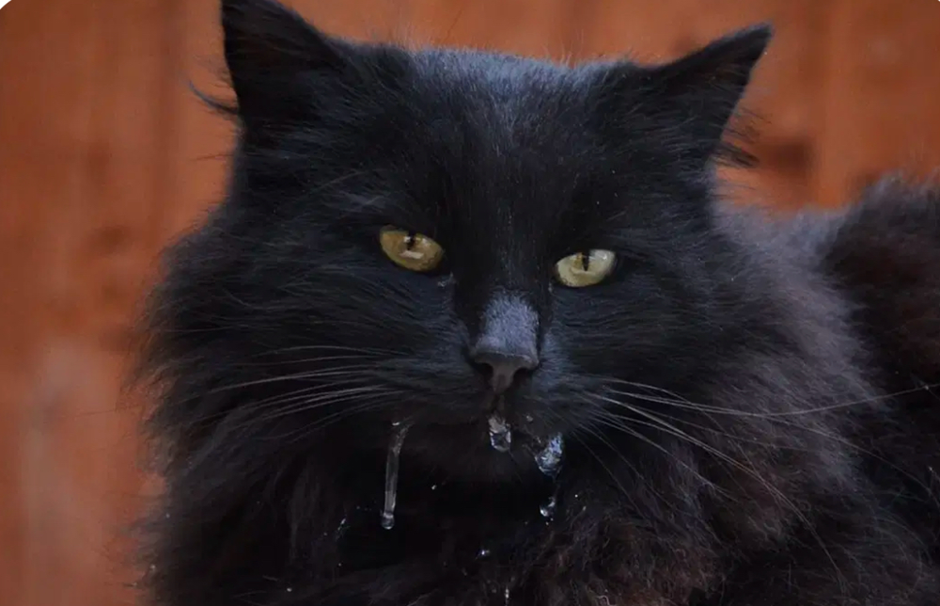
Being alert to wet spots on your cat’s chest or chin is serious business. Some cats will have a little drool which is all in the normal run of things, but if they begin to salivate suddenly or excessively, then it usually means that your cat is in pain or nauseous due to an oral trauma, ingestion of a toxin or some other illness. This is a primer to what is cat drooling, the most common reasons, how to triage at home and when to call your veterinarian.
Key Takeaways
- Cats can drool in small amounts sometimes. This is totally normal
- Sudden increase in drooling amounts is not normal and could mean danger. It could indicate nausea, dental disease, toxin ingestion, or another condition.
- Dental disease is the main cause of drooling in cats, according to the Cornell Feline Health Center.
- You can avoid drooling problems by ensuring regular health checkups and good hygiene in the house.
- When in doubt, call your vet – especially if drooling is in increased amounts, persistent, or accompanied by other signs.
What Is Cat Drooling?
Drooling, also technically referred to as ptyalism and hypersalivation, is when more saliva drips from the mouth than can be swallowed by your cat. You can notice wet fur over the chin or wetness on bedding.
Fluorescing substances: Cats tend to be tidy animals and not droolers. Whether it is recent or regular, drooling is an issue because most of the time something is off. In some cases, it might be exposure to a toxin or a piece of string stuck under your cat’s tongue which might be a true emergency.
When Drooling Can Be Normal
Contentment drool
When a cat is completely relaxed, purring and snuggling with you, sometimes a little drool just happens. It is usually nothing to worry about and stops as soon as they move away. According to the American Veterinary Medical Association (AVMA), this kind of tiny, happy drooling is completely normal.
Brief car trips versus Mild nausea
Some cats will drool for a brief period when traveling in cars from motion sickness or stress. The American Animal Hospital Association (AAHA) notes that this usually resolves after the ride is completed. It is also interesting to note that studies show that up to 20% of cats exhibit signs of travel-induced nausea, including drooling, even when they appear calm.
Red flags and frequent medical diagnoses
Call your vet immediately if drooling is new, increased, frequent or if accompanied by any of the following: bad breath, bleeding in the saliva, pawing at the mouth, refusal of food or water, or vomiting. The next few sections outline the most likely culprit and what to do next.
Oral lesions / Infections, such as feline calicivirus
Sore mouth ulcers are a common cause for over-drooling. Calicivirus and other inflammations will also inflame the gums and tongue, and your cat will not like to swallow. VCA and other references report that organophosphate-poisoned cats will typically drool, not eat, and not allow their mouth to be touched.
What to do: Call a veterinarian and schedule an appointment. Pain medication, fluids, nutrition, and antibiotics for infection or disease may be employed to treat it.
Foreign Bodies namely string (tinsel in particular)
String, tinsel, thread and dental floss are very dangerous to cats. One end can get stuck under the tongue while the rest goes into the intestines and stomach. It causes the gut to pucker up and potentially tear a hole in the intestinal lining. The crisis is one of immediate death. The American Society for the Prevention of Cruelty to Animals (ASPCA) advises that foreign bodies can cause drooling and require immediate veterinary attention.
What to do: Do not pull if string is visible in mouth. Try to calm your cat and take them immediately to a vet. It is up to a veterinarian to remove it.
Renal disease and ulcers due to uremia
Feline chronic or acute kidney disease-affected cats develop mouth ulcers caused by uremic toxins. Signs: Stale ammonia breath odor, mouth pain, drooling. The American Veterinary Medical Association (AVMA) states that kidney disease can lead to mouth ulcers and drooling in cats.
What to do: Your veterinarian will diagnose kidney involvement using blood and urine examinations and treat with diet change, fluids, and medication.
Bitter-tasting medications or chemicals
It is also true that most cat pills and liquids are extremely bitter. If a cat licks any on its tongue, it will drool and vomit for as long as 5 mins.
What to do: Ask for pill pockets or a fast water or broth chaser if they have them in “flavored compounding” (a technique where a medication is blended into a flavored liquid), for instance. Don’t administer any human meds except as specifically prescribed for your wee kitty by a professional vet.
Neurologic disease, including rabies
Hypersalivation is present in the animal case presentation of rabies and thus should also be seen in other encephalopathic illness. Make sure your cat is immunized and get immediate care after bites and exposure to wildlife.
What to Know Quick Triage: When to Get Immediate Care
You observe string, thread or floss below the tongue or dangling from the mouth
Coughing up blood, facial swelling, can’t breathe or won’t eat
Constant drooling or refusing food, ongoing vomiting, or severe lethargy
Friendly reminder: This is a guide. With each medical issue, you have to go along with your veterinarian’s advice to be certain.
Expert Tips and Real-Life Examples
The happy dribbler
Milo lies in your lap, purring and playing with a blanket using his paws. A small amount of saliva appears, then disappears when he gets up. He is playing and eating as usual and has no foul breath. According to the American Veterinary Medical Association (AVMA), this may be all part of the nature of certain cats. Monitor for changes such as blood, smell or a drastic volume increase.
The dental dodger
Luna was slobbering, dropping kibble and chewing on one side, leaving wet strings of saliva in her wake after meals. That pattern is indicative of oral pain. Many cats have tooth resorption or severe periodontal disease found on a dental exam with X-rays under anesthesia. Saliva tends to get better after extractions and cleaning.
The string scare
Whiskers are pawing at his mouth. You can see floss under his tongue and he will not eat. Don’t pull it out. GET MEDICAL ATTENTION IMMEDIATELY to prevent damaging the intestines.
The bouquet problem
A flower arrangement was received yesterday. Today your cat is vomiting and drooling. If an actual lily was involved, take this as an emergency situation and call the vet immediately. Drooling caused by peace lilies and calla lilies is usually due to mouth irritation, but better to consult with your vet.
The heat wave
Your indoor cat is on his back with mouth agape and salivating on a hot, steamy summer afternoon. Put him in a cooler spot, offer him water and watch for distress. Those sound relatively harmless, though, he said. If he starts to weaken or the salivation persists, call your veterinarian at once.
Frequently Asked Questions
Q1: What is normal for a cat’s drool?
Small quantities of drooling are the norm in some extremely relaxed, purring cats. New heavy, smelly or excessive drooling is always an abnormality and must be investigated by a vet.
Q2: What dental problems cause cats to drool?
Gingivitis, periodontitis, tooth root abscesses, stomatitis and tooth resorption are all common culprits. Tooth resorption is very prevalent in mature cats and diagnosis will often rely on dental radiographs.
Q3: My cat started drooling when she chewed on a houseplant. What should I do first?
If you can figure out the plant, contact your veterinarian. If there is any chance whatsoever that it is an actual lily or daylily, then it has to be handled as an emergency and immediate attention needs to be obtained.
Q4: What tests would my vet do for a drooling cat?
A thorough oral examination, dental radiographs under anesthesia if necessary, blood tests and urinalysis if necessary, and imaging tests such as abdominal x-rays or ultrasound when foreign body or systemic illness is suspected.
Q5: Can rabies be a reason for drooling in a cat?
Yes. Hypersalivation also occurs with rabies and other neurologic diseases. Keep vaccines up to date, and get early counsel if exposed.
Q6: My cat will only drool in the car. Should I worry?
That’s typically motion sickness or stress. Discuss carrier training, calming strategies and anti-nausea medication with your veterinarian if travel is unavoidable.
Conclusion
It is to be anticipated that some drool during snuggle happy time. Sudden, chronic or abnormal drooling usually signifies an issue of worth fixing. More typical issues are sore tooth infection, mouth injury and infection, illness, foreign bodies such as string or toxic disorders (e.g. lilies). Early action on swallowing string and perhaps a lily in fact, can be a lifesaver. Most drooling issues are prevented by regular dental maintenance and prompt visits to the vet. If you are unsure what to do, speak with your veterinarian.
Disclaimer: This article is not a replacement for professional veterinary treatment. For your cat’s individual circumstances, consult with your veterinarian.

Dr. Johnson Coleman is a dedicated veterinary expert with over 10 years of hands-on experience in animal health and wellness. His mission is to help pets live longer, happier lives through compassionate care, practical guidance, and a genuine love for animals.
After earning his Doctor of Veterinary Medicine (DVM) degree, Dr. Coleman spent a decade working in both private clinics and community shelters, where he gained deep expertise in preventive medicine, pet nutrition, and behavioral care.
He believes that pet owners deserve reliable, easy-to-understand information about their companions’ health. Through his writing, Dr. Coleman breaks down complex veterinary topics into friendly, actionable advice that helps readers make informed decisions for their pets.
Outside of his professional work, Dr. Coleman volunteers with local animal rescue groups and enjoys spending time outdoors with his two golden retrievers. His lifelong dedication to animal welfare continues to inspire his work and connect with pet lovers around the world.