The harlequin rasbora (Trigonostigma heteromorpha) is a peaceful, copper-orange schooling fish with a striking black triangle on each side. It’s been a community-tank favorite for over a century because it’s hardy, calm and eye-catching in a group. To keep harlequins well, give them a school of at least eight, a planted tank with open swimming space and soft to moderately hard water.
Harlequin Rasbora Quick Facts
| Trait | Harlequin rasbora |
|---|---|
| Scientific name | Trigonostigma heteromorpha |
| Adult size | About 1.8–2 in (4.5–5 cm) |
| Lifespan | About 5–8 years with good care |
| Temperature | 72–81°F (22–27°C) |
| pH | 6.0–7.5 |
| Hardness | Soft to moderately hard, about 1–12 dGH |
| Minimum tank | At least a 24 × 12 in footprint; a 20-gallon long (30 × 12 in) is ideal |
| Group size | 8 or more |
| Temperament | Peaceful schooling fish |
Where Harlequin Rasboras Come From
Harlequins are native to southern Thailand, Peninsular Malaysia, Singapore and Sumatra. In the wild they live in slow forest streams and peat swamps, where the water is soft, slightly acidic, stained brown by leaf litter and shaded by plants. Captive-bred fish adapt well to typical tap water, but they show their best color in a planted tank with subdued lighting.
Tank Setup for Harlequin Rasboras
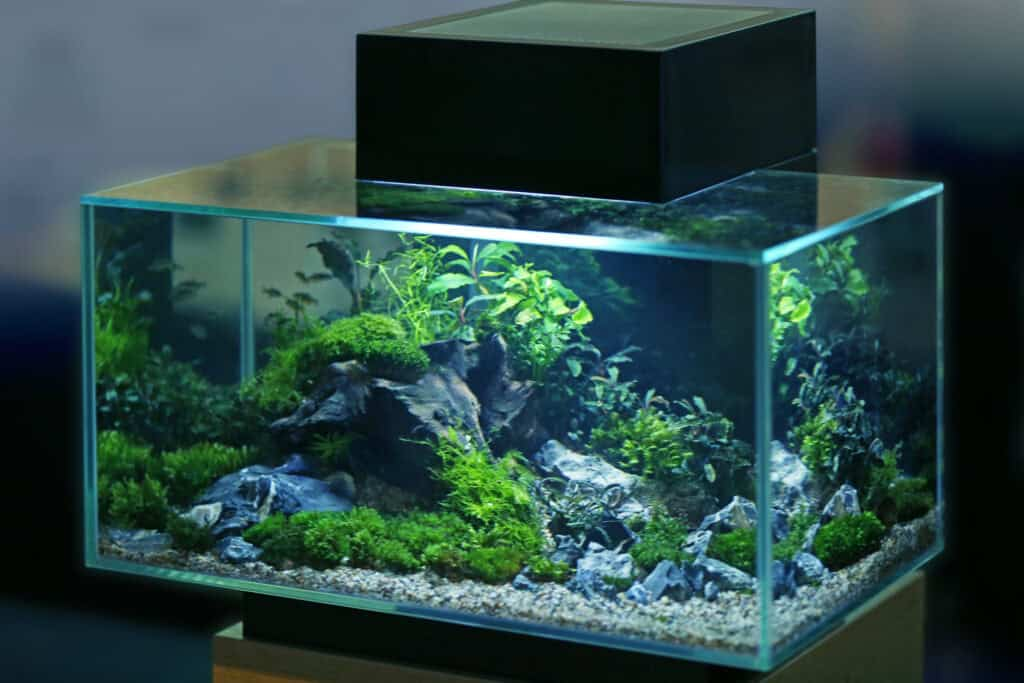
- Tank size: a school needs swimming room more than depth. A tank with a footprint of at least 24 × 12 inches works, and a 20-gallon long, which measures about 30 × 12 inches, is a great starting point for 8–10 fish.
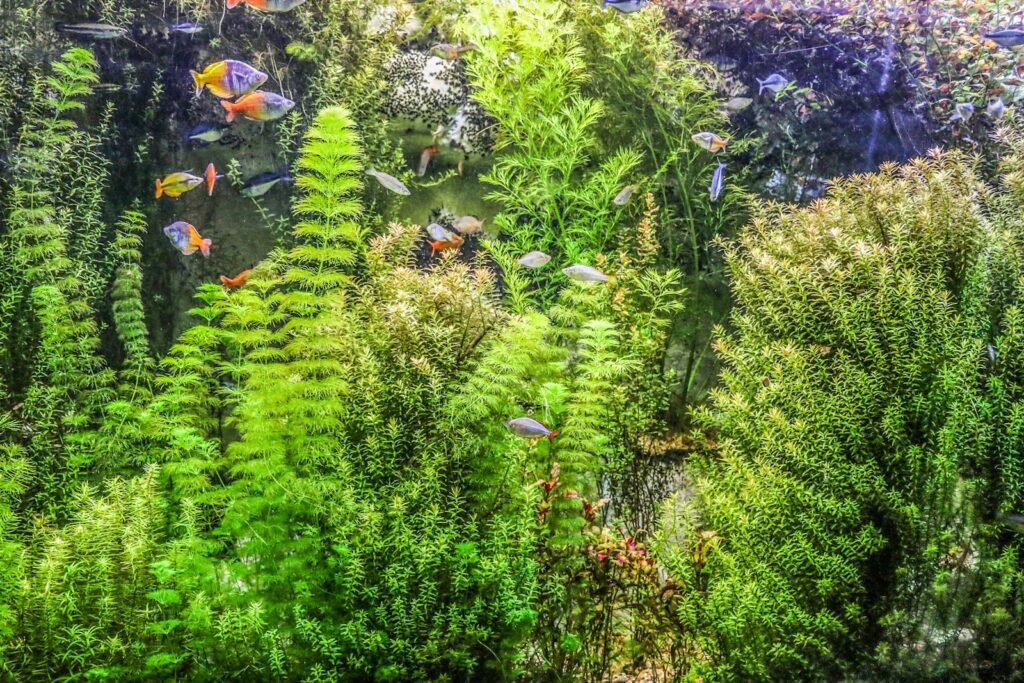
- Plants: plant the back and sides heavily and leave open water in the middle. Broad-leaved plants such as cryptocorynes and anubias suit them well, and floating plants soften the light.
- Gentle flow: a moderate or gentle current is fine. Harlequins come from slow water.
- Dark substrate and background: these make their colors stand out and help them feel secure.
- Lid: like many small schooling fish, they can jump when startled.
- Cycled tank: add them only once ammonia and nitrite read 0 ppm. See our tank cycling guide.
Driftwood and dried leaves are a nice touch. They release tannins that tint the water slightly and mimic the fish’s natural habitat.
How Many Harlequin Rasboras Per Tank?
Keep at least eight, and more if you have the room. In larger groups, harlequins school tightly, show stronger color and act more confident. A small group of two or three tends to hide and stay pale. As a rough guide, a 20-gallon long can hold a group of 8–10 with a few small bottom dwellers.
What to Feed Harlequin Rasboras
Harlequins are omnivores and easy to feed. Offer:
- A good micro pellet or crushed flake as their everyday food
- Frozen or live foods such as baby brine shrimp, daphnia, cyclops and finely chopped bloodworms a few times a week
Feed small amounts once or twice a day, only what they eat in a couple of minutes. A varied diet brings out the copper and orange tones. Our fish food guide covers the main food types.
Best Tank Mates for Harlequin Rasboras
Harlequins get along with most peaceful fish of a similar size. Good companions include:
- Small tetras such as neon tetras and ember tetras
- Corydoras and kuhli loaches
- Otocinclus catfish
- Peaceful gouramis, such as the honey gourami
- Other small rasboras and danios
Avoid big, aggressive or predatory fish that could eat them, such as larger cichlids and angelfish kept with very small harlequins.
Can you keep harlequin rasboras with a betta?
Often, yes. Harlequins are calm, don’t nip fins and stay mostly in the middle of the tank. Use a tank of at least 20 gallons with plenty of plants and open swimming space, and watch for a betta that chases them. Some individual bettas won’t tolerate tankmates at all.
Will harlequin rasboras eat shrimp?
Adult cherry shrimp are usually too big for them, but harlequins will eat baby shrimp. If you want a growing shrimp colony, give the shrimp dense moss for cover, or keep them in a separate tank.
Male vs. Female Harlequin Rasboras
The difference shows in the black triangle and body shape:
- Males are slimmer, with brighter orange color. The lower front corner of the black patch extends forward into a rounded point.
- Females are slightly larger and rounder in the belly. The front edge of their black patch is straighter and more squared off.
The difference is easiest to see when you compare several adult fish side by side.
Similar Species
Two close relatives are often sold alongside harlequins:
- Lambchop rasbora (Trigonostigma espei): smaller and slimmer, with a black marking shaped more like a lamb chop than a triangle.
- Hengel’s rasbora (Trigonostigma hengeli): also smaller, with a thin black wedge and a glowing orange stripe.
Their care is similar, but both stay smaller than the harlequin.
Breeding Harlequin Rasboras
Harlequins are trickier to breed than most small fish. Unlike many egg-scatterers, they lay eggs on the underside of broad leaves. A pair turns upside down beneath a leaf, such as a cryptocoryne, and attaches the eggs there.
For the best chance:
- Set up a separate tank with soft, slightly acidic water at around 79–81°F
- Add broad-leaved plants and very gentle filtration
- Condition the fish with live and frozen foods
- Remove the adults after spawning, since they’ll eat the eggs
The eggs hatch in about a day, and the fry need infusoria or very fine fry food until they can take baby brine shrimp.
Why Is My Harlequin Rasbora Losing Color?
A pale harlequin is usually stressed. Common causes are a school that’s too small, bright lighting with no cover, aggressive tankmates, poor water quality or recent shipping. Check ammonia, nitrite and nitrate, add plants or floating cover, and increase the group size if needed. If color loss comes with clamped fins, white spots or ragged fins, look for disease. Our ich treatment guide covers one of the most common culprits.
Frequently Asked Questions
Are harlequin rasboras hard to keep?
No. They’re among the hardiest small schooling fish and a good choice for beginners with a cycled tank. The main requirements are a large enough group and stable water.
How big do harlequin rasboras get?
Around 1.8–2 inches (4.5–5 cm), with females slightly larger than males.
How long do harlequin rasboras live?
Typically 5–8 years in a well-kept aquarium, which is long for a small fish.
Do harlequin rasboras need a heater?
Yes. They’re tropical fish that do best at 72–81°F, which is warmer than most homes stay year-round.
The Bottom Line
Harlequin rasboras are hardy, peaceful and beautiful in a group. Keep at least eight in a planted tank such as a 20-gallon long, stable tropical temperatures and a varied diet, and choose calm tankmates. For more small schooling fish, browse our list of small freshwater fish.

Dr. Johnson Coleman is a dedicated veterinary expert with over 10 years of hands-on experience in animal health and wellness. His mission is to help pets live longer, happier lives through compassionate care, practical guidance, and a genuine love for animals.
After earning his Doctor of Veterinary Medicine (DVM) degree, Dr. Coleman spent a decade working in both private clinics and community shelters, where he gained deep expertise in preventive medicine, pet nutrition, and behavioral care.
He believes that pet owners deserve reliable, easy-to-understand information about their companions’ health. Through his writing, Dr. Coleman breaks down complex veterinary topics into friendly, actionable advice that helps readers make informed decisions for their pets.
Outside of his professional work, Dr. Coleman volunteers with local animal rescue groups and enjoys spending time outdoors with his two golden retrievers. His lifelong dedication to animal welfare continues to inspire his work and connect with pet lovers around the world.