The betta (Betta splendens), also called the Siamese fighting fish, is one of the most popular pet fish in the US, and one of the most misunderstood. Bettas are often sold in cups and kept in bowls, but they’re tropical fish that do best in a heated, filtered tank of at least 5 gallons. Get the basics right (warm, clean, calm water, a varied meaty diet and no fin-nipping tankmates), and a betta can live 3–5 years or longer while showing real personality.
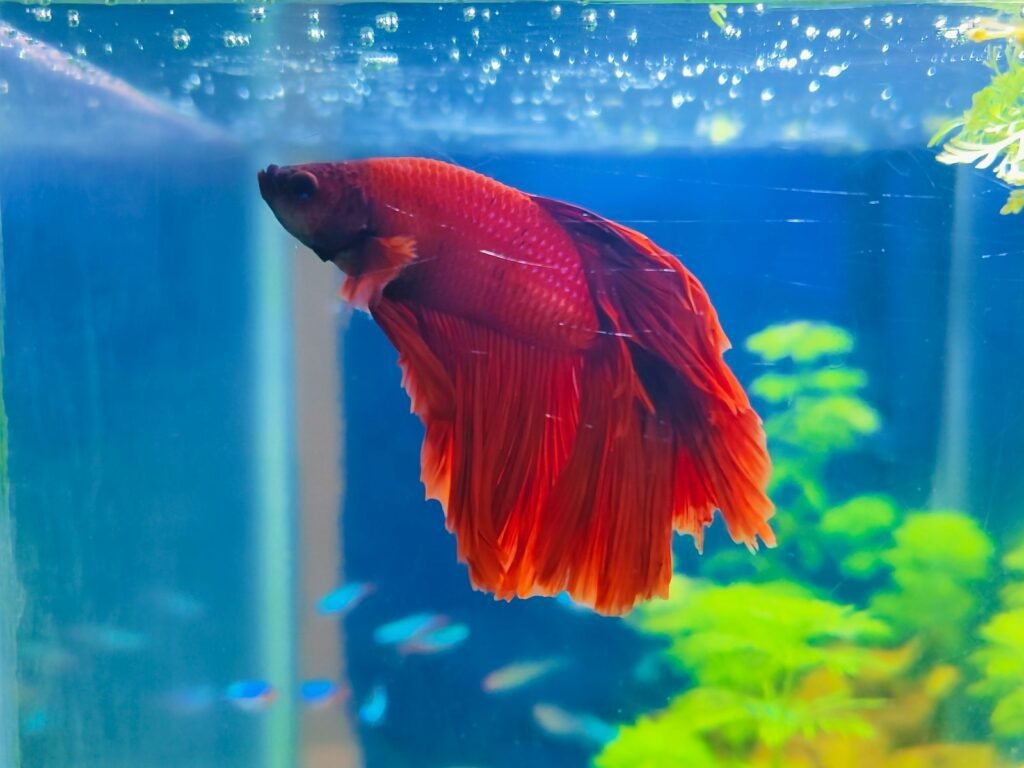
Betta Fish Quick Facts
| Trait | Betta fish |
|---|---|
| Scientific name | Betta splendens |
| Adult size | About 2.5–3 in (6–7.5 cm), not counting long fins |
| Lifespan | 3–5 years with good care; some live longer |
| Temperature | 76–81°F (24–27°C) |
| pH | 6.5–7.5 (stable matters more than exact) |
| Minimum tank | 5 gallons, heated and filtered; 10 gallons is easier to keep stable |
| Diet | Carnivore; high-protein pellets plus frozen or live foods |
| Temperament | Males are territorial with other males; usually calm with the right community |
Why Bettas Need More Than a Bowl
In the wild, bettas live in shallow, warm, slow-moving waters in Southeast Asia: rice paddies, marshes and planted ditches. Those waters can be shallow, but they’re far from small, and the temperature stays warm year-round.
A betta also has a labyrinth organ, which lets it gulp air from the surface. That’s why bettas survive in cups at the store, but surviving isn’t the same as thriving. In a small, unheated bowl, waste builds up fast, the temperature swings with the room, and the fish’s immune system weakens. Most betta health problems, including fin rot, trace back to these conditions.
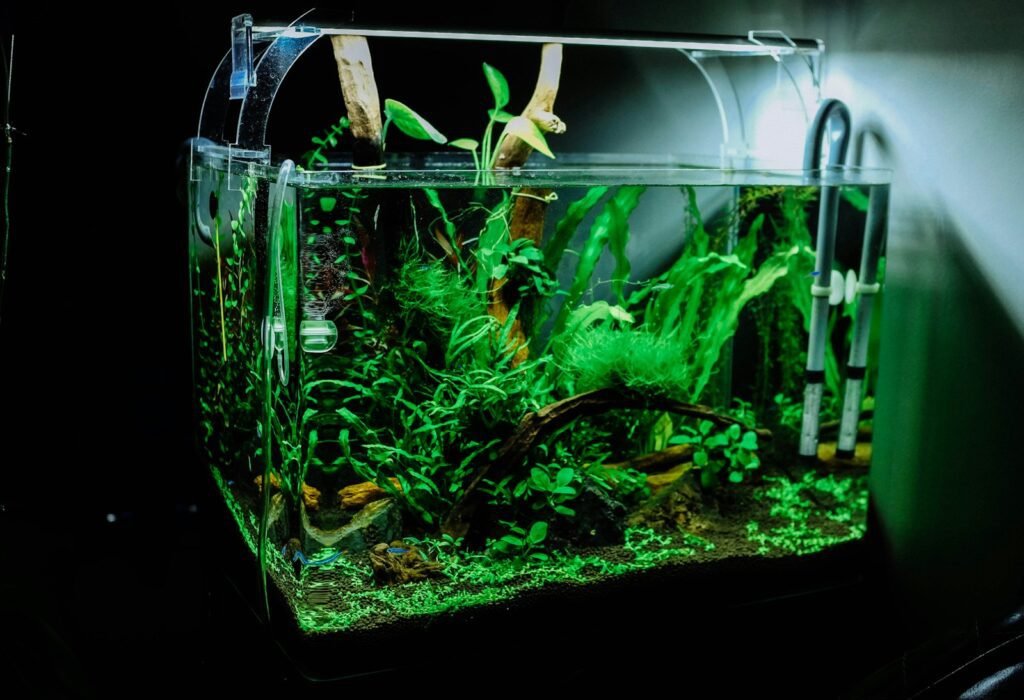
How to Set Up a Betta Tank
Tank size
Five gallons is a sensible minimum for one betta. A 10-gallon tank holds its temperature and water quality even better, which makes your job easier. Choose a tank with a lid, because bettas can jump, and leave a small air gap under the lid so the fish can reach the surface to breathe.
Heater
Bettas need a steady 76–81°F. Most homes are cooler than that, so use an adjustable aquarium heater with a thermostat, and check it with a separate thermometer. Avoid placing the tank near a window, vent or radiator, where the temperature can swing during the day.
Filter
Use a gentle filter. Long-finned bettas struggle in strong current and can get pushed around the tank. A sponge filter is a great choice, or you can baffle a hang-on-back filter’s outflow with a sponge or plants.
Decor and plants
Bettas like to rest near the surface and explore cover. Good additions include:
- Live plants such as anubias, java fern, cryptocorynes and floating plants
- A “betta leaf” hammock or broad leaves near the surface for resting
- Smooth caves or driftwood for hiding
Skip sharp plastic plants and rough decorations, which can tear delicate fins. A simple test: if it snags a pair of nylon tights, it can snag fins too.
Cycle the tank first
Set up the tank, run the filter and complete the nitrogen cycle before adding your betta, so beneficial bacteria are ready to process waste. Our tank cycling guide walks you through it step by step.
What to Feed a Betta Fish
Bettas are carnivores. A good diet includes:
- A quality betta pellet or micro pellet as the staple
- Frozen or live foods a few times a week, such as brine shrimp, daphnia, mysis shrimp and bloodworms
- Freeze-dried foods only occasionally, soaked first so they don’t expand in the stomach
Feed once or twice a day, giving only what your betta eats in a minute or two, which for most adults is two to four pellets per meal. A betta’s stomach is small, and overfeeding leads to bloating, constipation and dirty water. Many keepers skip feeding one day a week. For more on food types, see our guide to fish food.
Weekly Betta Tank Maintenance
Small, regular care keeps the tank stable:
- Weekly: change about 20–30% of the water with dechlorinated water at the same temperature, and vacuum waste from the substrate.
- Weekly: test ammonia, nitrite and nitrate. Ammonia and nitrite should read 0 ppm, and nitrate should stay low, ideally under 20–40 ppm.
- Monthly: rinse the filter sponge in old tank water, never tap water, so you don’t kill the beneficial bacteria.
- Daily: check the temperature and watch your betta during feeding. Changes in appetite or behavior are often the first sign something is off.
Can Betta Fish Live With Other Fish?
Never keep two male bettas together; they’ll fight, often to the death. Females can be kept in groups called sororities, but they’re unpredictable and need a large, heavily planted tank, so they aren’t a good starting point.
Some bettas share a tank peacefully, and some attack anything that moves. If you’d like a community, use a tank of at least 10 gallons, add plenty of plants and choose calm companions that won’t nip fins:
- Pygmy corydoras in a group of at least six, or kuhli loaches in a group of six or more in a larger tank with plenty of hiding spots
- Nerite snails and mystery snails
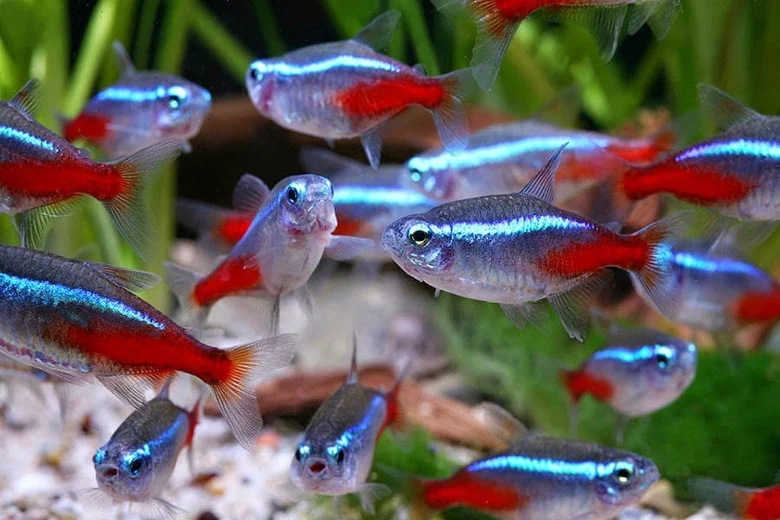
- Small, peaceful schooling fish in larger tanks, such as ember tetras or harlequin rasboras
Avoid fin-nippers such as tiger barbs and some tetras, other labyrinth fish such as gouramis, and brightly colored, long-finned fish like fancy guppies that a betta may mistake for a rival. Have a backup plan, like a spare tank, in case things don’t work out. Shrimp can work, but a betta may eat them.
Signs of a Healthy (and Unhappy) Betta
A healthy betta has bright color, fins held open, a good appetite and curiosity about its surroundings. Many males build bubble nests at the surface. It’s a normal breeding behavior, but a nest on its own doesn’t prove your betta is healthy, and plenty of healthy males never build one.
Watch for these warning signs:
- Clamped fins held close to the body
- Ragged, shrinking or dark-edged fins, which can signal fin rot
- White spots like grains of salt, a sign of ich. Our ich treatment guide covers what to do.
- Lying on the bottom for long periods, gasping at the surface or refusing food
- A swollen belly or raised scales
If you see any of these, test the water first. Poor water quality is behind most betta illnesses, and fixing it is often the first step to recovery.
Frequently Asked Questions
Are betta fish easy to take care of?
They’re beginner-friendly once the tank is set up properly. The hard part is the setup: a heated, filtered, cycled tank. After that, daily feeding and a weekly water change cover most of the work.
What do betta fish like most in their tank?
Warm, calm water, places to rest near the surface, live or silk plants and somewhere to hide. Most bettas also like exploring, so a planted tank with a few caves keeps them active.
What are the do’s and don’ts of betta care?
Do use a heater, a gentle filter, dechlorinated water and a varied diet. Don’t keep a betta in an unheated bowl, overfeed it, house two males together or add fin-nipping fish.
How often should I feed my betta?
Once or twice a day, only as much as it finishes in a minute or two. Skipping one day a week is fine for adults.
Do bettas need a filter?
Yes. A gentle filter keeps the water clean between water changes. Without one, waste builds up quickly in a small tank.
Why is my betta making bubbles?
That’s a bubble nest, which males build as part of their breeding instinct. It’s normal behavior, so you don’t need to do anything about it.
The Bottom Line
Betta fish are easy to love and easier to keep than their reputation suggests, as long as you skip the bowl. Give your betta a heated, filtered tank of at least 5 gallons, a varied meaty diet in small portions and a weekly water change, and choose any tankmates carefully. For more ideas on small fish that pair well with a calm betta tank, see our list of small freshwater fish.

Dr. Johnson Coleman is a dedicated veterinary expert with over 10 years of hands-on experience in animal health and wellness. His mission is to help pets live longer, happier lives through compassionate care, practical guidance, and a genuine love for animals.
After earning his Doctor of Veterinary Medicine (DVM) degree, Dr. Coleman spent a decade working in both private clinics and community shelters, where he gained deep expertise in preventive medicine, pet nutrition, and behavioral care.
He believes that pet owners deserve reliable, easy-to-understand information about their companions’ health. Through his writing, Dr. Coleman breaks down complex veterinary topics into friendly, actionable advice that helps readers make informed decisions for their pets.
Outside of his professional work, Dr. Coleman volunteers with local animal rescue groups and enjoys spending time outdoors with his two golden retrievers. His lifelong dedication to animal welfare continues to inspire his work and connect with pet lovers around the world.