

House fires are frightening for any family, and the worry is even heavier when beloved pets are inside as well. Both smoke and flames can injure pets very quickly, and in many modern homes there may be only about two minutes for everyone to get out safely. American Red Cross
The good news is that thoughtful planning, simple equipment, and a calm step by step approach can dramatically improve your pets chances of surviving a house fire. In this guide you will learn how to build a pet fire evacuation plan, prepare emergency kits for different species, work with firefighters, and reduce the risk that a pet related accident starts a fire in the first place.
Key Takeaways
- Include every pet in a written fire escape plan so your family knows who will grab which animals and where to meet outside.
- Updated collars, tags, and microchipping pets give you a much better chance of being reunited if a pet escapes or is rescued separately. ASPCA
- A well stocked pet emergency kit should cover leashes, carriers, food, medicine, water, and species specific supplies for at least several days. Ready.gov
- Dogs, cats, small mammals, birds, reptiles, and fish all need different evacuation strategies, so plan and practice for your species.
- Fire prevention for pet owners includes supervised candles, protected stove knobs, safe wiring, and regular smoke alarm checks to reduce the chance of a house fire with pets. ASPCA Pet Insurance
What Is a Pet Fire Emergency Plan and Why It Matters
A pet fire emergency plan is a simple written escape plan that treats your animals as full members of the household. It sits alongside your general home fire plan and spells out who does what for each pet when an alarm sounds.
Estimates from fire safety organizations suggest that hundreds of thousands of pets are affected by home fires each year, and tens of thousands may die, often because there was not enough planning or time to reach them. Combined with the fact that people may have as little as two minutes to escape a burning home, planning ahead becomes essential rather than optional. American Red Cross+1
What a pet fire plan includes
A good pet fire evacuation plan usually covers
- A floor plan that marks at least two exits from each main area
- The usual sleeping spots and hiding places for each pet
- Which adult or older child is responsible for each animal
- Where leashes, carriers, and pet emergency kits are stored
- A safe outdoor meeting point where you can count people and animals
- Information for first responders, such as how many pets live in the home
Government preparedness sites such as Ready dot gov strongly encourage families to include animals in evacuation planning and to think through where pets will go if they cannot stay at home. Ready.gov
How pets behave in fires
During a fire, pets often do the opposite of what humans hope. Cats may dash under beds or into closets, dogs may hide behind furniture, and prey species such as rabbits or birds may freeze and become very hard to pick up. Smoke and noise can cause even gentle animals to scratch, bite, or slip out of collars.
Planning with these behaviors in mind helps you choose realistic strategies such as
- Keeping carriers assembled and near exits
- Storing leashes at doors rather than in a distant cupboard
- Knowing your pets favorite hiding places before an emergency
Why last minute decisions are risky
Without a clear pet fire evacuation plan, people are more likely to
- Waste precious seconds searching for equipment
- Forget about a quiet pet in a back room
- Argue over what to do while smoke spreads
Experts in home fire safety repeatedly stress that modern fires can spread fast due to synthetic furnishings and building materials, leaving only a short window for escape. Seattle Children’s When that window is only a few minutes, every indecision matters.
Key Benefits of Planning for Pet Fire Safety
Thoughtful planning for pet fire safety gives your family several concrete advantages.
- Faster and calmer evacuation
When each person knows their role and the route they will use, they move with purpose instead of panic. Practicing your plan with your pets makes the real event less confusing for them as well. - Better protection for hidden or caged pets
Indoor cats, small mammals, and birds are easy to overlook in a rush. Written checklists, window decals that list pets in the home, and consistent sleeping areas help ensure these animals are not forgotten. Total Veterinary Care - Higher chances of reunion after separation
Many veterinarians and animal welfare groups recommend a combination of visible ID tags and permanent microchips with up to date contact details so that pets rescued later can be traced back to you. ASPCA - Lower risk that pets start a fire
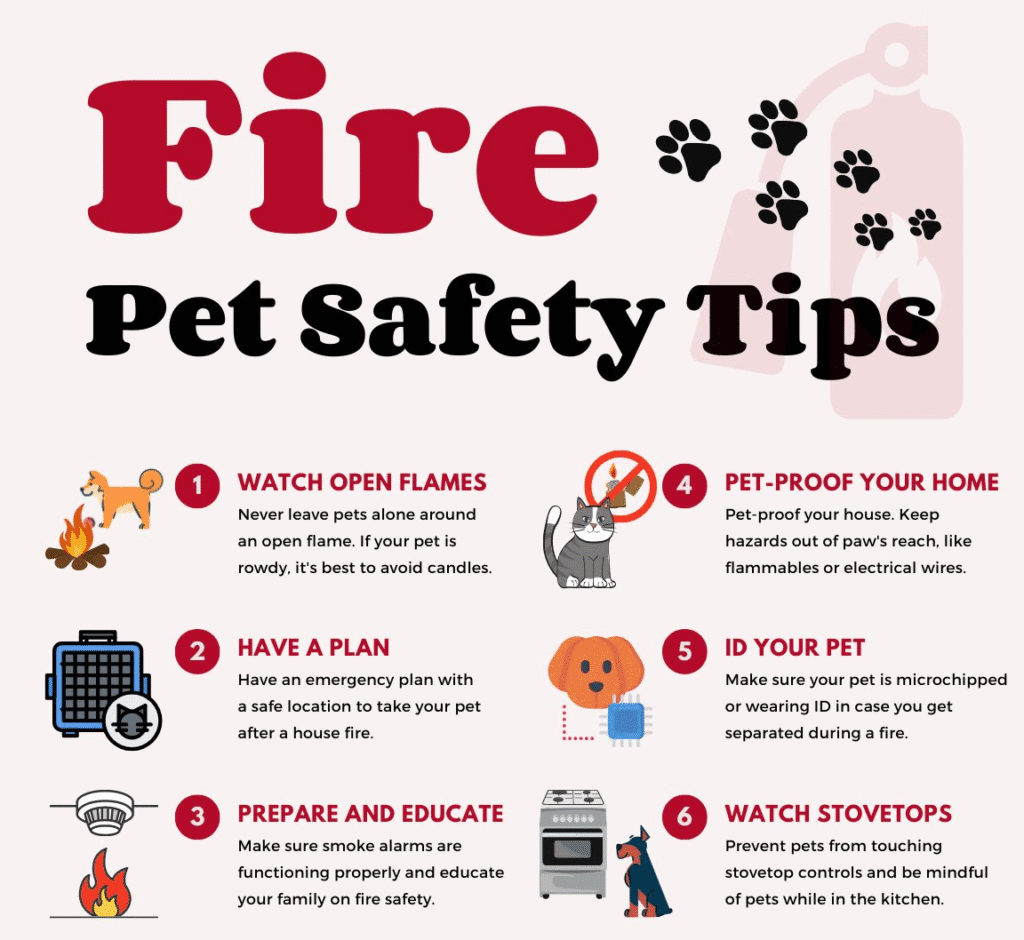
Pet related fires are often linked with bumped stove knobs, knocked candles, or chewed wires. Taking simple steps such as removing knobs or using flameless candles can significantly cut this risk. - Peace of mind from ready to grab supplies
Knowing that you can pick up a carrier and a pet emergency kit on the way out makes it easier to focus on getting to safety instead of scrambling for bowls and food bags in thickening smoke.
Posting a brief version of your pet fire safety plan near an exit or with your emergency kit helps the whole household remember what to do.
Risks, Warnings, and Common Mistakes Pet Owners Should Avoid
Understanding common mistakes can help you avoid them when seconds matter.
Never reenter a burning or smoke filled home
This is one of the hardest truths to accept, but it is vital. Fire departments and animal welfare organizations consistently warn that people should not go back inside a burning building to search for pets. Only trained firefighters with protective gear should enter.
Instead
- Tell firefighters immediately what animals are inside and where they were last seen
- Leave doors or windows open if you can do so safely on your way out
- Call your pets from a safe distance outside to guide them toward exits
Relying on a single leash or hard to reach carrier
If you own multiple pets and have only one leash in a distant closet, you may not be able to control frightened animals outside. Keep extra leashes hung near main exits and carriers assembled, not nested with lids stored separately. Animal Emergency MN
Not updating tags or microchip records
A microchip only works if the registration has your current phone number and address. Pets found after a house fire are sometimes taken to shelters or veterinary clinics. Without accurate contact details, staff may not be able to find you. ASPCA
Leaving pets loose outdoors in smoke and chaos
Once outside, secure dogs on leashes and place cats and small pets in carriers if possible. Anxious animals can bolt through crowds or into traffic, and smoke and sirens can make them run far from home.
Ignoring everyday fire hazards created by pets
Common hazards include
- Candles on low tables where tails or whiskers can brush the flame
- Unprotected stove knobs that curious paws can nudge on
- Electrical cords that look like chew toys to puppies or rabbits
- Space heaters that pets can knock over
Organizations such as the National Fire Protection Association and pet insurers have documented that stoves and candles are leading causes of fires started by pets or involving pets.
Step by Step Guide to Keeping Pets Safe in a Fire Emergency
Step 1: Create a Family Fire Escape Plan That Includes Pets
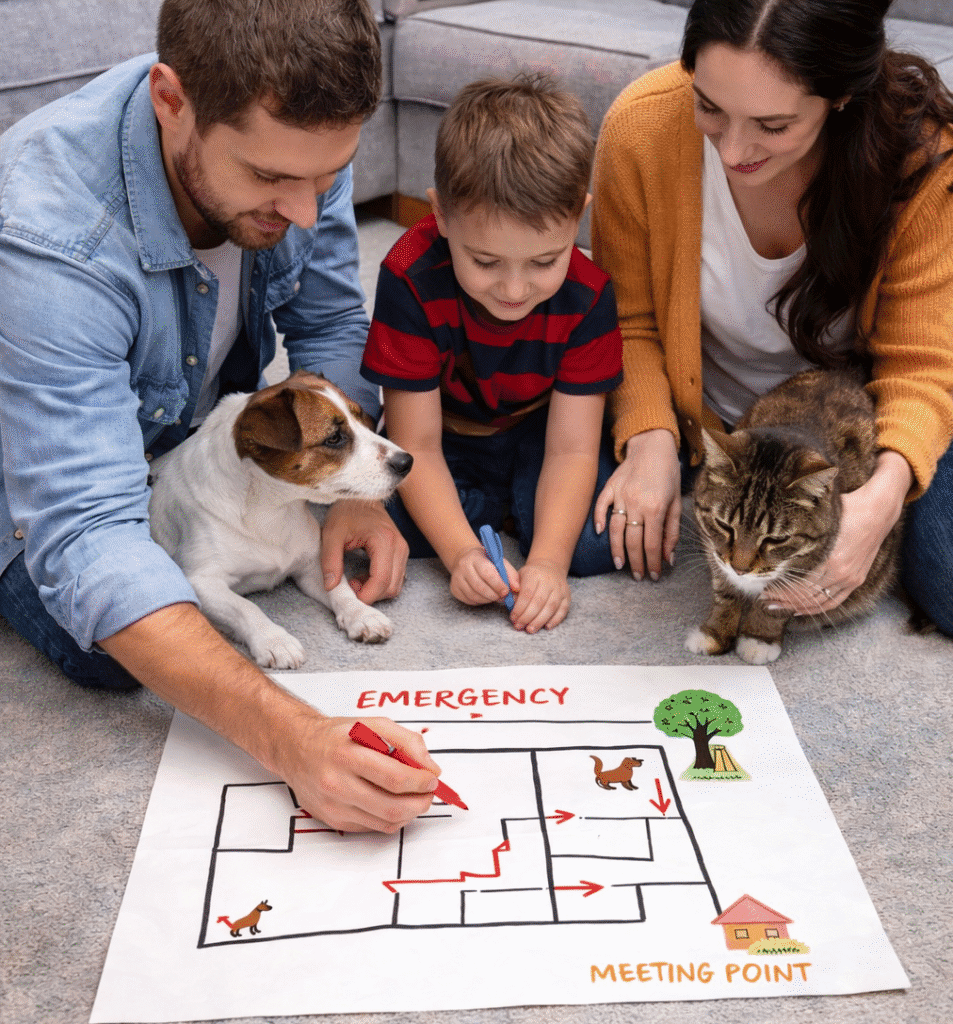
- Draw a simple map of your home and mark at least two exits from bedrooms and main living areas.
- Choose a safe outdoor meeting spot, such as a tree or a mailbox across the street.
- Assign each adult or older child specific responsibilities, such as
- Person one guides younger children out
- Person two gathers the dog and cat
- Person three grabs the pet emergency kit if it is next to the door
- Note where each pet usually sleeps or hides, such as under a particular bed or in a favorite closet.
- Place pet alert decals in windows or on exterior doors to tell firefighters what kind and how many pets are inside. San Antonio
- Practice the plan a few times a year, including calmly putting pets on leashes or into carriers and walking to the meeting spot.
Step 2: Prepare Pet Identification and Microchips
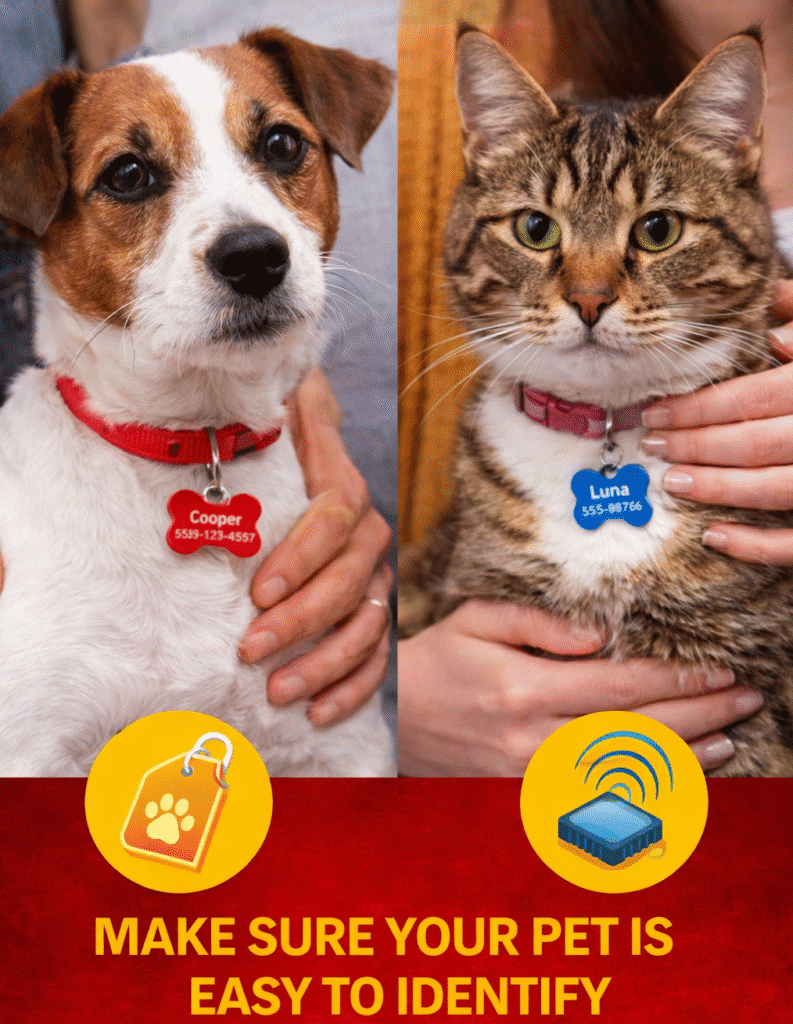
Collars and tags can fall off during an emergency. Because of this, many veterinarians recommend microchipping pets and keeping the registration up to date.
For each pet
- Use a collar with an ID tag that lists the pet name, your phone number, and any urgent medical needs.
- Ensure the microchip is registered with a national database and that your phone number and email are current.
- Keep recent clear photos of each pet on your phone and print copies to store with your pet emergency kit. These help shelters, veterinarians, and volunteers identify your animals after a fire.
Step 3: Build Species Specific Pet Emergency Kits
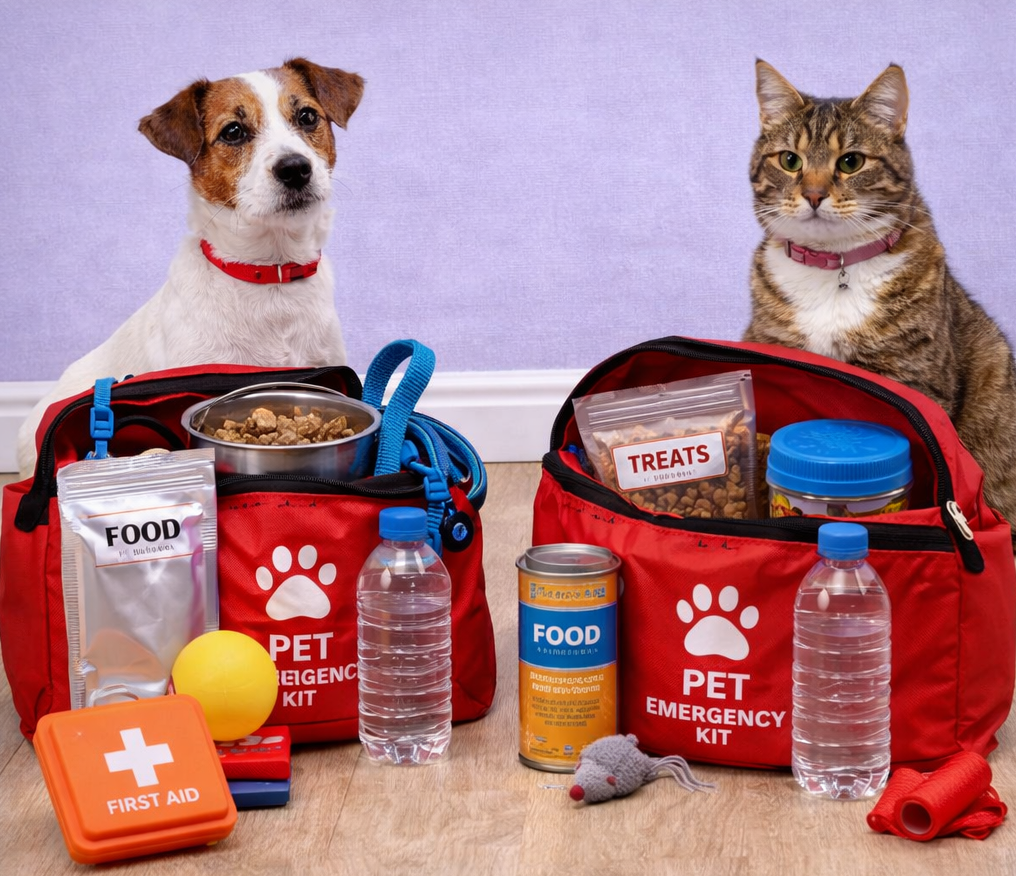
Guides from Ready dot gov and veterinary emergency resources encourage families to keep at least several days of supplies for each pet in a grab and go kit. Ready.gov+2Ready.gov+2 Tailor your pet emergency kit to each species and check expiration dates regularly.
Dogs and cats
Include
- Extra leashes, harnesses, and a soft muzzle if your dog may nip when stressed
- One secure carrier or crate per animal
- A basic first aid kit approved by your veterinarian
- At least one week of your pets usual food in sealed containers
- Bottled water and collapsible bowls
- Any daily medicine, clearly labeled with dosing instructions
- For cats, litter and disposable trays or small boxes
- Copies of vaccination records and microchip numbers in a waterproof pouch
- A familiar blanket or toy to provide comfort
Small mammals and birds
For rabbits, guinea pigs, hamsters, ferrets, and birds consider
- A sturdy travel cage with secure latches
- A pillow case or well taped cardboard box as a last resort carrier if you have no cage nearby
- Species appropriate food and pellets
- A small bag of familiar bedding or nesting material
- Water bottles or bowls that you can attach in the travel cage
- Baby wipes and paper towels for quick clean up
Reptiles
Reptiles often have special temperature needs, so consult a reptile veterinarian when assembling their kit. getready.gov.bs
Useful items include
- A small transport container or ventilated plastic box for each reptile
- A heat source recommended by your vet, such as chemical heat packs wrapped safely, or a travel heat lamp that can plug into a car adapter
- Enough food for several days, such as pellets or dried insects where appropriate
- Clean water in leak resistant bottles
Fish
Evacuating fish is challenging and may not always be possible in a fast moving fire. When there is time and firefighters say it is safe, these steps can help
- Keep at least two nets hanging near the tank and fish safe plastic bags in the same location.
- Pre label bags by size so you can quickly fill them one third with tank water and place one or two fish in each. Ready.gov
- If you have more time, a covered bucket with tank water and a small battery or car powered air pump provides a more stable environment.
Always ask your veterinarian about the safest options for your particular species, especially if they are sensitive or rare.
Step 4: What To Do When the Alarm Sounds
In a real emergency you will not have time to check lists. Practice and simple rules are your best tools.
- Stay as low as possible to avoid smoke and move quickly toward your nearest safe exit. American Red Cross
- If a pet is nearby, clip on a leash or scoop them up into a carrier. For cats or small dogs without a carrier handy, wrap them securely in a towel to limit struggling and smoke inhalation.
- Do not waste time searching through the entire house if smoke is already heavy or flames are visible between you and a pet. Your priority is to get human family members out and to tell firefighters where animals are located.
- Close doors behind you if you can do so safely to slow fire spread on the way out.
- Go straight to your outdoor meeting point and do a quick head count of people and animals.
If an animal has not made it out, give firefighters the clearest possible information and continue to call your pets name from outside.
Step 5: Working With Firefighters During and After a Fire
Firefighters are trained to locate and remove people and animals from dangerous buildings. You can help them help your pets by
- Calmly stating how many animals are inside, their species, and where they were last seen
- Mentioning any mobility issues or special needs, such as a large dog that cannot walk well or a cat that hides in high cabinets
- Pointing out pet alert decals and cage locations if this is safe to do from outside
After the fire is controlled
- Follow instructions about when it is safe to approach the building or search the surrounding area.
- Contact local shelters, animal control, and nearby veterinary clinics to report any missing pets. Many emergency pet safety campaigns stress that ID tags and microchips are vital at this stage.
Step 6: After the Fire
Even if your pet looks normal, smoke inhalation and stress can cause hidden problems.
- Have every pet examined by a veterinarian as soon as possible. Smoke can irritate lungs and eyes, and burns may not be obvious under fur or feathers. ASPCA Pet Insurance
- Watch for behavior changes such as clinginess, house soiling, loss of appetite, or sudden aggression. These may improve as your pet feels safe again but can also signal pain or anxiety that deserves professional attention.
- Review how your plan worked. Did leashes, carriers, and kits stay accessible Did anyone forget a step Update your plan and equipment based on what you learned.
At Home Fire Prevention Tips for Pet Owners

Prevention is the quiet half of pet fire safety, but it can save more lives than any rescue effort.
Control open flames
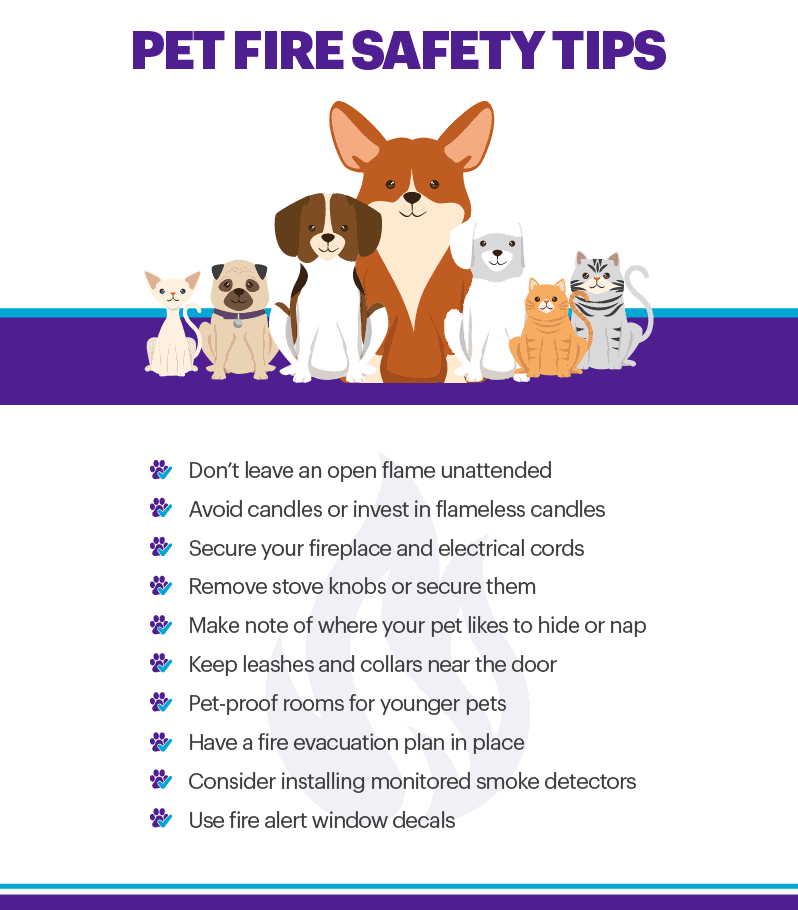
- Keep candles, incense, and wax warmers on high, stable surfaces where tails and whiskers cannot reach them.
- Never leave open flames unattended when pets are in the room.
- Consider flameless candles and electric wax warmers as safer alternatives. Fire safety data show that candles are involved in a noticeable share of home fires and related injuries. NFPA
Protect cooking areas
- Remove or cover stove knobs if pets can reach them. NFPA related guidance notes that stoves are a leading source of pet started fires.
- Keep pets three feet or more from stoves, ovens, fireplaces, and outdoor fire pits whenever possible.
Tidy cords and heaters
- Secure lamp cords, phone chargers, and extension cords where curious mouths cannot chew them.
- Place space heaters on solid surfaces and use models with automatic shutoff if they are tipped. Do not allow pets to sleep directly against them. Pleasant Hill Animal Hospital
Check alarms and equipment
- Test smoke alarms monthly and replace batteries as recommended. Working alarms can cut the risk of dying in a home fire by about half.
- Consider monitored alarm systems if available in your area, since they can summon help even when you are not home.
Walk through your home at pet eye level and look for dangling cords, unstable candles, or heaters placed where a playful tail might knock them over. Small adjustments can remove big hazards.
Expert Tips and Real Life Style Examples
To deepen the practical side of pet fire safety, consider a few realistic examples drawn from common advice by veterinarians and fire educators.
Practicing with a nervous indoor cat
An indoor cat that hates the carrier is very likely to vanish under a bed when the alarm sounds. To prepare, one family left the carrier out all the time with soft bedding and occasional treats inside. A few evenings each week they gently guided the cat into the carrier, closed the door for a short period, and then let her out with praise and a treat. When they later practiced their fire drill, the cat was less fearful of being crated and the parents could move her to safety faster.
Using window decals and a shared kit for multiple species
Another household kept two dogs and a rabbit. They placed a pet alert decal on the front window listing two dogs and one rabbit and hung an emergency leash rack by the main door. A plastic storage box under the rack held a small bag of dog food, a rabbit pellet container, a water bottle, and printed vaccination records. When they practiced, one adult clipped the leashes and guided the dogs out while the other grabbed the rabbit carrier and the kit in a single motion. That repetition meant they could evacuate more calmly when a real kitchen fire filled the house with smoke from burnt food.
Microchips helping reunite a lost cat
After a minor apartment fire, a cat escaped through an open door while firefighters worked. The family searched for days and alerted local shelters. The cat was finally trapped by animal control several streets away. Because he was microchipped and the registration was current, staff called the owners quickly and the cat went home the same day. Stories like this are exactly why veterinary and emergency groups emphasize microchipping pets as part of a pet fire evacuation plan. ASPCA
Small habits such as keeping carriers built and near exits, hanging leashes by doors, and rehearsing calm loading into carriers during quiet evenings can make a real difference in an emergency.
Frequently Asked Questions
Q1: What is the safest way to evacuate a scared indoor cat during a fire
The safest method is to use a secure carrier that is already familiar to your cat. Keep the carrier assembled and near an exit. During your regular fire drills, practice gently placing your cat inside with a towel or blanket and closing the door. In a real fire, approach the cat calmly, wrap them in a towel if they resist, and place them into the carrier while speaking softly. If smoke is heavy or flames block the route, do not stay inside. Exit immediately and tell firefighters where the cat was last seen.
Q2: How do I prepare an emergency kit for my dog or cat in case of a house fire
At minimum, include extra leashes, a harness, a secure carrier, several days of your pets usual food, bottled water, collapsible bowls, any regular medicine, copies of medical records, and a familiar blanket or toy. For cats, add litter and disposable trays. Store the kit near a main exit so it can be grabbed on the way out. Check food and medicine dates every few months and rotate supplies as needed. Preparedness agencies and veterinary groups consistently encourage pet emergency kits as part of disaster and fire readiness. Ready.gov
Q3: What should I do if my pet is still inside when firefighters arrive
Tell firefighters right away how many animals are inside, their species, and their usual locations. For example, you might say, “One indoor cat usually hides under the bed in the back left bedroom, and a dog crate is in the kitchen.” Share any health or mobility issues. Do not reenter the building yourself. Stay at the designated meeting point, continue to call your pets name if advised it is safe, and contact shelters and animal control afterward in case your pet escapes and is found later.
Q4: Can I safely evacuate fish and reptiles during a fire, and how
It depends on how fast the fire is spreading and whether firefighters say it is safe to attempt. If there is very little time, focus on getting people and mobile pets out first. If you have more time and the exit route is safe, you can quickly move fish into pre prepared bags or a covered bucket with tank water and a portable air source, and place reptiles into secure travel containers with a safe heat option. Because these species have special needs, ask your veterinarian in advance for personalized advice and build their recommended equipment into your pet emergency kit.
Q5: How can I lower the risk of my pet starting a house fire
Keep pets away from stoves, space heaters, and open flames. Remove or cover stove knobs if pets can reach them, use flameless candles, and secure cords where they cannot be chewed or pulled. Practice good general fire safety such as regular smoke alarm testing and keeping clutter away from heaters. Fire safety organizations report that stoves and candles are frequent sources of fires involving pets, so these simple steps can significantly reduce risk.
Conclusion
Planning ahead for pet fire safety is an act of love as much as a safety task. When you include pets in your written fire escape plan, keep ID and microchips current, and build a simple pet emergency kit, you give your animals a much better chance of surviving a house fire and being reunited with you afterward. Daily choices such as using flameless candles, protecting stove knobs, and checking smoke alarms quietly lower the likelihood of a dangerous event in the first place.
You do not need to do everything at once. Today you might choose one or two steps, such as drafting a basic pet fire evacuation plan, checking your pets microchip details, or hanging leashes by your main exit. Over time, these small actions build strong protection for every animal in your care.
Always consult your veterinarian, local fire department, or other qualified professionals for advice tailored to your home, your pets, and the specific risks in your area.

Dr. Johnson Coleman is a dedicated veterinary expert with over 10 years of hands-on experience in animal health and wellness. His mission is to help pets live longer, happier lives through compassionate care, practical guidance, and a genuine love for animals.
After earning his Doctor of Veterinary Medicine (DVM) degree, Dr. Coleman spent a decade working in both private clinics and community shelters, where he gained deep expertise in preventive medicine, pet nutrition, and behavioral care.
He believes that pet owners deserve reliable, easy-to-understand information about their companions’ health. Through his writing, Dr. Coleman breaks down complex veterinary topics into friendly, actionable advice that helps readers make informed decisions for their pets.
Outside of his professional work, Dr. Coleman volunteers with local animal rescue groups and enjoys spending time outdoors with his two golden retrievers. His lifelong dedication to animal welfare continues to inspire his work and connect with pet lovers around the world.