The celestial pearl danio (Danio margaritatus), also sold as the galaxy rasbora, is a tiny fish with a dark blue body covered in pearly spots and red-and-black striped fins. It was only discovered in 2006 and quickly became a favorite for planted nano tanks. It’s hardy and peaceful toward other fish, but it can be shy and needs a proper group. This guide is part of our list of 25 small fish for freshwater aquariums.
Celestial Pearl Danio Quick Facts
| Trait | Celestial pearl danio |
|---|---|
| Scientific name | Danio margaritatus (also called galaxy rasbora or CPD) |
| Adult size | About 0.8 in (21 mm) standard length |
| Temperature | 68–79°F (20–26°C) |
| pH | 6.5–7.5 |
| Hardness | 5–15 dGH |
| Minimum tank footprint | 18 × 12 in (45 × 30 cm), about 41 liters (11 gallons) |
| Group size | Ideally 20 or more |
| Temperament | Peaceful with other fish; males spar |
Where Celestial Pearl Danios Come From
CPDs come from Shan State in eastern Myanmar, in the Salween River drainage. They were only discovered in 2006 and were first sold as the “galaxy rasbora.” Myanmar banned exports in 2007 over concerns about overcollection, but later that year surveys found five more wild populations, and the species doesn’t appear to be under immediate threat from collection. Commercial breeding is now widespread.
Unlike many nano fish, CPDs don’t need very soft, acidic water. They do well in neutral, moderately hard water and slightly cooler temperatures than many tropical fish.
Tank Setup
- Tank size: aim for a footprint of at least 18 × 12 inches. A bigger tank lets you keep the larger group they prefer.
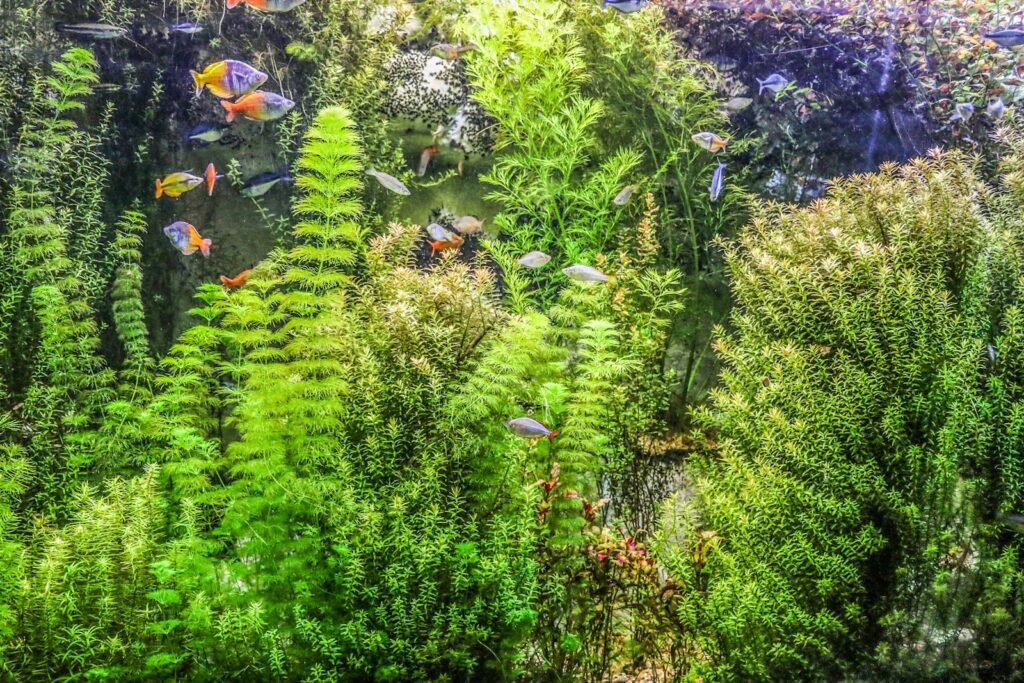
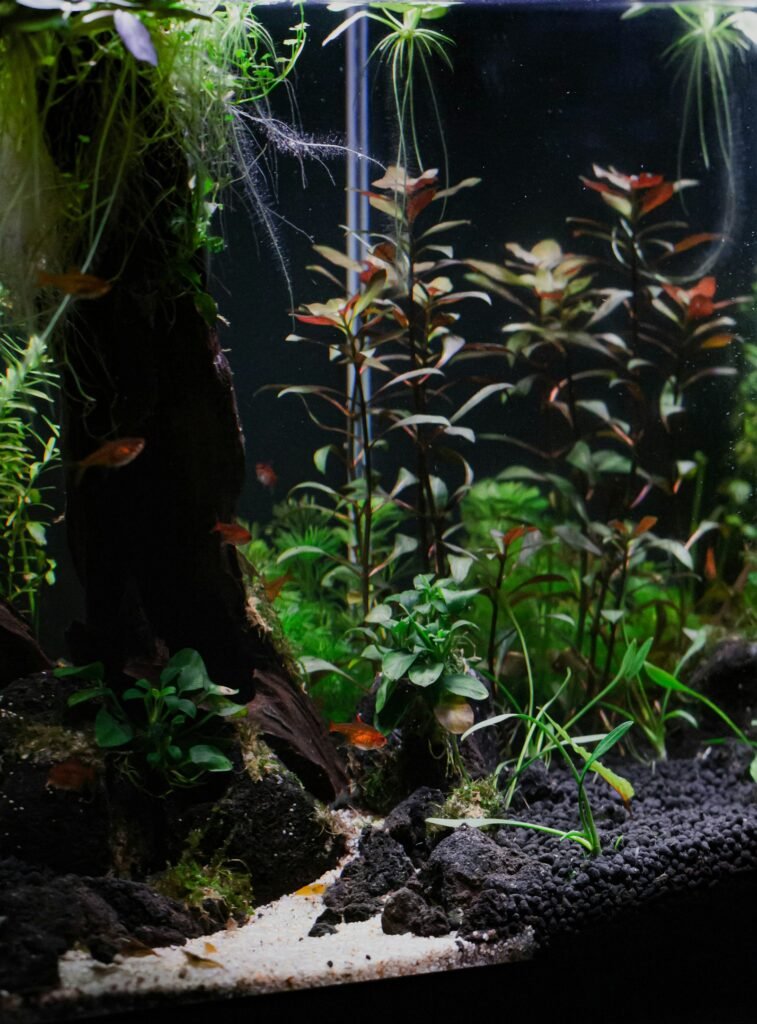
- Dense planting: CPDs are shy at first. Thick plants, moss and some floating cover help them settle and come out.
- Gentle flow and stable water: keep ammonia and nitrite at 0 ppm, keep nitrate low with routine water changes, and avoid sudden temperature or pH swings. Add them only to a fully cycled tank. See our cycling guide.
- Substrate: a dark substrate shows off their spots. Our planted tank substrate guide compares options.
Feeding Celestial Pearl Danios
CPDs mainly eat small live foods in the aquarium, such as daphnia and baby brine shrimp, which help their color and condition. They accept dried foods, but those shouldn’t be the only food. Offer:
- Small or crushed flakes and micro pellets
- Live or frozen daphnia and baby brine shrimp
- Crumbled algae wafers for some plant matter
Feed small amounts once or twice a day. Shy fish may wait until food sinks, so make sure some reaches the lower levels.
How Many Celestial Pearl Danios Should Be Kept Together?
Celestial pearl danios are social fish, and a group of 20 or more is ideal, although smaller groups are commonly kept when there’s enough space and cover. Males spar with each other during the day, and a large group spreads that sparring out so no single fish gets bullied. It also brings out better color. If your tank can’t hold that many, keep the largest group the tank allows with more females than males.
Tank Mates
CPDs are peaceful toward other fish. Nipped fins are common within a group from male sparring, but it usually doesn’t extend to tankmates. Possible companions include the following, as long as their temperature, water chemistry, space and feeding needs overlap:
- Other small, calm fish that like similar water, such as chili rasboras and ember tetras where parameters overlap
- Pygmy corydoras and otocinclus, provided their care needs overlap. Otocinclus need a mature tank with enough natural grazing.
- Dwarf shrimp such as cherry shrimp. Adults usually coexist, but tiny shrimplets can be eaten.
Don’t keep them with the closely related Danio erythromicron, as the two may hybridize. Avoid large, fast or boisterous fish that would outcompete them.
Males vs. Females
Males have steel-blue to deep blue bodies and bold red and black stripes on their fins. Females are more blue-green with weaker fin color, and they look rounder when full of eggs.
Breeding Celestial Pearl Danios
CPDs scatter their eggs among plants or moss and give no parental care. A typical spawn is about 30 eggs. Adults eat the eggs, so breeders move the eggs or adults into separate containers. Eggs usually hatch after about 72 hours, depending on temperature, and the fry become free-swimming 3–4 days later. They first need microscopic foods such as paramecium or a very fine fry food before moving on to baby brine shrimp.
Frequently Asked Questions
How many pearl danios should be kept together?
Ideally 20 or more. Larger groups reduce male sparring damage and show better color.
How big do celestial pearl danios get?
About 0.8 inches (21 mm) standard length.
How many celestial pearl danios can I keep in a 5-gallon tank?
A 5-gallon tank is smaller than the 18 × 12 inch footprint they need, so it isn’t ideal for a group. Choose a tank with at least an 18 × 12 inch footprint instead.
How many celestial pearl danios can I keep in a 10-gallon tank?
Check the tank’s dimensions, not just the gallons. A standard 10-gallon tank is usually about 20 × 10 inches, which is narrower than the 18 × 12 inch footprint they need. A larger, heavily planted tank is a better choice for a real group, and you won’t reach the ideal 20-plus group in a small tank.
Are celestial pearl danios hard to keep?
Not particularly. They’re hardy in stable water. The common problems are shyness in bare tanks, too-small groups and food that never reaches them.
The Bottom Line
Celestial pearl danios reward a well-planted, stable tank with stunning color. Keep the largest group your tank allows, with more females than males, feed small live or frozen foods alongside dry food, and give them plenty of cover. For more small species, see our full list of small freshwater fish.

Dr. Johnson Coleman is a dedicated veterinary expert with over 10 years of hands-on experience in animal health and wellness. His mission is to help pets live longer, happier lives through compassionate care, practical guidance, and a genuine love for animals.
After earning his Doctor of Veterinary Medicine (DVM) degree, Dr. Coleman spent a decade working in both private clinics and community shelters, where he gained deep expertise in preventive medicine, pet nutrition, and behavioral care.
He believes that pet owners deserve reliable, easy-to-understand information about their companions’ health. Through his writing, Dr. Coleman breaks down complex veterinary topics into friendly, actionable advice that helps readers make informed decisions for their pets.
Outside of his professional work, Dr. Coleman volunteers with local animal rescue groups and enjoys spending time outdoors with his two golden retrievers. His lifelong dedication to animal welfare continues to inspire his work and connect with pet lovers around the world.