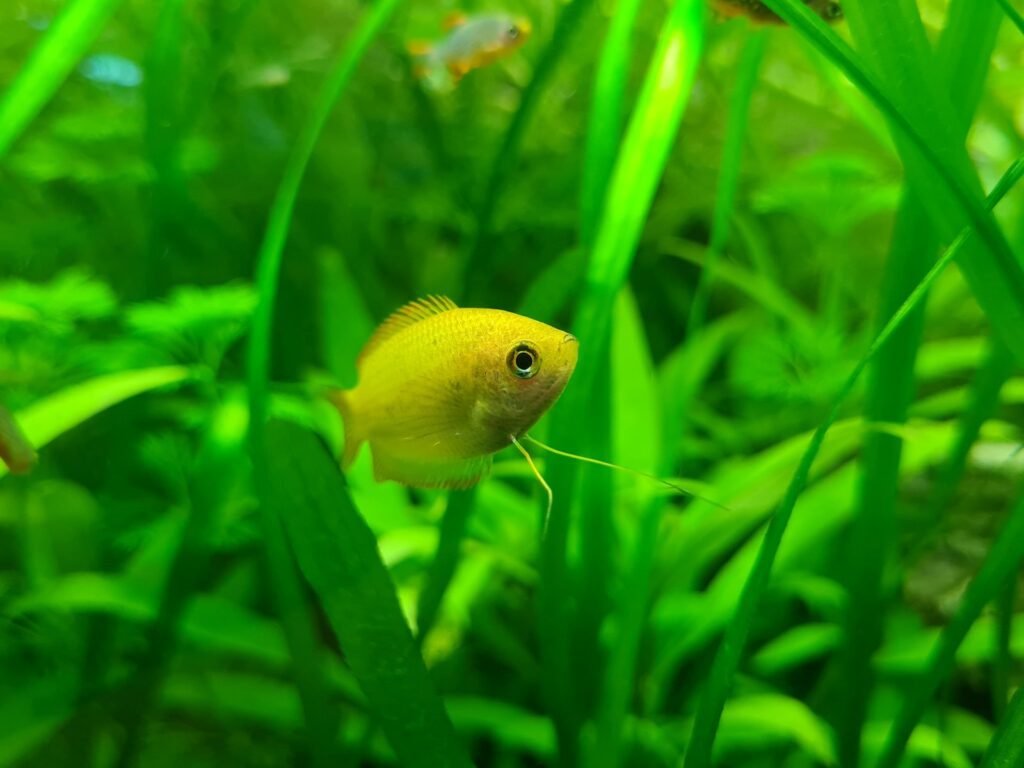
The chili rasbora (Boraras brigittae) is one of the smallest fish in the hobby. At under an inch long, it brings a bright red glow to a planted nano tank. It’s peaceful and generally fine with adult dwarf shrimp, and it does best with consistent care and the conditions its tiny size and wild habitat call for: a mature tank, soft water, a proper group and food small enough to eat. This guide covers each of those. It’s part of our list of 25 small fish for freshwater aquariums.
Chili Rasbora Quick Facts
| Trait | Chili rasbora |
|---|---|
| Scientific name | Boraras brigittae (also called mosquito rasbora) |
| Adult size | About 0.8 in (20 mm) standard length |
| Temperature | 68–82°F (20–28°C) |
| pH | 4.0–7.0 |
| Hardness | 1–10 dGH (soft) |
| Minimum tank footprint | 18 × 12 in (45 × 30 cm), roughly 11 gallons |
| Group size | At least 8–10 |
| Temperament | Very peaceful, timid |
Where Chili Rasboras Come From
In the wild, chili rasboras live in blackwater streams and pools in the peat swamp forests of southwestern Borneo. The water there is very soft, acidic, stained brown with tannins, and dimly lit. Copying those conditions is the simplest way to keep them healthy and colorful.
Tank Setup
- Tank size: aim for a footprint of at least 18 × 12 inches. Small as they are, a slightly larger tank holds steadier water.
- Mature tank only: don’t add chili rasboras to a newly set-up aquarium. They’re sensitive to swings in water chemistry, so the tank should be fully cycled and stable first. Our tank cycling guide explains how.
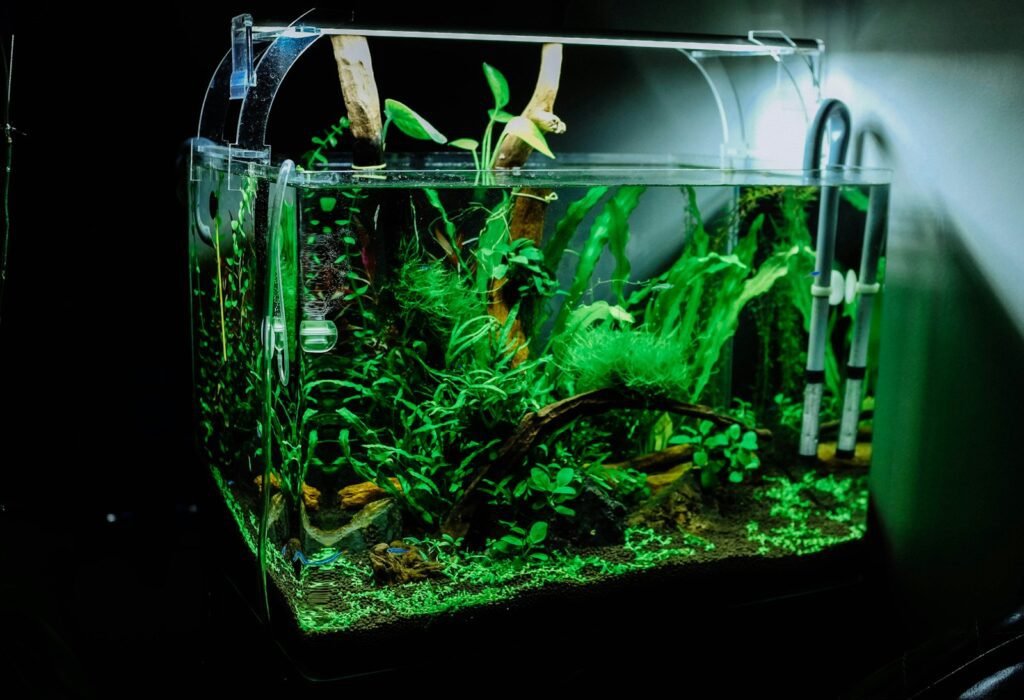
- Plants and cover: dense planting, floating plants and moss help them feel secure. Dried leaves such as catappa can tint the water like their native habitat.
- Gentle flow and a covered intake: a sponge filter or a baffled outflow suits them better than strong current. If your filter has an exposed intake, fit a fine sponge prefilter so these tiny fish can’t be pulled in.
- Dim lighting: softer light, or floating plants to shade the tank, usually brings out more color.
- Substrate: any fine, dark substrate works. If you plan a planted nano, see our guide to the best planted tank substrate.
Water Parameters
Aim for soft, slightly acidic water within the ranges in the table above. Stability matters more than hitting an exact number, so avoid big swings during water changes and match the temperature of new water. Test ammonia and nitrite regularly, especially after adding fish; both should stay at zero. Keep nitrate low with regular partial water changes.
Feeding Chili Rasboras
Chili rasboras are micropredators that eat tiny invertebrates. They’ll accept dried food, but they shouldn’t live on it alone. Offer:
- Crushed flakes or micro pellets small enough for their mouths
- Live or frozen baby brine shrimp (Artemia) and daphnia
- Other tiny live foods such as microworms
Feed small amounts once or twice a day. A varied diet with live or frozen foods gives the best color.
How Many Chili Rasboras Should Be Kept Together?
Keep at least 8–10. In a group they feel safer, spend more time in the open and show better color. A larger group is even better if your tank has room.
Tank Mates
Chili rasboras are very peaceful but timid, so they’re not ideal for a busy community tank. They do best on their own or with other tiny, calm species, such as:
- Pygmy corydoras and other small corydoras (see our corydoras guide)
- Otocinclus
- Other micro fish like ember tetras in soft-water setups
- Cherry shrimp and other dwarf shrimp
Only pair species whose temperature, pH and hardness needs overlap with theirs, and add otocinclus only to an established tank with enough natural grazing. Avoid anything large or boisterous enough to outcompete them for food or swallow them.
Males vs. Females
Males are usually redder and more intensely colored, and dominant males show the strongest color. Females are rounder-bellied and often slightly larger.
Breeding Chili Rasboras
They’re egg-scatterers that spawn continuously and give no parental care. In a mature, planted tank with moss, a few fry may survive on their own. For more fry, breeders use a small, dimly lit tank with fine-leaved plants or moss, add a couple of conditioned pairs, then remove the adults after a couple of days to reduce egg predation. The tiny fry need infusoria-sized foods first.
Buying Chili Rasboras
Other tiny Boraras species are sometimes sold under similar names. Check the scientific name, Boraras brigittae, and ask the store where the fish came from. Choose alert fish that swim normally and show no visible signs of illness. Newly shipped fish are often pale from stress, so color alone isn’t a reliable health check.
Frequently Asked Questions
Is the chili rasbora hard to keep?
Not if you set up for it. The main risks are adding them to a new tank, keeping too few, and feeding food that’s too big. In a mature, planted tank with soft water and tiny foods, they can thrive as long as conditions stay stable.
How many chili rasboras should be together?
At least 8–10. Larger groups behave more naturally and color up better.
How long does it take for chili rasboras to color up?
New fish are often pale from stress and shipping. They usually color up as they settle into a stable, planted tank with good food. The timing varies, so give them time and keep conditions steady.
Why are chili rasboras often out of stock?
Supply varies by season and supplier, and they’re a popular nano fish, so stores can sell out. If yours is out, ask when the next shipment is due rather than buying a different “micro rasbora” without checking its needs.
Can chili rasboras live with shrimp?
Generally, yes. Chili rasboras usually live peacefully with adult cherry shrimp and other dwarf shrimp, but they may eat newly hatched shrimplets. Dense moss gives baby shrimp cover; a shrimp-only tank is safer if you want to maximize shrimp breeding.
The Bottom Line
Chili rasboras are a great choice for a planted nano tank if you add them to a mature tank, keep a group of 8–10 or more, and feed small live or frozen foods alongside a fine dry food. For more tiny fish that suit similar tanks, see our full list of small freshwater fish species.

Dr. Johnson Coleman is a dedicated veterinary expert with over 10 years of hands-on experience in animal health and wellness. His mission is to help pets live longer, happier lives through compassionate care, practical guidance, and a genuine love for animals.
After earning his Doctor of Veterinary Medicine (DVM) degree, Dr. Coleman spent a decade working in both private clinics and community shelters, where he gained deep expertise in preventive medicine, pet nutrition, and behavioral care.
He believes that pet owners deserve reliable, easy-to-understand information about their companions’ health. Through his writing, Dr. Coleman breaks down complex veterinary topics into friendly, actionable advice that helps readers make informed decisions for their pets.
Outside of his professional work, Dr. Coleman volunteers with local animal rescue groups and enjoys spending time outdoors with his two golden retrievers. His lifelong dedication to animal welfare continues to inspire his work and connect with pet lovers around the world.