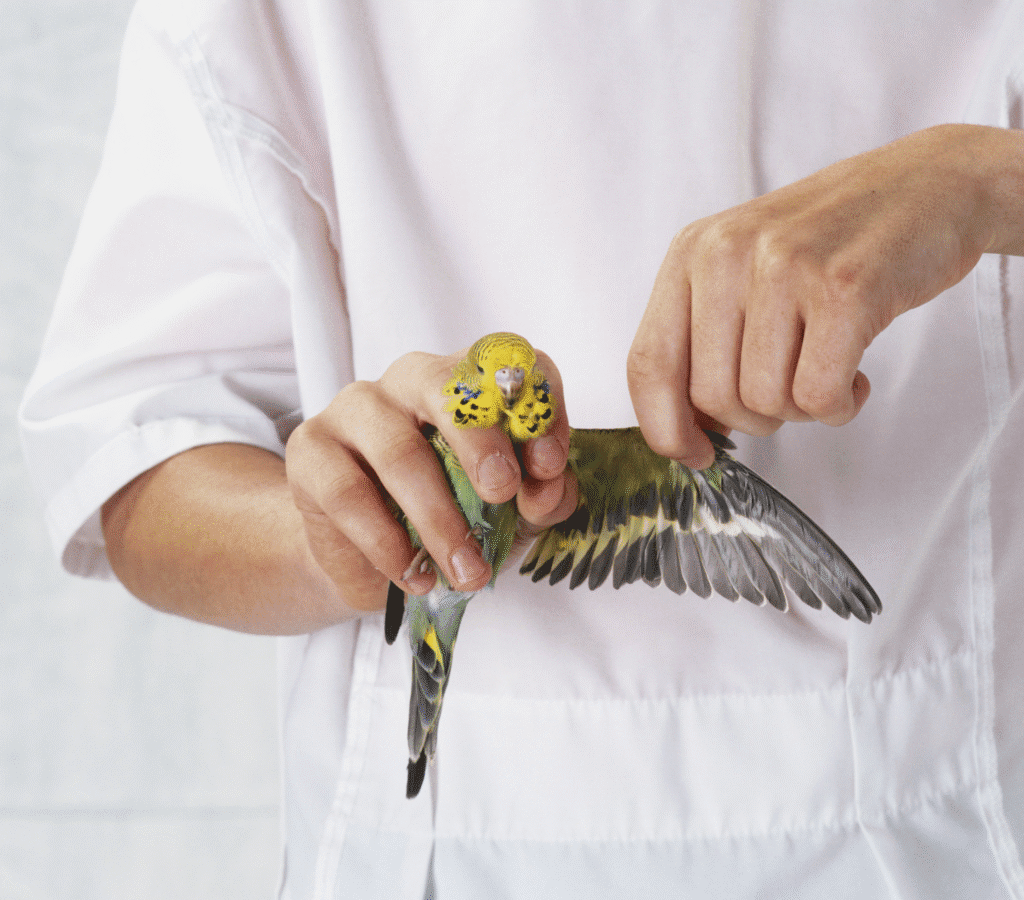

Essential oils are almost everywhere now in diffusers, cleaners, skin care, and even social media wellness trends. For people they can feel calming or refreshing. For pet birds, the picture is far more complicated and often risky.
Birds have very sensitive respiratory systems and very small bodies, so even tiny amounts of airborne chemicals can affect them much more quickly than humans. Based on current veterinary toxicology information, many essential oils and many ways of using them are not considered safe for birds. ASPCA
This guide explains what is known, what is not known, and how to keep your bird safer if essential oils are used anywhere in your home. It is written to help you make calm, informed decisions about essential oils and birds, not to scare you.
Important: This article is for general information only and does not replace professional veterinary advice. Always speak with an avian veterinarian about questions specific to your bird.
Key Takeaways for Bird Owners
- Many essential oils and birds are a risky combination, especially when the oils are concentrated, heated, or turned into fine mist. Pet Poison Helpline
- Birds have an extremely efficient respiratory system, which makes them more sensitive to fumes and aerosols than dogs and cats. Ask A Vet
- Diffusers, warmers, scented cleaning sprays, and poorly diluted essential oils for bird cages can all increase the risk of toxicity.
- Some oils such as tea tree, eucalyptus, certain citrus oils, and others are linked with serious poisoning in pets and should be considered especially unsafe around birds. ResearchGate
- The safest approach is to avoid exposing your bird directly to essential oils and to ask an avian veterinarian for advice before using any scented product in a shared air space. ASPCA
What Are Essential Oils and How Do They Affect Birds?
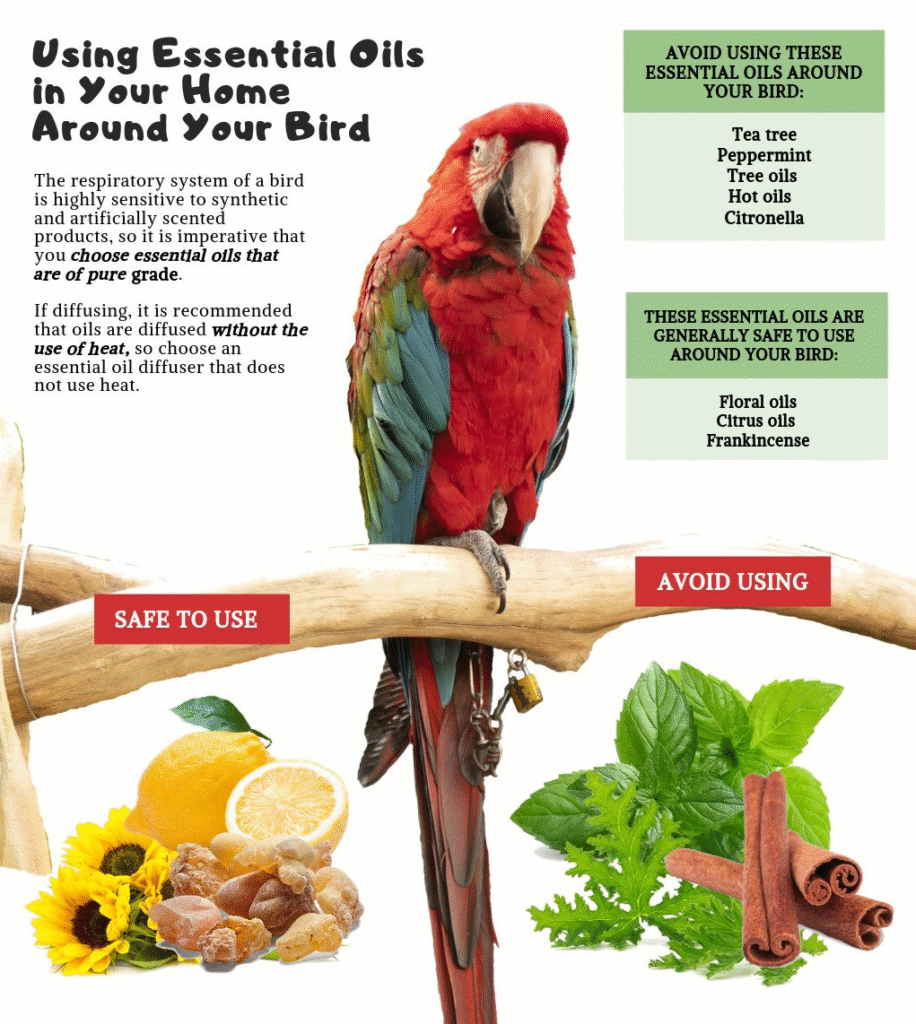
What essential oils are
Essential oils are concentrated aromatic extracts from plants. The oil contains volatile compounds that easily evaporate into the air and carry strong scent. People commonly use them for
- Aromatherapy in diffusers or warmers
- Scented candles and reed diffusers
- Ingredients in cleaners, polishes, and laundry products
- Personal care such as massage oils, balms, and skin products
Because they are plant based, essential oils are often marketed as natural and therefore assumed to be safe. Veterinary toxicology sources repeatedly caution that natural does not automatically mean safe for pets. aercmn.com+3ASPCA+3Pet Poison Helpline+3
Why birds are especially sensitive
Birds do not breathe like mammals. Their respiratory system includes small, rigid lungs plus a system of air sacs that keep air moving in one direction through the lungs. This design allows continuous flow of fresh air and very efficient gas exchange, so birds can take in more oxygen per breath than mammals of similar size. Ask A Vet
Key points about bird breathing
- Thin respiratory membranes and rich blood supply mean gases and vapors pass into the bloodstream quickly.
- Air sacs extend into parts of the skeleton and body cavity, so inhaled substances can reach many tissues.
- Birds have high metabolic rates and often a faster respiratory rate than similar sized mammals. Veterinary Practice
Veterinary sources note that this high efficiency makes birds more vulnerable to airborne toxins, including fumes from overheated non stick cookware, aerosols, and chemical vapors.
When you put essential oils into a diffuser or spray them in a cleaner, you are putting volatile compounds into the air. These can irritate the delicate respiratory membranes of birds or be absorbed into the bloodstream.
What research says about essential oils and birds
Compared with dogs and cats, there is very little formal research about essential oils and birds. Most of what we know comes from
- General essential oil toxicosis data across species
- Case reports in birds and other small animals
- Experience shared by avian veterinarians and toxicology centers
For example
- The Merck Veterinary Manual lists essential oils among household hazards. Tea tree oil is described as one of the most commonly reported essential oil intoxicants in pets. MSD Veterinary Manual
- Pet Poison Helpline and similar services report that cats and birds are at particular risk from essential oils, with signs such as drooling, vomiting, lethargy, tremors, and respiratory issues. Pet Poison Helpline
- A published case report describes acute tea tree oil intoxication in a pet cockatiel, showing that even a relatively small bird can suffer serious effects from essential oil exposure. ResearchGate
Based on the available data, experts generally recommend strong caution and usually discourage any direct use of essential oils on or near birds unless an avian veterinarian has a very specific, supervised medical plan.
Are Essential Oils Safe for Birds at All?

There is no honest way to give a simple yes or no. Safety depends on the specific oil, dose, route of exposure, ventilation, and the individual bird. However, several clear patterns have emerged from toxicology data and avian veterinary experience.
Situations that are clearly unsafe
Based on current information, the following should be considered unsafe for birds
- Running an essential oil diffuser or warmer in the same room, or in a connected air space, as a bird
- Spraying concentrated or poorly diluted essential oil mixtures on surfaces that birds walk on, chew, or lick
- Applying essential oils directly to feathers or skin
- Adding essential oils to drinking water or food
These uses combine several risk factors at once
- High concentration
- Direct contact with respiratory surfaces, eyes, or skin
- Chance of ingestion
- Continuous exposure in a confined air space
Situations that might look safer but still carry risk
Some bird owners use household cleaners that include essential oils or fragrances and assume these are gentle. The reality is more complicated.
- Many pet safe claims are not regulated or are based on limited data.
- Even low level fragrance can irritate a bird with existing respiratory issues. Vca
- Essential oil droplets can settle on perches, toys, or food bowls where birds may pick them up on their beaks. Pet Poison Helpline
If a product contains essential oils and is not specifically cleared for use in homes with birds by an avian veterinarian, it is safest to avoid using it near your bird.
When cautious, vet guided use might be discussed
In some households, a family member insists on using essential oils for their own wellness. In that situation an avian veterinarian may help you plan ways to reduce risk, for example
- Only using essential oils in a closed room far from the bird, with good ventilation and time for air to clear before doors are opened
- Avoiding especially risky oils such as tea tree, eucalyptus, and certain citrus oils
- Monitoring the bird closely for any respiratory issues
Even then, most avian veterinarians will stress that completely avoiding essential oil exposure is safer for the bird. Dial A Vet+1
Risks, Warnings, and Mistakes Bird Owners Should Avoid
Diffusers, warmers, and birds in the same air space
Oil diffusers and warmers release a fine mist or vapor that contains droplets of essential oil. This mist does not stay neatly in one corner. It can move with air currents through open doors, vents, or shared HVAC systems.
Because birds absorb airborne substances so efficiently, even levels that smell mild to you can be enough to irritate their respiratory tract or cause toxicity. Signs may include
- Rapid or effortful breathing
- Tail bobbing with each breath
- Open beak breathing or panting
- Wheezing, coughing, or sneezing
- Weakness, sitting fluffed, or reluctance to move Ask A Vet
Cleaning bird cages with essential oils
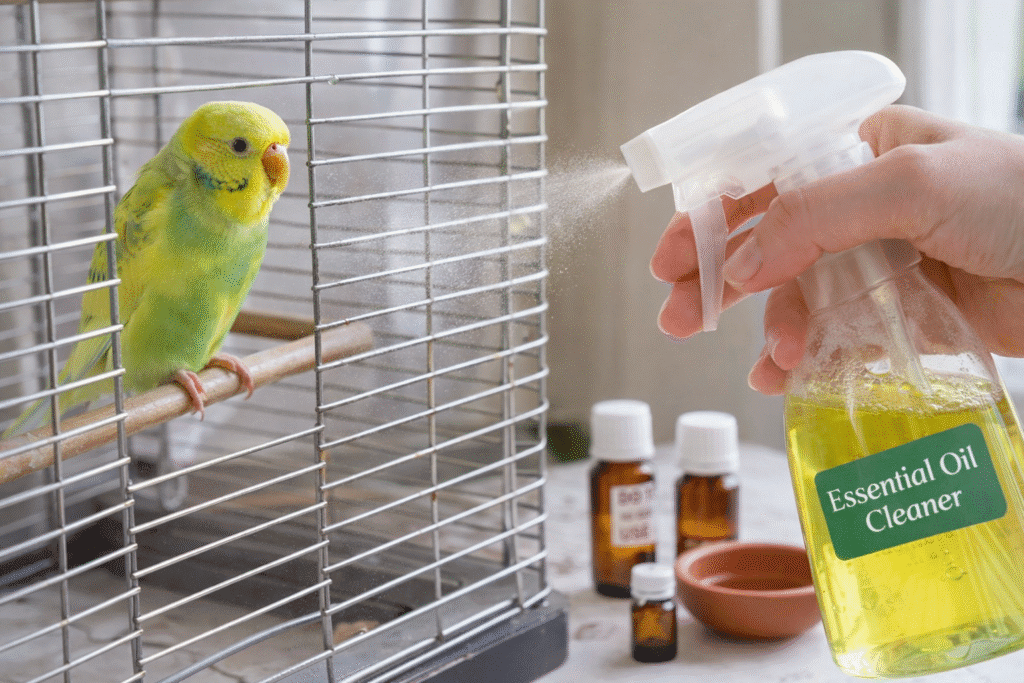
Some people use essential oils for bird cage cleaning because they want a more natural smell. This can backfire.
Essential oils used in cleaning sprays may
- Leave residue on bars, perches, and toys
- Be inhaled as a fine mist during spraying
- Be ingested when the bird chews or grooms contaminated surfaces
Veterinary toxicology resources warn that essential oils in cleaners and liquid potpourri can cause serious poisoning in pets. Oils such as cinnamon, citrus, pennyroyal, peppermint, pine, tea tree, wintergreen, and ylang ylang are specifically listed as dangerous.
For birds, whose bodies are much smaller and lungs more sensitive, any residue from these oils on cage surfaces is a concern.
Tea tree oil and other especially risky oils
Tea tree oil is a well known example of tea tree oil toxicity in pets.
- Merck Veterinary Manual notes that tea tree oil is one of the most commonly reported essential oil intoxicants in pets.
- A published case describes a pet cockatiel with acute tea tree oil intoxication, confirming that birds can be seriously affected. ResearchGate
- Pet toxicology resources report that even small amounts of pure tea tree oil can cause neurologic signs, weakness, and collapse in dogs and cats. It is reasonable to assume birds are at least as sensitive, if not more.
Other oils often listed as high risk for pets include eucalyptus, citrus oils, clove, cinnamon, peppermint, pine, wintergreen, pennyroyal, and ylang ylang.
Because there is little bird specific research, the safest assumption is that these are toxic essential oils for birds and should not be used anywhere they might inhale, touch, or ingest them.
Adding essential oils to bird water or food
Some people ingest essential oils themselves and may wonder about giving a bird a drop in drinking water. This is unsafe.
- Oils do not mix evenly with water and can remain as concentrated droplets.
- Ingestion of concentrated oils can damage the digestive tract and liver.
- Birds can aspirate tiny oil droplets into the lungs while drinking, which may cause severe respiratory problems.
Essential oils should not be added to bird water, food, or treats unless a board certified avian veterinarian is supervising a specific treatment plan, and even then most will choose other options.
Signs of essential oil poisoning or respiratory distress in birds
Based on veterinary and poison control resources, common signs of essential oil poisoning and respiratory issues can include
- Sudden change in breathing rate or effort
- Tail bobbing with each breath
- Open beak breathing or wheezing
- Drooling, vomiting, or diarrhea
- Weakness, incoordination, or tremors
- Lethargy, unusual quietness, fluffed feathers
- Collapse or seizures in severe cases
Any of these signs after exposure to a diffuser, scented cleaner, or spilled oil should be treated as an emergency.
Step by Step Guide to Safer Choices if You Use Essential Oils at Home
If your household already owns essential oils, you can lower risk for your bird with a clear plan.
1. Talk with your avian veterinarian first

Before you ever run a diffuser or use an oil based cleaner in a home with birds, ask an avian veterinarian for advice. Bring
- A list of exact products and ingredients
- How you plan to use them
- Any past history of respiratory issues in your bird
Your vet can explain how essential oils and birds interact and may strongly recommend avoiding certain products entirely.
2. Decide whether you really need essential oils
Ask yourself what problem you are trying to solve.
- If it is bad cage odor, better cleaning and ventilation are safer than stronger scent.
- If it is your own stress or sleep, consider unscented methods such as breathing exercises, white noise, or herbal tea you drink rather than evaporate in the room.
Often, once you look honestly at the risks, it feels easier to skip essential oils in a bird home altogether.
3. Set strict house rules if essential oils stay
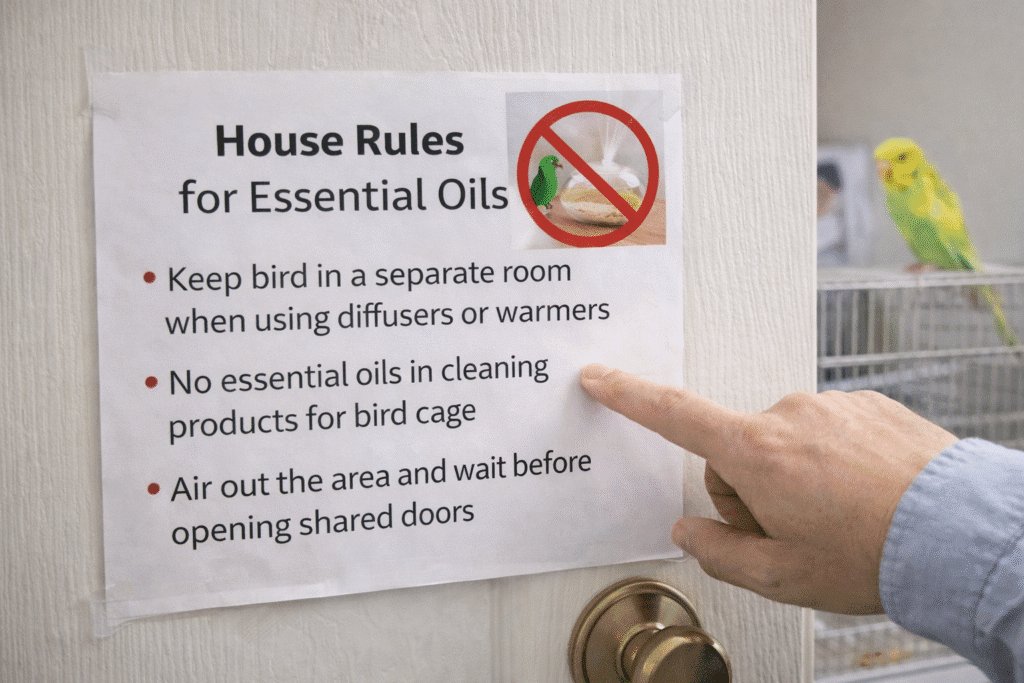
If your family chooses to keep essential oils, agree on safety rules such as
- No diffusers or warmers in rooms where birds live or sleep
- Keep birds in a separate closed room with independent ventilation whenever oils are used elsewhere
- Wait a generous amount of time after using a diffuser before opening doors, and air out the area with open windows or fans
These rules reduce risk but do not make exposure completely safe. They are a compromise when someone in the home insists on essential oils. Animal Poisons Helpline
4. Avoid using essential oils in bird cage cleaners
For non toxic cleaners for bird cages, focus on
- Unscented soap or detergent in appropriate dilution
- Plain water rinsing of food and water dishes
- Vet approved disinfectants that are fragrance free and formulated for animal use
Always rinse surfaces that your bird can chew, walk on, or lick until there is no slippery or scented residue. Ask your avian veterinarian or avian vet technician to recommend specific cleaning products that are safe for your species of bird. MSD Veterinary Manual
5. Improve air quality and smell with bird safe options
Instead of essential oils and birds sharing the same air space, try
- Cleaning daily around the cage to remove food scraps and droppings
- Using a high quality air purifier with a filter suited to particles and odors, placed where the airflow does not blow directly on the bird
- Opening windows when outdoor air quality is good
- Using baking soda in trash bins to absorb smells rather than cover them with fragrance
These safe home scent options for birds address the source of odors without adding chemical fumes. Veterinary Practice
6. Learn and watch for early warning signs
Every bird owner should know the basic signs of respiratory issues in birds
- Any change in breathing effort or sound
- Tail bobbing when at rest
- Change in voice
- Nasal discharge or sneezing
- Sudden quietness, fluffed feathers, or reluctance to perch Vca+2Veterinary Practice+2
If you see these signs after any scented product, including essential oils, candles, or aerosol cleaners, move the bird to fresh air and call an avian veterinarian at once.
7. Have emergency contacts ready
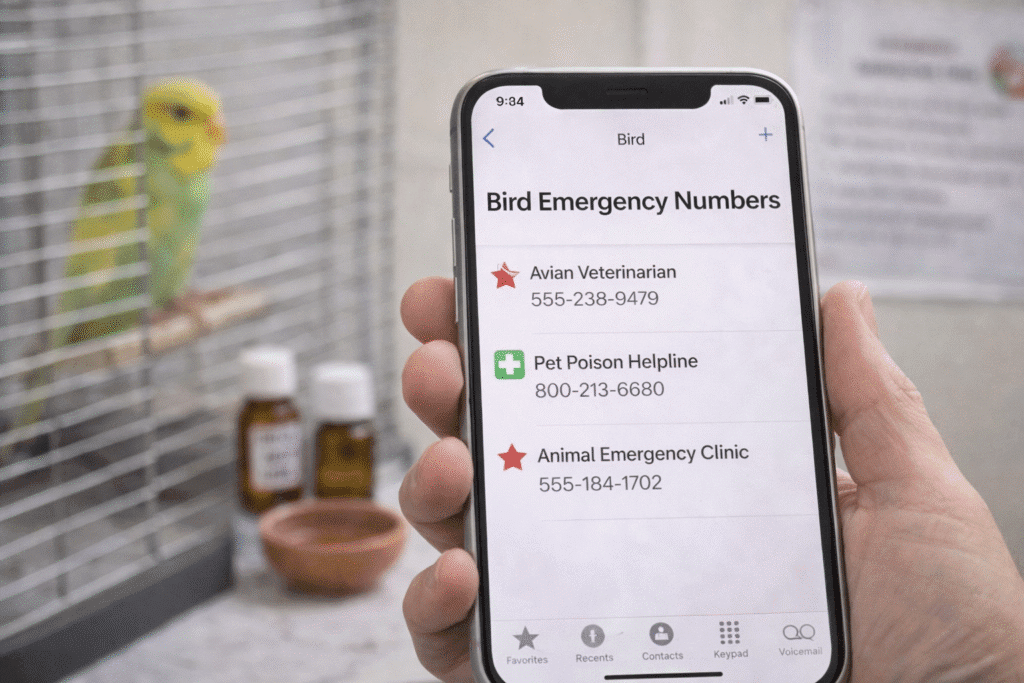
Keep these numbers posted near your cage and saved in your phone
- Your regular avian veterinarian
- The nearest emergency veterinary clinic that sees birds
- A pet poison helpline that accepts calls about birds, such as ASPCA Animal Poison Control Center or Pet Poison Helpline available in many regions, noting that consultation fees may apply.
Quick action can make the difference between a mild incident and a life threatening emergency.
Expert Tips and Real Life Examples
Example one: The living room diffuser
Maya kept her cockatiel in the dining area and loved running a lavender essential oil diffuser in the nearby living room each evening. She noticed that on nights when the diffuser ran, her bird sat fluffed and breathed a little faster, with a slight tail bob.
After reading about birds and diffusers, she turned the diffuser off, opened windows, and booked an appointment with an avian veterinarian. The vet explained that even though the diffuser was not in the exact same room, the mist could easily spread through the shared air space. The bird’s signs improved once the diffuser was removed from the home.
What we learn: Mild respiratory changes can be early signs of irritation. If a bird acts differently when scented products are used, stop the exposure and seek avian veterinarian advice right away. MSD Veterinary Manual
Example two: Cage cleaning with scented spray
Alex wanted the bird room to smell fresher and started cleaning the cage with a natural spray that contained citrus and eucalyptus oils. Within a short time, his budgie became quiet, drooled a little, and seemed wobbly on the perch.
He rushed the bird to an emergency clinic, bringing the cleaner bottle. The veterinarian suspected essential oil exposure, provided supportive care, and advised switching to unscented cleaning and very thorough rinsing. The budgie recovered, and Alex now focuses on more frequent basic cleaning and better ventilation instead of stronger scents.Hospital
Practical expert style tips
- Tell your vet exactly what products you use at home, including diffusers, wax warmers, candles, sprays, and cleaners.
- Before trying any natural remedy that involves scent, ask your vet:
- Is there research on this ingredient in birds
- Is there a safer alternative such as a diet change, environmental enrichment, or medication
- Remember that strong fragrances of any kind, not just essential oils, can affect birds. This includes air fresheners, incense, cooking fumes, and smoke.
Frequently Asked Questions about Essential Oils and Birds
Q1: Can I ever use a diffuser in a home with birds?
In practice, the safest choice is not to use essential oil diffusers at all in a home with birds. If someone insists on using a diffuser, it should never run in the same or connected air space as the bird, and the bird should be kept in a completely separate, well ventilated room while the diffuser is in use and while the scent lingers. Even with these precautions, some risk remains, so avian veterinarians generally discourage diffusers in bird homes.
Q2: Are any essential oils considered relatively safer around birds?
At this time there is not enough research to clearly label specific essential oils as bird safe essential oils. Toxicology data show that some oils, such as tea tree, eucalyptus, citrus, and others, are clearly higher risk for pets, but that does not mean other oils are truly safe for birds. ResearchGate Based on the limited evidence, it is more honest to say that some oils are known to be dangerous and the rest are of unknown safety rather than to promise that any oil is safe.
Q3: Is it safe to clean my bird cage with a cleaner that contains essential oils?
Products that contain essential oils are usually not ideal for cleaning bird cages, even if they are marketed as natural. Oils can leave residue on bars, perches, and toys that birds can inhale or ingest later. Veterinary guidance favors unscented cleaners, plenty of water rinsing, and fragrance free disinfectants that your avian veterinarian has recommended.
Q4: What should I do right away if my bird is exposed to essential oils or seems unwell?
- Turn off the diffuser, warmer, or spray and remove the source.
- Move your bird to fresh air away from the scented area.
- If oil is on feathers or skin, do not attempt to wash aggressively yourself, because wet feathers can chill the bird and stress it further. Call a vet for instructions.
- Contact your avian veterinarian or an emergency clinic immediately and describe the product, ingredients, and your bird’s signs.
- You may also call a pet poison helpline for guidance while you prepare to travel, understanding that fees may apply. ASPCA
Do not wait to see if signs get worse. Birds often hide illness until they are already very sick.
Q5: How can I make my home smell fresh without putting my bird at risk?
Focus on removing odor sources and improving ventilation rather than covering smells. Good options include
- Frequent cage cleaning and changing of cage liners
- Washing food and water dishes daily
- Using a suitable air purifier, placed where air does not blow directly on the bird
- Keeping trash covered and sprinkling baking soda in bins
- Opening windows when outdoor air quality is good
These steps improve air quality without relying on fragrances that may irritate your bird’s respiratory system.
Q6: Can I use essential oils directly on my bird for mites, wounds, or stress?
No. Essential oils should not be applied directly to a bird’s feathers or skin unless an avian veterinarian has designed and is supervising the treatment, which is rare. Essential oils can be absorbed through the skin, can damage feathers, and can cause serious toxicity. There are safer, better studied treatments for mites, skin issues, and anxiety that your avian veterinarian can recommend.
Conclusion
Essential oils and birds are not a simple match. Because birds have such sensitive respiratory systems and small bodies, they are at higher risk from airborne toxins and concentrated plant oils than most people realize. Current veterinary toxicology information shows clear dangers from oils such as tea tree, eucalyptus, citrus, and others, while the safety of many remaining oils has not been proven. DNB Portal

You can still have a clean, pleasant home and keep your bird safe by focusing on
- Good cage hygiene and ventilation
- Unscented, bird appropriate cleaning products
- Careful avoidance of diffusers, warmers, and scented sprays in shared air spaces
- Quick action and professional help if signs of exposure appear
Take a few minutes to review how you currently use scented products. Talk with your avian veterinarian about any essential oil plans, and choose safer long term strategies for cleaning and air quality.
This guide is for general information only. Always consult an avian veterinarian for advice that is specific to your bird, your home, and any products you want to use.

Dr. Johnson Coleman is a dedicated veterinary expert with over 10 years of hands-on experience in animal health and wellness. His mission is to help pets live longer, happier lives through compassionate care, practical guidance, and a genuine love for animals.
After earning his Doctor of Veterinary Medicine (DVM) degree, Dr. Coleman spent a decade working in both private clinics and community shelters, where he gained deep expertise in preventive medicine, pet nutrition, and behavioral care.
He believes that pet owners deserve reliable, easy-to-understand information about their companions’ health. Through his writing, Dr. Coleman breaks down complex veterinary topics into friendly, actionable advice that helps readers make informed decisions for their pets.
Outside of his professional work, Dr. Coleman volunteers with local animal rescue groups and enjoys spending time outdoors with his two golden retrievers. His lifelong dedication to animal welfare continues to inspire his work and connect with pet lovers around the world.