Agility can look like pure joy when you watch a dog fly through a tunnel and then whip around to a jump because their person moved and called at just the right moment. If you are curious but nervous, that is normal. This guide will walk you through what agility is, which dogs it suits, the safest way to begin, and a step by step starter plan you can actually follow, even if you are brand new.
Key Takeaways
• Dog agility is a sport where you guide your dog through an obstacle course using cues and body movement, combining teamwork, speed, and accuracy. American Kennel Club
• Most dogs can enjoy agility at some level, but safety depends on health, confidence, and age appropriate training, especially around jumping.
• For many organizations, dogs must meet minimum age rules before competing, such as fifteen months for AKC agility.
• Start with foundation skills and low impact confidence games before you ever raise jump height or add speed.
• It is completely okay if your dog loves casual backyard agility but has no interest in competition, the goal is fun, safety, and bonding.
What Is Agility Training for Dogs
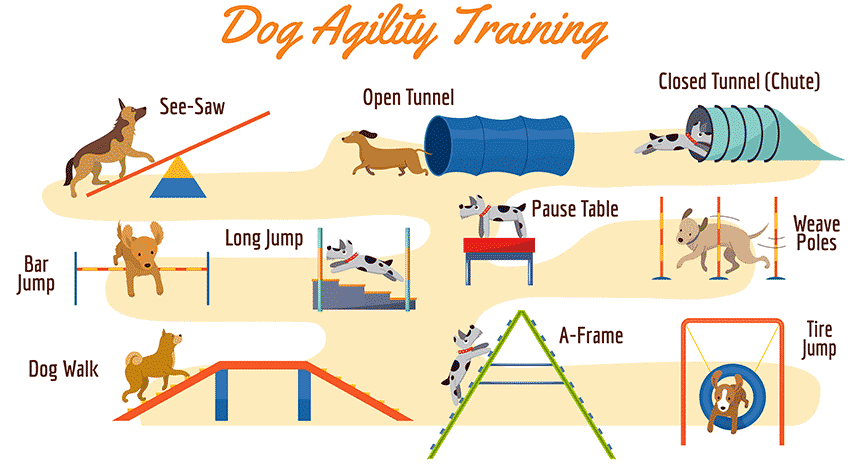
Dog agility is a timed obstacle course sport where a handler guides a dog through obstacles in a specific order. Obstacles commonly include jumps, tunnels, weave poles, and contact equipment such as the A frame, dog walk, and see saw.
In real life, it looks like this: your dog runs with enthusiasm, and you communicate with a mix of voice cues and body language. Your job is not to drag your dog through the course. Your job is to help them understand where to go next, build confidence, and keep them safe while they learn. American Kennel Club
A helpful way to think about agility is that it is part fitness, part puzzle, and part relationship skill. Many people start because they want an outlet for a high energy dog. Others start because their dog needs confidence building and would benefit from learning to climb, balance, and problem solve in a structured way.
Key Benefits of Agility Training For Dogs

Physical benefits you can often see at home
Agility asks your dog to accelerate, slow down, turn, balance, and place their feet carefully. Over time, that can improve coordination, body awareness, and overall fitness when training is done with smart progression and good surfaces.
Many owners notice their dog comes home pleasantly tired and relaxed after a short agility session, the way they might after a good hike. The difference is that agility can provide both exercise and skill work in a small space.
Mental benefits and confidence building
Agility is not just running. Your dog has to listen, make choices, and work through novelty. For some dogs, especially those who get bored easily, that mental work is the real magic.
For shy dogs, carefully introduced obstacles can be a safe way to practice bravery. A tunnel can start as a wide open, well lit “run through for treats” game. A wobble board can start as “one paw earns a reward.” Small wins add up.
Relationship benefits and communication
Agility is teamwork. You learn how your dog reads your motion. Your dog learns that paying attention to you predicts good things. This is why many people say agility improves their everyday handling and recall, even if they never compete. American Kennel Club
Lifestyle benefits for busy households
You do not need a huge yard to start the early stages. With a hallway, a few cones, and a couple of low impact props, you can practice attention, directional cues, and confidence games. When you are ready, classes and clubs give you safe access to full equipment.
Risks, Warnings, and Common Mistakes to Avoid
Agility is exciting, but it is still an athletic sport. Being honest about risks is part of being a great teammate for your dog.
Health and age considerations
Most puppies should not do repetitive jumping or sharp high speed turns while growth plates are still open. The AKC notes that puppies should not be asked to jump in extreme or competitive situations until at least twelve to fifteen months, and longer for giant or slow maturing breeds, because growth plates may not be closed and injury risk can increase. American Kennel Club
If you want a clear rule of thumb: you can train agility foundations early, but delay height, speed, and repetition until your veterinarian says your dog is ready.
Also consider that some dogs need modifications or a different sport entirely. Dogs with significant joint disease, breathing problems, or pain issues may need a low impact enrichment plan instead of traditional agility. Canine Arthritis Resources and Education
Injury risk is real, so plan like an athlete
Injury surveys in agility dogs report substantial injury rates. A 2022 open access review of agility injury literature describes reported injury rates that include figures such as thirty two percent in earlier data and forty one point seven percent in a later study, highlighting why conditioning and thoughtful training matter. PMC
That does not mean agility is “bad.” It means you should treat it like a sport. Warm up, build skills slowly, protect joints with good surfaces, and stop when something feels off.
Safety risks you can prevent
• Slippery ground: slick floors can cause slips during turns and takeoff. Use grippy mats or train on grass or proper sport flooring.
• Unstable equipment: wobbly boards and home built obstacles can tip and scare a dog or cause injury. Start with very stable, low props.
• Too much too soon: the fastest way to create fear is to push a nervous dog onto equipment before they trust it.
• Training when tired: fatigue increases sloppy landings and missed footing.
Common training mistakes
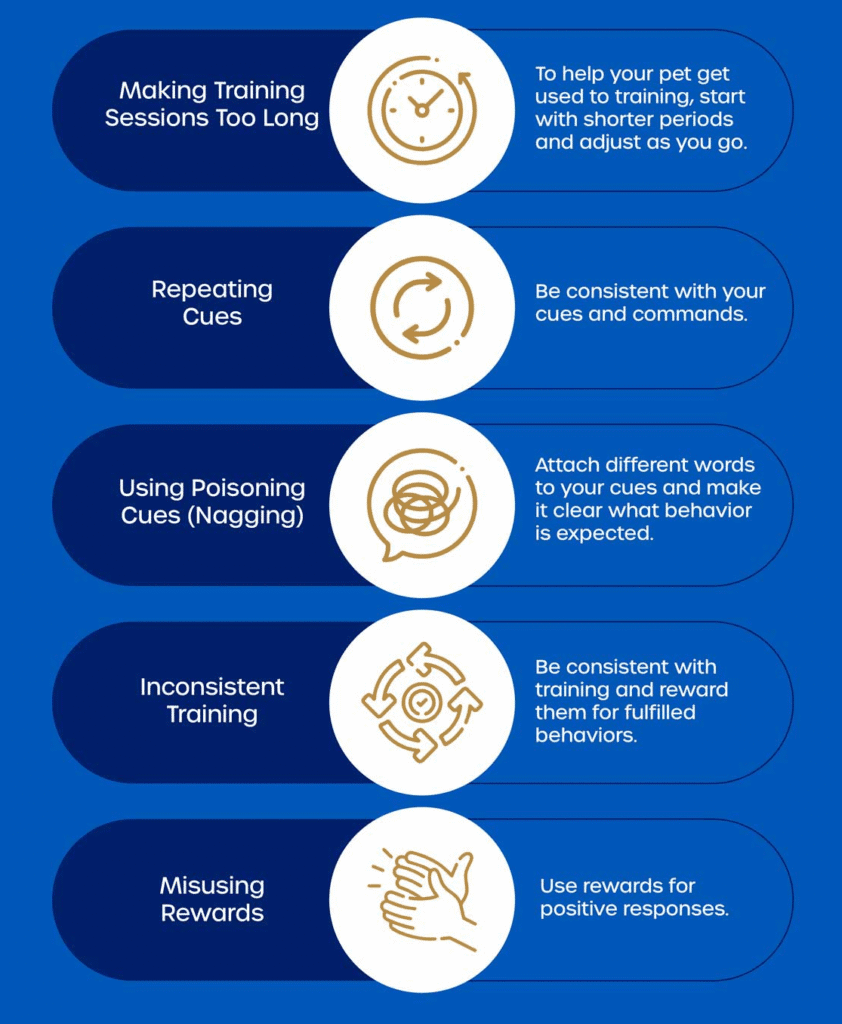
Rushing the obstacles before the basics. If your dog cannot reliably respond to a recall or a stop cue in a calm setting, a fast course will fall apart. Build the boring skills first. AKC Reunite
Using pressure when your dog is unsure. If your dog slows down, looks away, freezes, or tries to leave, that is information. The answer is usually to make the task easier and pair it with rewards, not to force the dog forward.
Ignoring stress signals. Yawning, lip licking, low body posture, tucked tail, pinned ears, and refusal are often signs your dog is overwhelmed. Back up and build confidence.
Stop and call your veterinarian or trainer if
• Your dog limps, yelps, or shows soreness after training
• Your dog suddenly refuses an obstacle they used to enjoy
• You notice repeated slipping, crashing into bars, or awkward landings
• Your dog seems anxious around equipment even after you have slowed down and rewarded generously
When in doubt, pause. A week of rest and evaluation is better than months of rehab.
Step by Step Guide: How to Get Started
Step 1: Check health and readiness
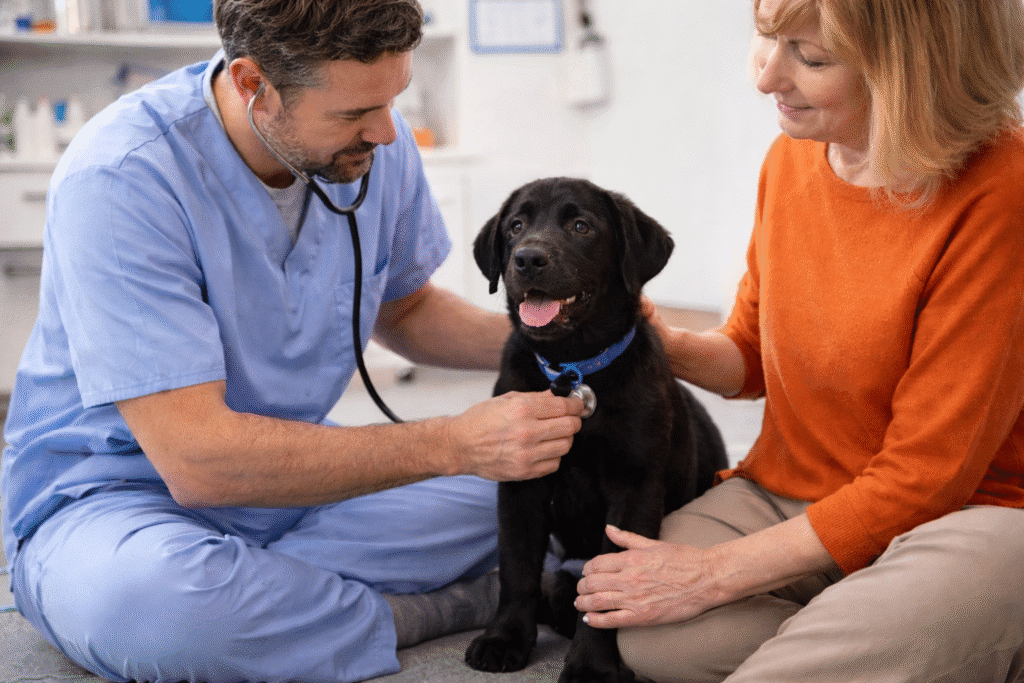
If your dog is a puppy, a senior, overweight, or has a history of orthopedic or breathing issues, ask your veterinarian what types of impact are appropriate. The AKC also lists “in sound health” as part of eligibility to compete, which is a helpful mindset even if you never plan to trial. American Kennel Club
Step 2: Build a strong foundation before obstacles
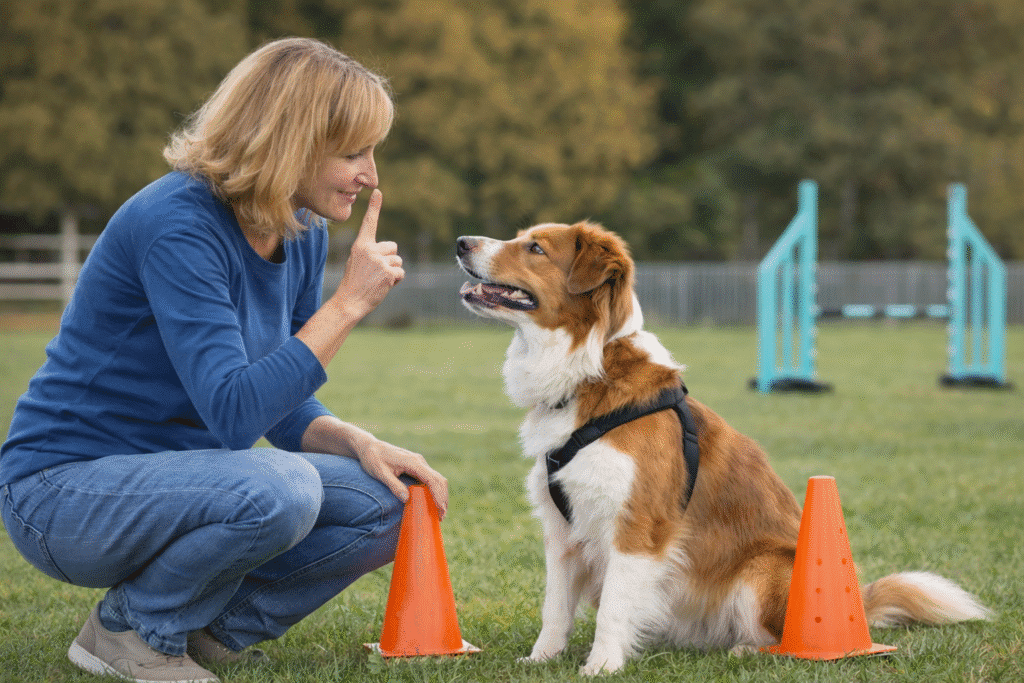
Focus on these skills first:
• Name response and eye contact
• Reliable recall in low distraction settings
• Loose leash walking and the ability to move with you
• Sit, down, stay, and a simple release cue
• Comfort working around other dogs and people at a distance
A structured manners goal like the AKC Canine Good Citizen program can be a helpful checkpoint for many beginners because it focuses on everyday control and polite behavior. American Kennel Club
Step 3: Choose the safest learning environment
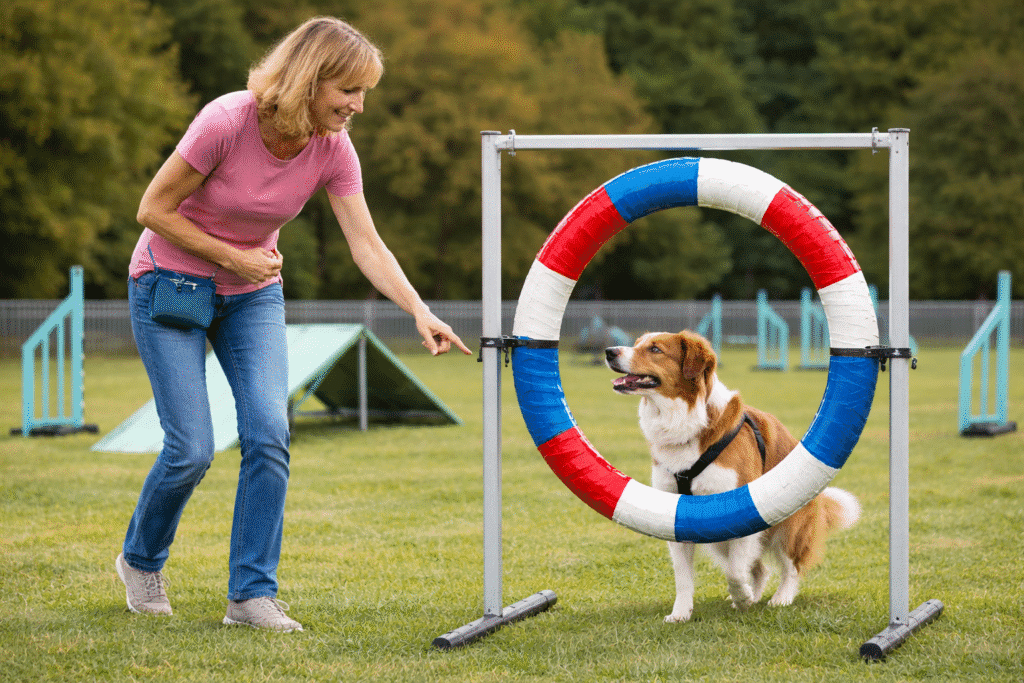
For most beginners, the safest route is a class because you get proper equipment, safe setup, and coaching on handling mechanics.
AKC encourages starting with a class at an AKC club, and the AKC club search tool can help you locate training options.
USDAA also provides a directory to help newcomers find a group or trainer. USDAA
If classes are not available or not in your budget, you can still do foundations at home, just keep equipment simple and low impact.
Step 4: Start with confidence and flatwork games
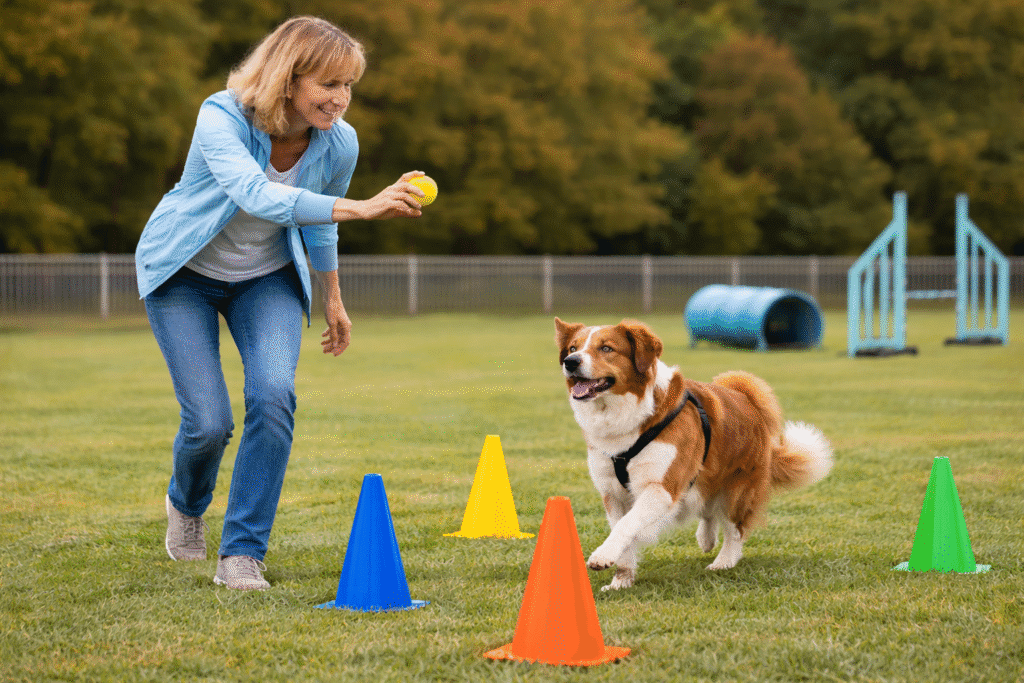
These are agility building blocks that do not require jumps:
Targeting: teach your dog to touch a hand or a target plate with their nose.
Wraps: teach your dog to go around a cone or bucket and come back to you.
Directional cues: practice left, right, and straight using cones in your yard.
Body awareness: slow stepping over ground poles laid flat can build coordination without jumping.
Step 5: Introduce the easiest obstacles first
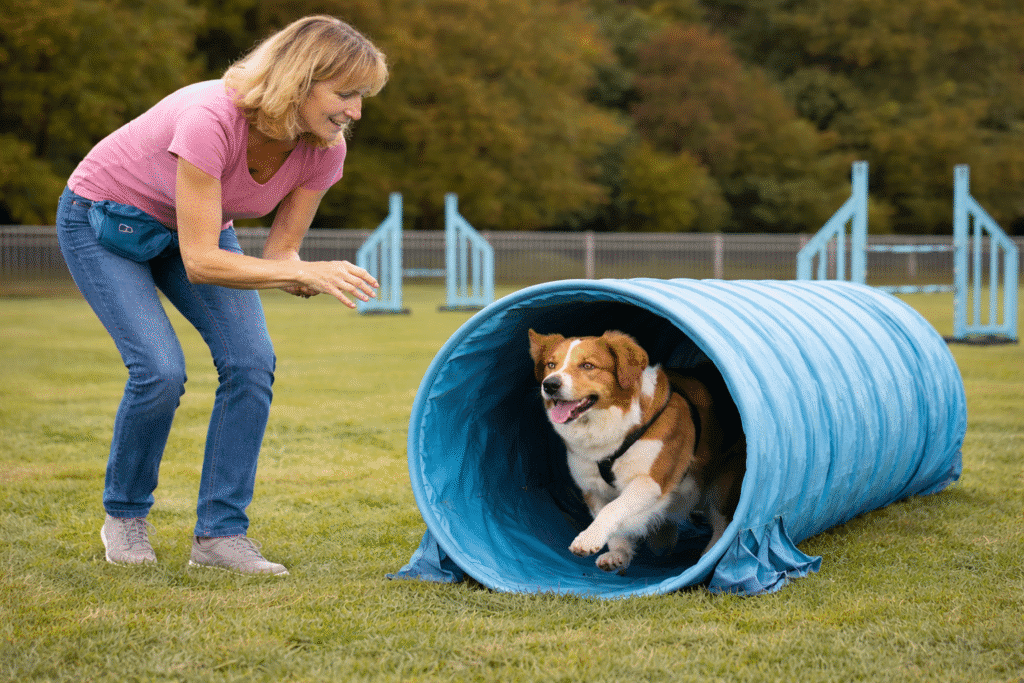
Most dogs find tunnels motivating, especially when the tunnel is short and straight at first. Use treats or a toy at the exit and keep it upbeat.
For weave poles, expect this to take time. Many dogs need weeks or months of short practice sessions to truly understand weaving. That is normal, and it does not mean you are doing it wrong.
Step 6: Teach contact equipment slowly and safely
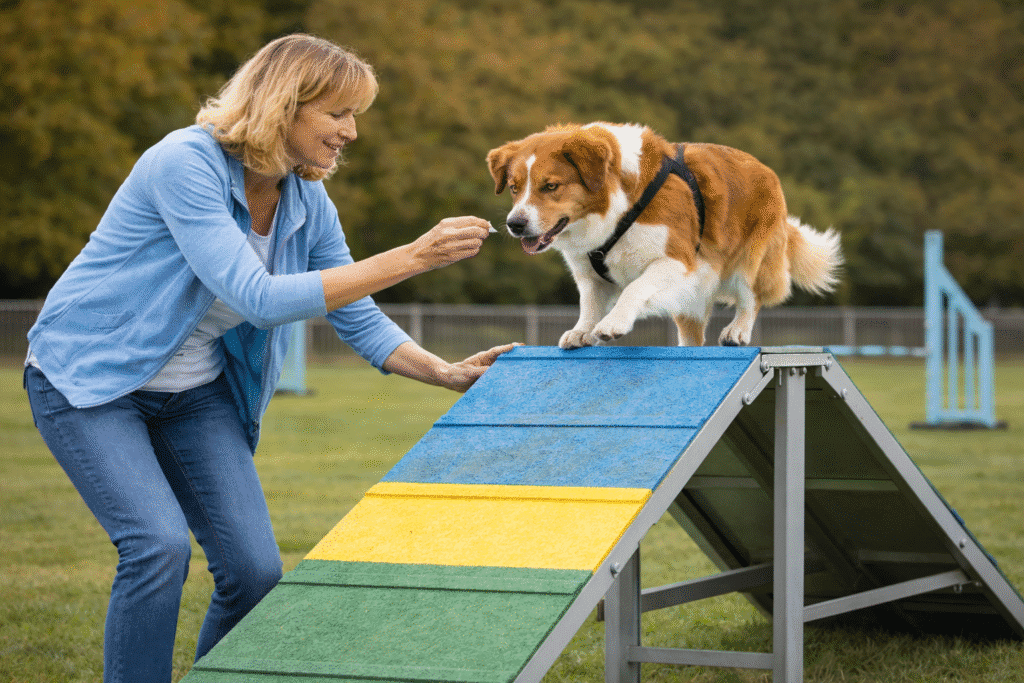
Contact obstacles in many organizations include the A frame, dog walk, see saw, and table, and they require the dog to touch a painted contact zone for scoring. USDAA
Begin with the lowest, safest settings and focus on:
• Confidence walking up and down slowly
• Understanding where to place feet
• A consistent behavior at the end, such as stopping on a target or holding a brief position
If you have access to a class, your instructor can help you introduce contact skills without scaring your dog.
Step 7: Add sequencing once single skills are solid
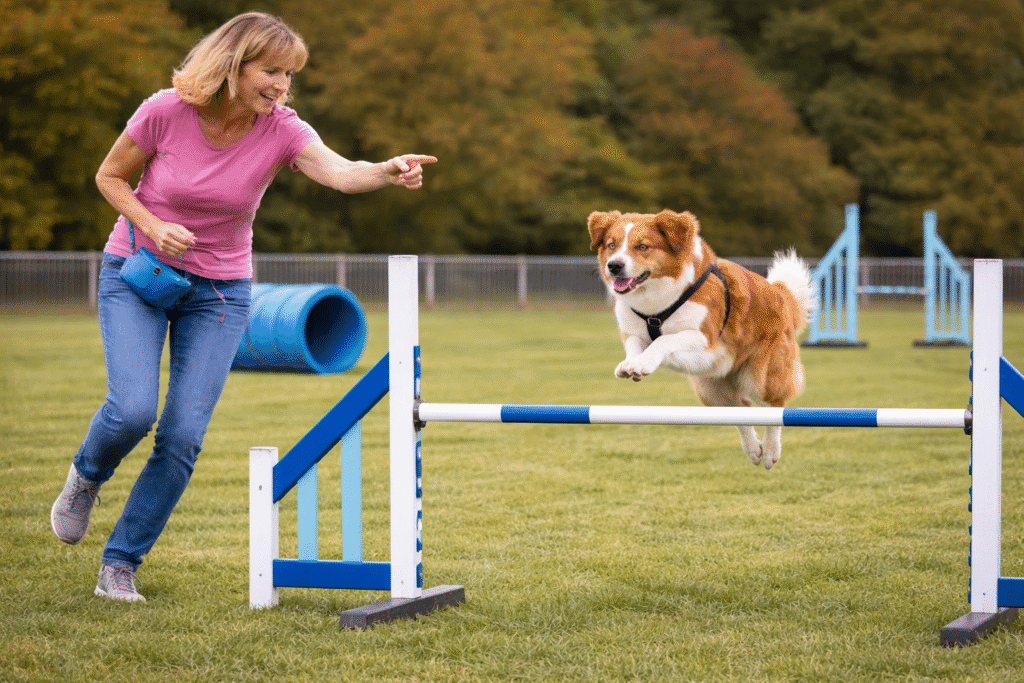
Sequencing means linking obstacles in order. Start with two easy obstacles, such as a low jump and a tunnel, then build to three. Keep it simple and reward heavily.
A common beginner mistake is waiting too long to cue the next obstacle. In agility, timing matters because your dog is making decisions quickly.
Step 8: Proof skills in new environments
Dogs do not automatically generalize. A dog who flies through a tunnel in your quiet yard might hesitate in a busy building with barking dogs. Practice in different places and gradually add distractions.
Step 9: Decide whether you want to compete or stay casual
Competing can be fun, but it adds noise, travel, and pressure.
If you do want to trial, check the rules of the organization you plan to enter. For example:
• AKC requires dogs to be at least fifteen months old to compete.
• USDAA states that competitors with dogs eighteen months or older are eligible to compete, with an Intro program that allows fourteen months or older. USDAA
Those rules help protect young dogs from being pushed too early.
A realistic beginner weekly plan
Here is a gentle starting pace many beginners can sustain:
• Two or three short foundation sessions during the week, focusing on attention, targeting, and cone games
• One class session or structured practice session on the weekend
• One rest day after harder training, especially for young or unconditioned dogs
Keep sessions short enough that your dog finishes eager for more.
Expert Tips and Real Life Examples
Tip: Reward commitment, not perfection
A beginner dog might knock a bar or miss a weave entry. Instead of correcting harshly, reward the effort you want, such as choosing to try, staying engaged, and returning to you quickly. Confidence builds speed later.
Tip: Make the environment work for the dog you have
High energy herding dog: These dogs often love agility, but they can become frantic. Spend extra time on start line calmness and impulse control. Short, clear reps are better than long chaotic ones.
Shy rescue dog: Start with confidence games. Let them investigate equipment at their own pace. Celebrate a single step into a tunnel. Many shy dogs bloom after a few positive sessions.
Older dog: Consider low impact agility style training with no jumping and minimal tight turns. Focus on tunnels, low contact work if appropriate, and handling games. Your goal can be mental enrichment and gentle conditioning, not speed.
Tip: Warm up and cool down like a sport team
A good warm up helps dogs move more comfortably, and many canine sports medicine educators recommend using warm ups and cool downs as part of an exercise routine, especially for canine sports. Canine Arthritis Resources and Education
A simple warm up can be a brisk walk, easy turns, and a few slow sits and downs before you start obstacles. Cool down can be a relaxed walk until breathing returns to normal.
Tip: Track how your dog feels the next day
After a training day, watch for stiffness the next morning. If you see it, reduce impact, reduce repetition, and consider a check in with your veterinarian or a rehab professional.
Frequently Asked Questions
Q1: What age can my dog safely start agility
You can start agility foundations early, such as targeting, balance games, and simple tunnels. For jumping and higher impact work, the AKC notes that puppies should not be asked to jump in extreme or competitive situations until at least twelve to fifteen months, and sometimes longer for large or slow maturing breeds. American Kennel Club
If your goal is competition, also follow organization rules, such as the AKC minimum of fifteen months to compete.
Q2: Can small dogs or mixed breed dogs do agility
Yes. Agility is not just for one breed type. Mixed breed dogs can participate in AKC agility through AKC Canine Partners, and AKC explains that mixed breed dogs can be registered through that program to compete. American Kennel Club
USDAA also describes having many breeds involved in the sport, including mixed breeds, and has published breed related participation information and news about its registered community. USDAA
Q3: How often should I practice agility with my dog
For beginners, short sessions a few times per week is often more effective than long sessions once in a while. The key is that your dog stays fresh and confident. If you see fatigue, frustration, or soreness, reduce frequency and intensity.
Q4: Do I need special equipment at home to get started
Not at first. You can start with cones, a broomstick laid flat as a ground pole, and a safe open space to practice attention and directional cues. Full height obstacles should be introduced in a class setting when possible so sizing, stability, and surfaces are appropriate.
Q5: What if my dog seems scared or overwhelmed
Slow down and make it easier. Break the obstacle into tiny steps and reward generously. If your dog continues to avoid equipment, a positive reinforcement based trainer can help you identify whether the issue is fear, pain, or confusion. If fear appears suddenly, consider a veterinary check to rule out discomfort.
Conclusion
Agility training can be one of the most fun ways to exercise your dog’s body and brain while strengthening teamwork. Start with foundations, introduce obstacles gradually, and protect your dog’s joints by keeping work age appropriate and confidence focused.
Whether your goal is a backyard course, a weekly class, or a future trial, the best plan is the one that keeps your dog happy and eager. Always consult your veterinarian or a qualified trainer for guidance tailored to your dog.

Dr. Johnson Coleman is a dedicated veterinary expert with over 10 years of hands-on experience in animal health and wellness. His mission is to help pets live longer, happier lives through compassionate care, practical guidance, and a genuine love for animals.
After earning his Doctor of Veterinary Medicine (DVM) degree, Dr. Coleman spent a decade working in both private clinics and community shelters, where he gained deep expertise in preventive medicine, pet nutrition, and behavioral care.
He believes that pet owners deserve reliable, easy-to-understand information about their companions’ health. Through his writing, Dr. Coleman breaks down complex veterinary topics into friendly, actionable advice that helps readers make informed decisions for their pets.
Outside of his professional work, Dr. Coleman volunteers with local animal rescue groups and enjoys spending time outdoors with his two golden retrievers. His lifelong dedication to animal welfare continues to inspire his work and connect with pet lovers around the world.