Wing clipping, or bird wing trimming, is one of those topics that can make even experienced bird owners a little nervous. Done correctly, it can help keep a companion bird safe in the home. Done poorly, it can cause pain, dangerous falls, or bleeding from a blood feather.
This guide is for pet bird owners and caregivers, including beginners, who want to understand what wing clipping really does, when it may or may not be appropriate, and how to work with an avian veterinarian to keep their bird safe. You will learn how to prepare, how to recognize primary flight feathers, how to clip gradually, and how to support recovery after a trim.
Throughout the article, safety comes first. If at any point you feel unsure, the safest choice is to stop and ask an avian veterinarian to demonstrate or perform the trim for you.
Key takeaways
- Wing clipping means trimming part of the primary flight feathers so a bird can glide down safely rather than fly with full power. It does not remove bone or permanently change the wing.
- The safest approach is to clip only a small number of primary flight feathers on both wings, trim a little at a time, and test flight ability between small trims, rather than removing many feathers all at once. Vca
- Blood feathers are new growing feathers that still have a blood supply in the shaft. If one is cut or broken, it can bleed significantly and may be an emergency. Wikipedia
- A calm, quiet location, safe restraint, toweling, a bird first aid kit, and sharp scissors designed for grooming are all essential parts of safe bird wing trimming. Vca
- Many birds need a re trim when new primary flight feathers grow in during molting, often every several months, but timing varies by species and individual bird. Watch flight ability rather than the calendar alone.
What is bird wing clipping and why do people do it
Simple definition
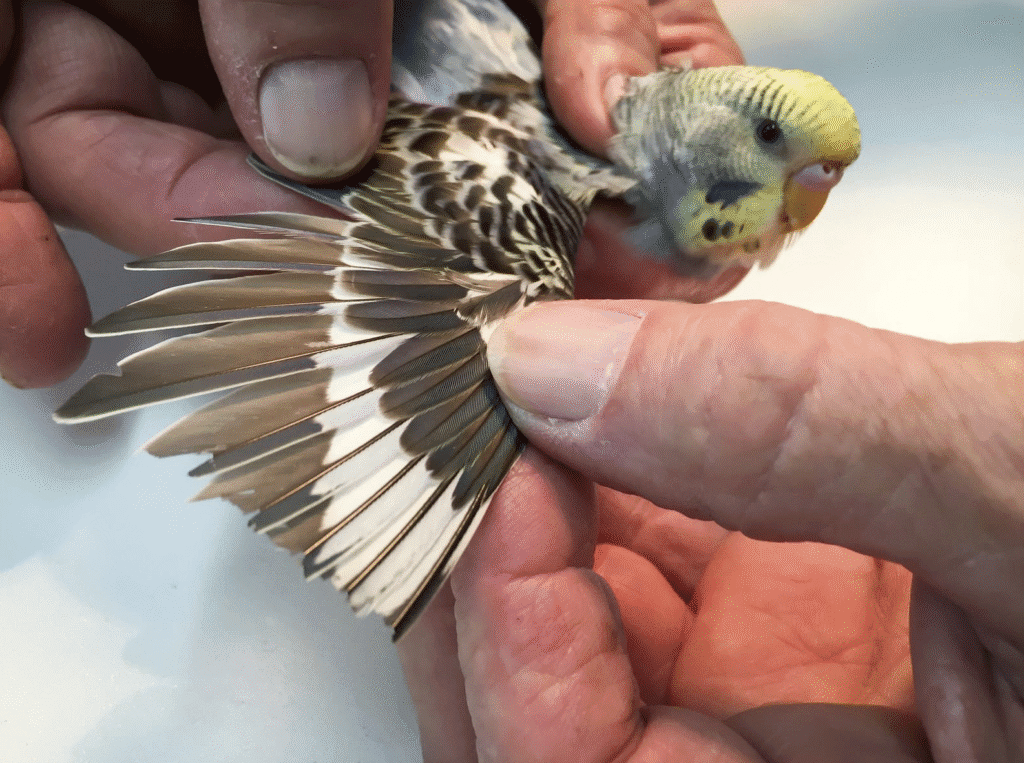
Bird wing clipping, or bird wing trimming, is the careful shortening of some of the primary flight feathers on each wing. These are the long feathers at the outer part of the wing that give a bird lift and forward power in flight. Rådet for dyreetikk
The goal is usually not to make a bird unable to fly at all. Instead, the usual goal is to reduce the height and distance of flight so that the bird can glide safely to the floor or a nearby surface rather than flying out a door, into a window, or up to dangerous areas.
What wing clipping can and cannot do
Wing clipping can:
- Reduce the risk of accidental escape through open doors or windows
- Make it harder for a bird to reach high shelves, ceiling fans, or kitchen hazards
- Help some birds focus more on human interaction and less on constant high flight
Wing clipping cannot:
- Replace the need for supervision and a safe bird proofed environment
- Guarantee that a bird will never gain enough lift to reach dangerous spots
- Solve behavior problems like biting or screaming on its own
A trim that is too aggressive can leave a bird unable to glide, which increases the risk of falls and injuries. According to avian veterinary guidance, trimming only a portion of the primary flight feathers and keeping the trim symmetrical on both wings is considered safer than removing many feathers very close to the wing.
Why technique matters for safety
Safe wing clipping respects both anatomy and welfare. The trim affects only the feather portion, not bone or skin. The cut should be placed in the part of the feather that no longer has a blood supply and should avoid blood feathers entirely. Wikipedia
Poor technique can lead to:
- Loss of balance and repeated crashes
- Broken blood feathers and heavy bleeding
- Long term fear of handling or grooming
Because of these risks, many professional organizations encourage owners to learn about risks, alternatives, and proper technique before deciding to clip wings, and to involve an avian veterinarian when possible. aav.org
Is wing clipping right for your bird
Wing clipping is not automatically right or wrong. It is a decision that depends on your bird, your home, and your ability to provide a safe, enriched environment.
Questions to consider
Before deciding on bird wing trimming, ask yourself:
- How safe is my home for a fully flighted bird
- Are there many open doors, large windows, ceiling fans, or unsupervised children
- Can I provide safe flight time in a secure room or aviary
- Is my bird confident and skilled in flight, or nervous and clumsy
- Do I have time to train recall and safe landing skills instead of relying on clipping
- Are there medical reasons that make full flight risky, such as heart or lung disease, where an avian veterinarian may suggest limited flight
For some households, such as busy homes with frequent visitors and often open doors, a partial wing clipping can reduce escape risk. In other cases, especially where owners can carefully bird proof and supervise, keeping a bird fully flighted with training may be a better welfare choice. aav.org
Why you should consult an avian veterinarian
For first time wing clipping, the safest plan is a consultation with an avian veterinarian. They can:
- Assess whether wing clipping is appropriate for your bird’s species, age, and health
- Demonstrate restraint and toweling techniques
- Show you which primary flight feathers can be safely trimmed
- Help set a plan for how short to trim and how often to re trim
Many avian vets are willing to have you watch closely during a trim, ask questions, and gradually learn how to maintain the trim at home if that is appropriate and legal where you live.
Risks, warnings, and mistakes to avoid
Real risks of bird wing trimming
According to veterinary sources, the main medical risks of wing clipping include:
- Falls and trauma if too many primary flight feathers are removed or trimmed too short
- Bleeding if a blood feather is cut, broken, or pulled incorrectly
- Stress or overheating during restraint and toweling, especially in small or sick birds
A blood feather is a new or regrowing feather that still has a blood supply inside the shaft. These feathers often look darker or bluish at the base compared to mature feathers. If damaged, they can bleed quite a bit in a short time, because the shaft is like a tiny tube of blood.
Common mistakes
Some common mistakes during wing clipping include:
- Clipping only one wing, which can cause the bird to spin and crash when trying to fly
- Taking too many primary flight feathers at once instead of testing flight gradually
- Cutting very close to the wing so the bird cannot glide at all
- Accidentally cutting a blood feather because the shaft color was not checked
- Clipping in a noisy area that increases fear and struggling
- Restraining the bird without proper toweling, leading to bites, panic, or escape Vca
How to prevent these problems
You can reduce risk by:
- Always clipping both wings in a similar pattern
- Trimming only a few primary flight feathers at first and reassessing flight
- Leaving enough feather length so your bird can glide safely to the floor
- Examining each feather shaft in good light and avoiding any that appear dark, bluish, or filled with blood
- Keeping sessions short and calm, with breaks if your bird shows strong stress signals such as open mouth breathing, eyes widening, frantic struggling, or sudden silence in a usually vocal bird
If heavy bleeding, breathing difficulty, collapse, or confusion appears at any point, this is an emergency. Use your bird first aid kit to try to control bleeding and contact an avian veterinarian or emergency clinic immediately.
What to prepare before you start
Preparation is as important as the actual trim. Before any bird wing trimming at home, use this checklist.
Wing clipping safety checklist
- Bird first aid kit
- Include styptic powder, corn starch or flour for small bleeding control, clean gauze pads or cotton balls, small clean towels, and your avian veterinarian contact information. The first aid kit is for short term support while you seek professional help, not a replacement for veterinary care. Vca
- Quiet location
- Choose a small, calm room away from the main cage, television, loud children, and pets. A bathroom or spare bedroom often works well. A quiet location helps reduce fear and sudden flight attempts.
- Towels for toweling and restraint
- Use a soft, clean towel large enough to wrap your bird securely without covering the head too tightly. Toweling provides gentle restraint, protects you from bites, and helps prevent wing flapping that can injure the bird.
- Sharp scissors or small pet nail and feather trimmers
- Dull scissors crush feather shafts and increase the risk of fraying or accidental slips. Use grooming quality sharp scissors reserved only for bird wing trimming, and keep them clean and dry. thebirdclinic.com
- Good lighting
- Bright, even light helps you see feather structure and spot blood feathers before cutting.
- A trusted helper if possible
- A second person can hold the towel wrapped bird while you trim, or can do the clipping while you handle restraint. This often makes the process safer and calmer, especially for beginners.
- Clear plan with an avian veterinarian
- Ideally, you and your vet have already agreed on how many primary flight feathers to trim, how short to go, and what signs mean you should stop. aav.org
Step by step guide to safely clip your bird’s wings
This step by step guide is for owners who already have guidance from an avian veterinarian and feel reasonably confident but still want careful instructions. If any step feels unsafe for you or your bird, stop and schedule a professional trim.
Step 1: Set up the quiet location
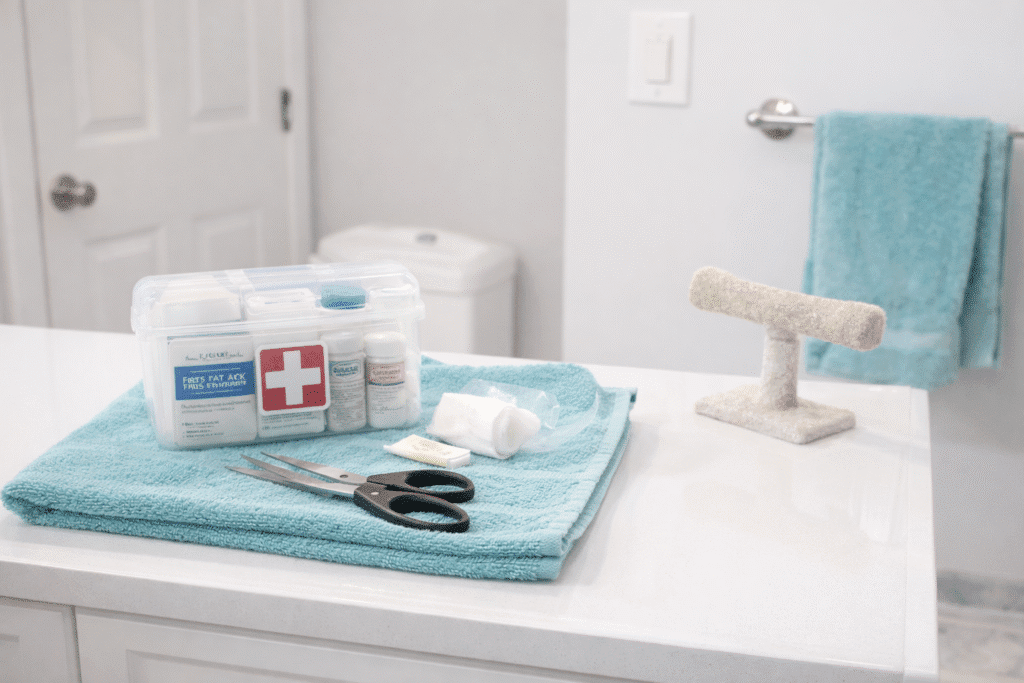
Prepare your quiet location before you bring the bird in. Place your bird first aid kit, sharp scissors, towel, and a small table or lap surface within easy reach. Close windows and doors so there is no escape route. Turn off noisy devices.
Step 2: Gently towel and restrain your bird
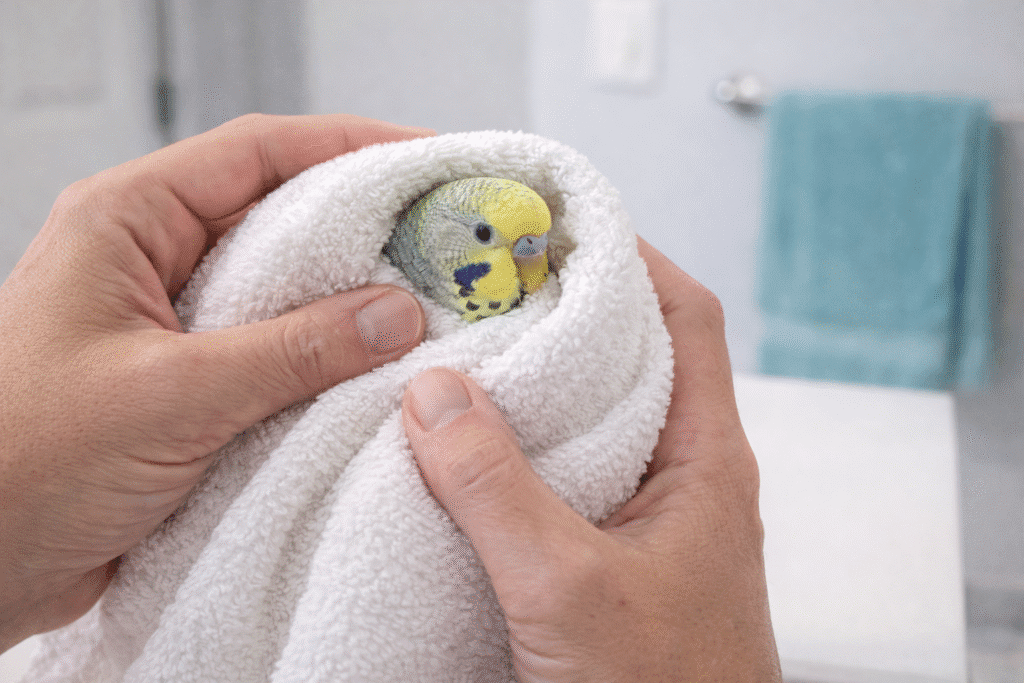
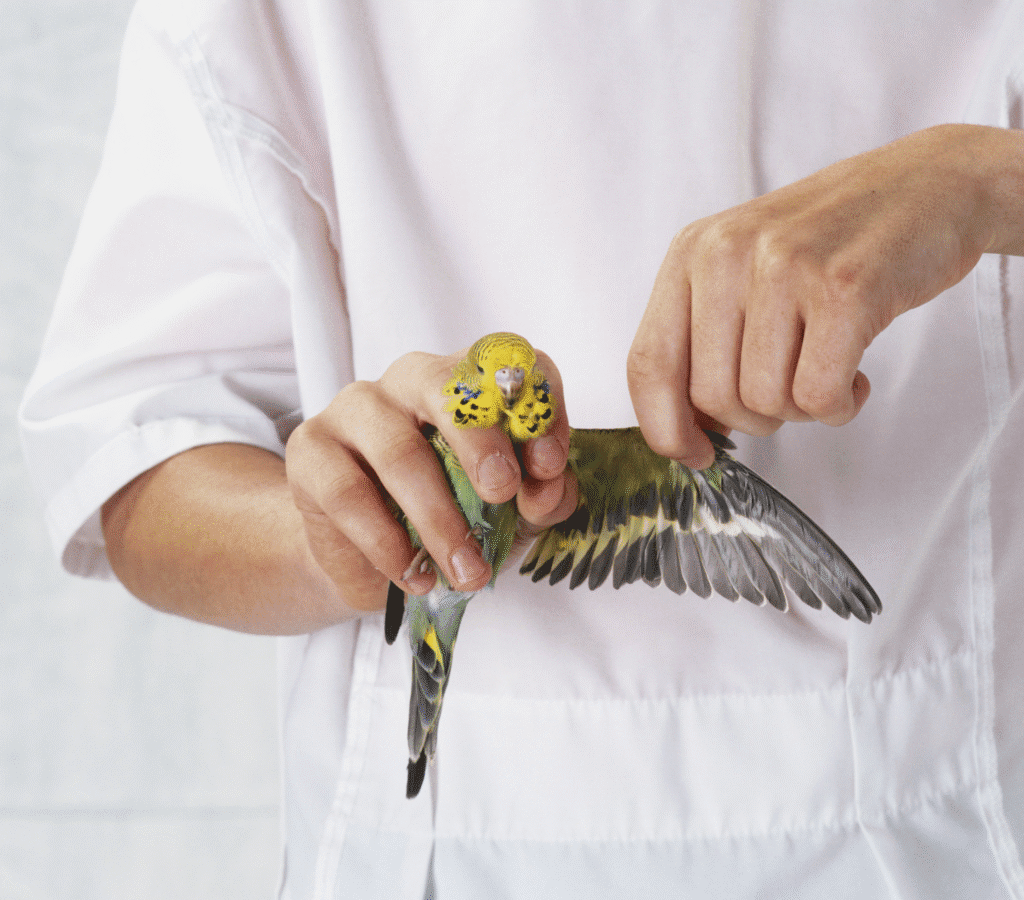
Bring your bird calmly into the room, then gently place the towel over the back and shoulders. Wrap the towel around the body so that the wings are held close to the sides while the head remains supported but not squeezed.
The goal of restraint is firm and gentle, never crushing. Your helper can hold the towel wrapped bird against their body, with the head supported and one wing gently freed at a time for trimming.
Watch for stress signals such as:
- Rapid breathing
- Wide eyes with pinned pupils
- Sudden limpness or struggle that does not stop
If these appear, pause, speak softly, and decide whether to continue or to stop and try another day with professional help instead.
Step 3: Identify the primary flight feathers
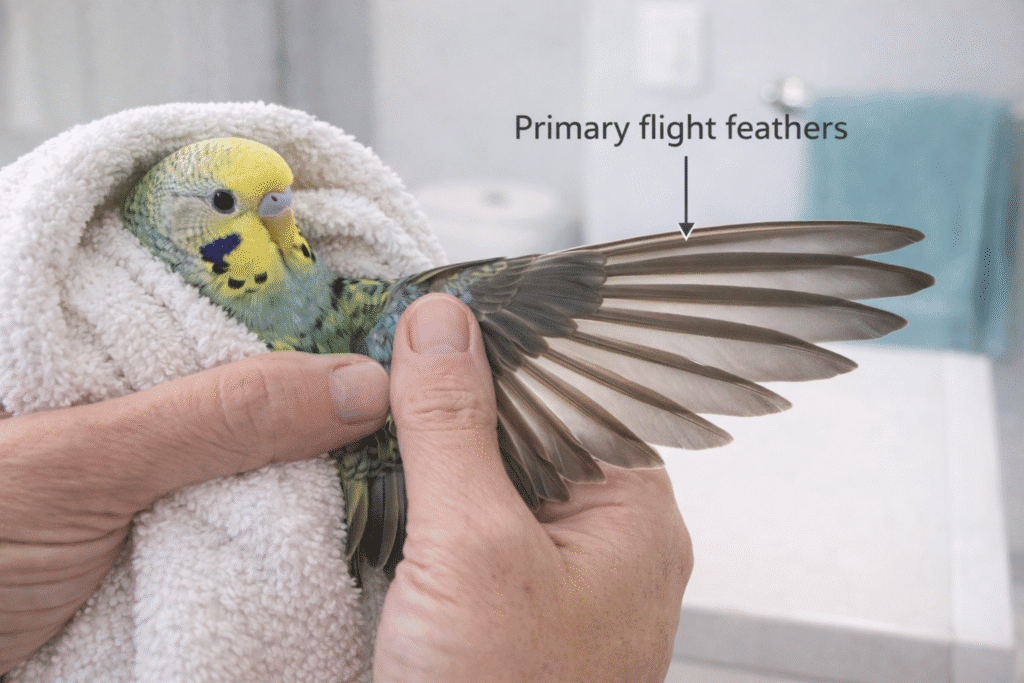
Open one wing carefully. At the outer edge of the wing you will see the longest feathers, which form the wing tip. These are the primary flight feathers. Closer to the body are the secondary feathers, and over the base of the primaries are shorter feathers called coverts that create a smooth surface. thebirdclinic.com
Use good light to inspect each primary feather shaft. Mature feathers usually have a pale or hollow looking shaft, especially toward the tip. Blood feathers often appear darker or reddish at the base, because the shaft still contains blood. Do not clip any feather that appears to be a blood feather. Wikipedia
Step 4: Plan a conservative trim
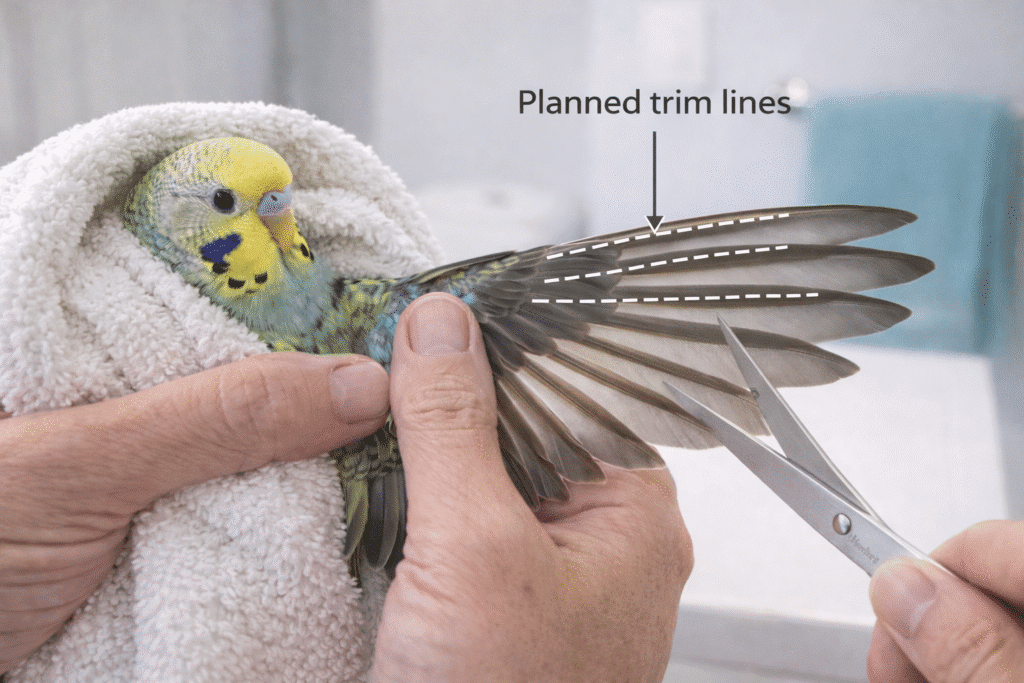
For many small parrots and parakeets, avian veterinarians often recommend trimming only a small number of the outer primary flight feathers on each wing, then testing flight. The exact number depends on species, body weight, and how strong a flier your bird is.
If your vet suggested clipping three to five primaries first, start there rather than assuming more feathers need to be shortened. The aim is to reduce upward lift but still allow controlled gliding.
Step 5: Clip the primary flight feathers

Hold a selected primary feather between your fingers, away from the skin, and position the sharp scissors at the point where you plan to trim. Many veterinary guides suggest cutting the feather somewhere around the middle of its length or just above the level of the primary coverts, leaving enough length for some air control while still limiting lift.
Important details during clipping:
- Make a single smooth cut instead of many small snips
- Stay in the portion of the feather that looks hollow and dry, not dark or full of blood
- Keep your fingers between the scissors and the bird’s body so the blades never touch skin
Repeat this with each planned primary flight feather on that wing, then gently fold the wing back against the body and move to the other wing. Match the pattern so both sides are symmetrical.
Step 6: Test flight ability in a safe space
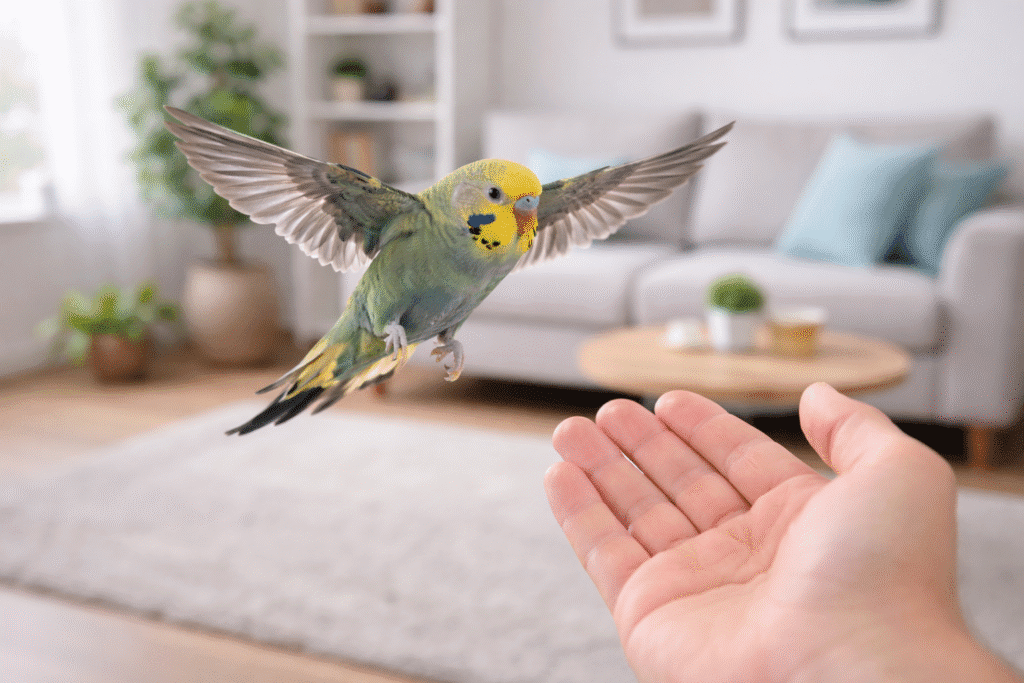
After clipping the same number of primary flight feathers on both wings, return the towel wrapped bird to a secure perch or your hand in a small, safe room. Gently encourage a short hop to a nearby perch or the floor with soft padding.
Watch how your bird moves:
- Ideal result The bird can glide down, land on feet, and does not crash chest first into the floor.
- Too much power The bird still gains significant height and can fly across the room to high spots.
- Too little power The bird drops quickly, struggles to control descent, or stumbles on landing.
If there is still too much lift, you may consider trimming one more primary flight feather on each wing, after discussing limits with your avian veterinarian. If there is too little power or uncontrolled falling, do not shorten more feathers. Let the feathers regrow during molting instead and seek professional advice.
Step 7: When to stop immediately and call an avian veterinarian
Stop at once and contact an avian veterinarian if:
- You notice fresh blood on feathers, towel, or your hands
- A shaft that looked normal suddenly bleeds after cutting
- Your bird becomes very weak, unresponsive, or has trouble breathing
- Your bird repeatedly crashes and seems unable to stand or perch
You can use corn starch, flour, or a commercial styptic product to press gently onto a bleeding feather tip while you contact the clinic, but do not try to pull a blood feather at home unless an avian veterinarian instructs you directly.
Aftercare and recovery
Right after the trim
Once clipping is complete, place your bird back in the cage and allow quiet rest for at least a couple of hours. Many birds are stressed after restraint and wing trimming. During this recovery period:
- Keep the room calm and at a comfortable temperature
- Offer fresh water and familiar food
- Avoid loud training sessions or heavy handling
Owners often notice that a bird may preen the trimmed feathers, rest more than usual, or stay nearer to familiar perches on the day of the trim. This can be normal as long as the bird is alert, breathing comfortably, and still interested in food.
Normal recovery versus warning signs
Normal recovery signs include:
- Eating and drinking within a few hours
- Steady perching without repeated falls
- Some mild annoyance or preening of clipped feathers
Warning signs that need veterinary advice include:
- Ongoing bleeding from any feather
- Repeated falls from perches
- Fluffed feathers with no interest in food
- Open mouth breathing, tail bobbing, or obvious distress
Any ongoing bleeding or breathing change should be treated as urgent.
When re trimming is usually needed
Feathers grow from follicles in the skin and are replaced during molting. Many companion birds go through some degree of molt about once each year, although the pattern can vary and some grow new primary feathers in cycles.
As new primary flight feathers grow in, your bird will gradually regain more lift and distance in flight. Rather than trimming on a strict calendar, watch for:
- Longer primary feathers appearing at the wing tips
- Improved ability to fly higher or farther within the home
- New blood feathers among the primaries
Some veterinary and grooming guides suggest that re trim may be needed every few months for birds who molt and regrow primaries quickly, while others need less frequent trims.
Always avoid clipping fresh blood feathers during these re trims, even if that means accepting a little more flight power until the feather matures. Wikipedia
Expert tips and real life examples
A nervous owner who chooses a vet visit instead
Mina has a small cockatiel who has never had a wing clipping at home. She reads about bird wing trimming, gathers a bird first aid kit, and practices toweling with gentle, very short sessions. When the day comes, her hands shake and her bird struggles more than usual in the towel.
Instead of pushing forward, Mina decides this is a sign to stop. She calls an avian veterinarian, schedules a trim, and asks to observe the procedure. At the appointment she learns where the primary flight feathers are, how to spot a blood feather, and how gently the vet handles the bird. Later, with that experience, she feels more confident about basic restraint at home, even if she still prefers professional trims.
This is a successful, safe choice, not a failure. Knowing when to stop is an important part of responsible wing clipping.
A bird that still flies strongly after a small trim
Rafi, a green cheek conure, is a powerful flier. After a conservative trim of a few primary flight feathers on each wing, he still easily reaches curtain rods and bookshelves. Instead of immediately cutting many more feathers, his owner waits and tests short flights in a safe room.
After discussing it with their avian vet, they decide to trim one additional primary on each wing and keep the length slightly longer than the coverts. This second, small adjustment brings Rafi’s flight down to a controlled glide while still letting him move between low perches.
The key here is gradual adjustment, not a single large trim.
A bird that seems stressed during trimming
Lila, a budgie, normally chatters and explores. During a wing clipping session, she suddenly goes quiet, breathes faster, and her feet feel cool to the touch. Her owner notices these stress signs, stops the clip immediately, returns Lila to her cage, and offers quiet time.
Later, they decide to schedule future trims at a clinic instead of at home. Lila does better when an experienced avian technician performs bird wing trimming quickly while the owner waits nearby.
Recognizing stress signals and choosing a less stressful location or team is an example of putting the bird’s well being first. aav.org+1
Frequently asked questions
Q1: Does wing clipping hurt
When done correctly, clipping primary flight feathers in the portion that has no blood supply should not cause pain, because feathers are similar to hair or nails once fully grown. Cutting into a blood feather, however, is painful and can cause significant bleeding.
Q2: How do I know which feathers to clip
Primary flight feathers are the long feathers at the outer part of the wing. Your avian veterinarian can show you exactly which feathers to target for your bird’s species and how short to trim them. Good lighting and hands on guidance are important, especially for beginners. Vca
Q3: What is a blood feather and what if I nick one
A blood feather is a new or regrowing feather with an active blood supply inside the shaft. It often looks darker or bluish near the base. If you accidentally nick or break a blood feather and it bleeds, use your bird first aid kit to apply gentle pressure with corn starch, flour, or styptic powder, and call an avian veterinarian at once. Do not pull the feather unless a vet specifically advises it, because pulling can cause more bleeding and pain.
Q4: Can I clip wings alone
Some experienced owners who have practiced with veterinary guidance can clip wings alone, but most wing trimming accidents happen when birds are poorly restrained or when the person trimming feels rushed or nervous. For safety, beginners should have a helper and, ideally, an avian veterinarian demonstrate the process before attempting bird wing trimming at home. Vca
Q5: How often do birds need a re trim
There is no single schedule for all birds. Many birds regain flight power as they molt and grow new primary flight feathers, which may be once a year or more often, depending on species and individual molt patterns. Some veterinary sources mention that trims may be needed every few months for birds that grow feathers quickly, but the best guide is your bird’s flight ability and your avian veterinarian’s advice.
Q6: Should I go to an avian veterinarian instead of clipping at home
For many owners, especially first time bird guardians, the safest choice is to have wings clipped by an avian veterinarian or a trained professional. They understand bird anatomy, can recognize health problems early, and can show you how to handle and towel your bird safely. Even if you eventually decide to maintain the trim at home, starting with professional guidance is strongly recommended.
Conclusion
Bird wing trimming is a serious procedure that affects how your bird experiences the world. It can reduce some risks in the home, but it also changes how your bird moves and may carry its own risks when done incorrectly.
The safest path is to:
- Think carefully about whether wing clipping is right for your bird and your home
- Learn about primary flight feathers, blood feathers, molting, and safe restraint
- Prepare a quiet location, a bird first aid kit, and a calm plan before you begin
- Clip only a few primary flight feathers at a time on both wings and test flight gently
- Stop immediately and call an avian veterinarian if you see bleeding, signs of injury, or severe stress
With good information, a cautious approach, and professional guidance, many bird owners can make informed decisions about wing clipping or about keeping their bird fully flighted with training and careful management.
Medical disclaimer
This article offers general information and practical tips but is not a substitute for an in person examination by an avian veterinarian. Every bird is an individual, and only a veterinarian who has examined your bird can give medical advice that is right for your situation.

Dr. Johnson Coleman is a dedicated veterinary expert with over 10 years of hands-on experience in animal health and wellness. His mission is to help pets live longer, happier lives through compassionate care, practical guidance, and a genuine love for animals.
After earning his Doctor of Veterinary Medicine (DVM) degree, Dr. Coleman spent a decade working in both private clinics and community shelters, where he gained deep expertise in preventive medicine, pet nutrition, and behavioral care.
He believes that pet owners deserve reliable, easy-to-understand information about their companions’ health. Through his writing, Dr. Coleman breaks down complex veterinary topics into friendly, actionable advice that helps readers make informed decisions for their pets.
Outside of his professional work, Dr. Coleman volunteers with local animal rescue groups and enjoys spending time outdoors with his two golden retrievers. His lifelong dedication to animal welfare continues to inspire his work and connect with pet lovers around the world.