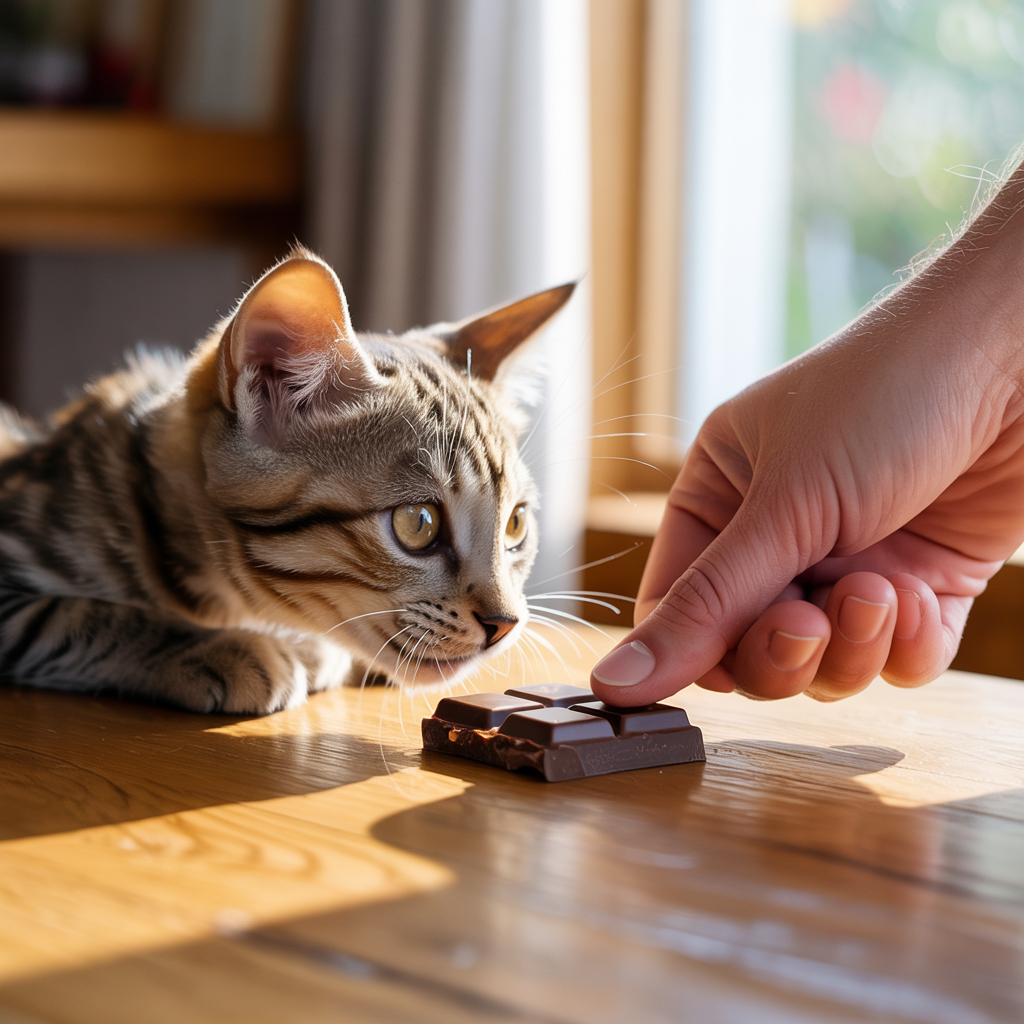

Cats often look like experts at doing nothing. They nap, stretch, wander to the food bowl, then curl up again. Under that relaxed surface though, your cat still has the body and brain of a hunter that is built to move. Getting exercise right is one of the simplest and most powerful ways to protect your cat’s health for life.
In this guide, you will learn how much exercise most cats need at different life stages, how to keep indoor cats active in normal homes, and how to tell if your cat is getting enough or too little. You will also see practical play ideas you can start today, along with clear signs that it is time to call your veterinarian.
Key Takeaways
- Most healthy adult cats do well with about 30 minutes of active play or exercise per day, split into several short sessions, while kittens usually need around an hour or more spread through the day.
- Exercise is not only about burning calories. It also supports joint health, muscle strength, and mental wellbeing, and it helps prevent boredom related problems such as destructive scratching or inappropriate toileting.
- Indoor cats can meet their exercise needs with a mix of interactive play, toys, climbing areas like cat trees, scratching posts, and simple hunting style games with their humans.
- Too little activity can contribute to weight gain, diabetes risk, arthritis, and behavior problems, while too much or unsafe exercise can cause injuries or stress, especially in senior or unwell cats.
- Call your vet if your cat suddenly becomes less active, seems painful when moving, pants during light play, avoids jumping, or stops playing altogether.
What Is Exercise For Cats
Exercise for cats simply means any movement that gets their body and brain working a little harder than rest. For humans we might picture a jog or a gym session. For cats, exercise usually looks like:
- Short bursts of running and pouncing during play
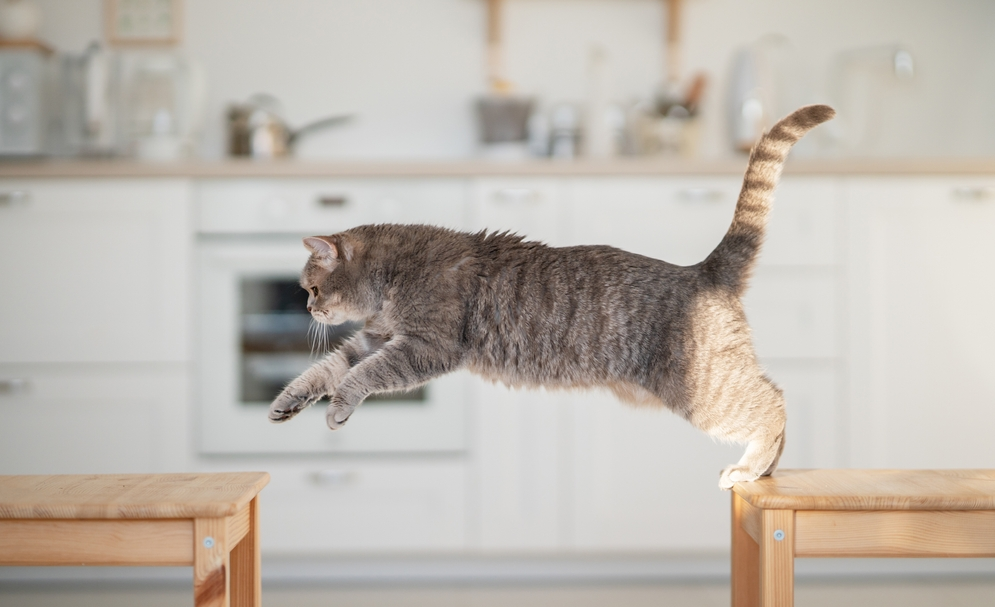
- Climbing and jumping on furniture, shelves, or cat trees
- Batting toys, chasing a teaser wand, or stalking a treat puzzle
- Scratching and stretching on posts or mats
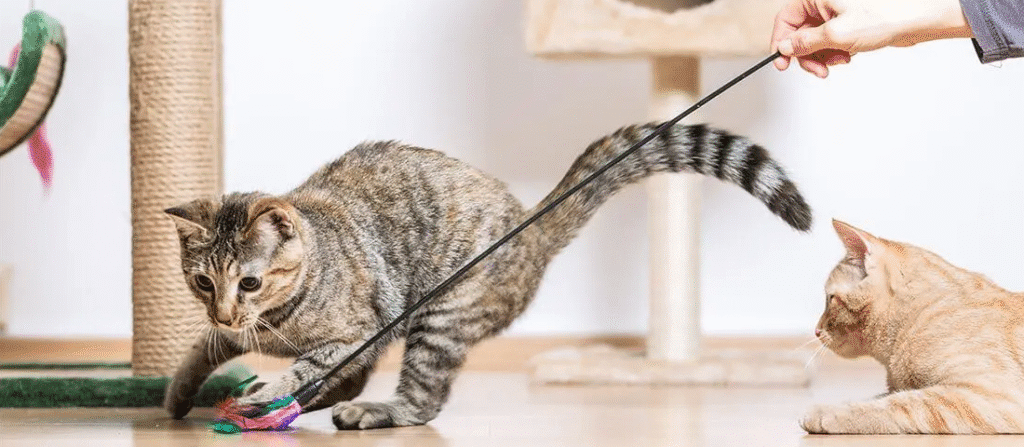
Unlike dogs, cats rarely enjoy one long workout. They are natural sprinters and hunters. In nature, a cat’s day is full of repeated short hunting attempts, bursts of speed, climbing, and hiding, with long rests in between. Good exercise for a pet cat tries to mimic this pattern in a safe, indoor friendly way.
Why Exercise Matters For Everyday Cat Life
Regular movement is not a luxury. It is part of a basic healthy routine just like fresh water, good quality food, and a clean litter box. Exercise:
- Uses up physical and mental energy so your cat is calmer and more content
- Keeps joints and muscles working smoothly so they can still jump onto their favorite spots
- Gives indoor cats a safe way to express hunting behavior that might otherwise show up as furniture attacks or ankle ambushes
When you think about your cat’s day, try to imagine a mix of sleep, exploring, gentle social time, and at least a few active play bursts.
Why Exercise Matters For Your Cat’s Health And Happiness
Physical Health Benefits
Healthy weight and body condition
Regular play helps your cat burn calories and maintain a trim body shape. Overweight cats have a higher risk of diabetes, arthritis, and other problems related to extra stress on their joints and organs, so exercise and nutrition work together to protect long term health.
Joint and muscle support
Gentle but regular movement keeps joints flexible and muscles strong. This is especially important for senior cats, who naturally lose some muscle with age and can develop arthritis. Well chosen games that involve short jumps, stretches, and controlled climbing help maintain their ability to move comfortably.
Better digestion and circulation
Moving around encourages healthy gut motility and circulation. Cats who stay active are often less prone to constipation and may have more energy overall.
Mental And Emotional Benefits
Reduced boredom and stress
Cats that lack mental stimulation can become bored, anxious, or frustrated. Regular play and exploration give them a sense of purpose and control over their environment. This can lower stress and often improves sleep and general mood.
Prevention of behavior problems
Many common issues such as nighttime zoomies, rough play with hands, destructive scratching, or inappropriate toileting can be linked to boredom or unmet hunting needs. Structured play sessions and enriching toys can redirect that energy into healthier outlets.
Better bonding with you
Interactive play with wand toys, treat puzzles, or clicker games builds trust and connection. Your cat learns that good things happen when you engage with them, which strengthens your relationship and makes handling, grooming, and vet visits easier.
How Much Exercise Your Cat Needs
Every cat is an individual, but there are useful starting points based on age, lifestyle, and health. The reference article notes that kittens often need about an hour or more of exercise per day, while many adults do well with around 30 minutes.
Think of this not as one long workout but as several short play bursts spread throughout the day.
General Daily Exercise Guidelines
You can use this simple table as a starting point:
- Kittens under 1 year
- Aim for about 3 to 5 short play sessions of 10 to 20 minutes each across the day and evening
- Total active time around 60 minutes or more, adjusted to your kitten’s energy
- Adult cats 1 to about 7 years
- Aim for 2 to 3 structured play sessions of about 10 to 15 minutes
- Total active time around 30 minutes or more per day
- Senior cats 7 years and older
- Aim for 2 to 3 gentle play sessions of about 5 to 10 minutes
- Focus on low impact activities and allow more rest between sessions
These are examples, not strict rules. Some active breeds and individuals may happily play much more, while others are satisfied with the lower end of these ranges.
Indoor Versus Outdoor Cats
Indoor only cats
Indoor cats rely almost entirely on you and their home setup for exercise. They usually need more deliberate play sessions and environmental enrichment than outdoor cats. Think climbing furniture, scratching posts, puzzle feeders, and several daily play bursts.
Outdoor or indoor outdoor cats
Cats with safe outdoor access often move more naturally through climbing, exploring, and stalking. They still benefit from indoor enrichment, but you may not need as many structured play sessions. You still should monitor their weight, joints, and behavior and step in with extra play if they seem restless or bored.
Lifestyle And Health Adjustments
- Very active or high prey drive cats may enjoy more frequent sessions and more intense wand games or exercise wheel time.
- Calm or shy cats might prefer shorter, quieter play near hiding places or with slower moving toys.
- Cats with arthritis, heart disease, or other medical issues need a tailored plan based on veterinary advice. For these cats, frequent gentle movement is usually better than intense play. Always check with your vet before starting a new exercise routine if your cat has known health problems.
Risks, Warnings, And Common Mistakes To Avoid
Doing Too Little
If a cat does not get enough movement over time, you might see:
- Gradual weight gain and difficulty feeling their ribs
- Less interest in exploring or jumping
- More nighttime restlessness and vocalizing
- Destructive scratching or attention seeking behavior
- Increased risk of diabetes and joint disease over the long term
Doing Too Much Or Pushing Too Hard
Common mistakes include:
- Very long or intense play sessions that leave your cat panting or hiding
- Forcing a fearful or senior cat to chase or jump when they seem uncomfortable
- Sudden changes from low activity to very vigorous games without a gradual build up
- Ignoring signs of pain such as limping, reluctance to jump, or stiffness after play
Cats are usually good at stopping when they have had enough, but some will keep chasing a toy even when tired, so your job is to watch for early signs of fatigue.
Safety Concerns
To keep exercise safe:
- Avoid toys with loose strings that could be swallowed when you are not watching
- Make sure climbing structures are stable and fixed so they do not tip
- Keep breakable objects away from play areas
- Use only well fitted harnesses and leashes if you walk your cat outside
When To Call Your Vet
Contact your veterinarian if you notice:
- Sudden drop in activity level or willingness to play
- Limping, stiffness, or difficulty jumping onto usual surfaces
- Open mouth breathing or panting during light play
- Sudden weight gain or weight loss without an obvious cause
- Aggression or sudden withdrawal during play, which can signal pain
Your vet can check for arthritis, heart or respiratory conditions, or other problems that may affect how much and what type of exercise is safe.
Step By Step Guide To Exercising Your Cat Safely
Step 1: Check Your Cat’s Starting Point
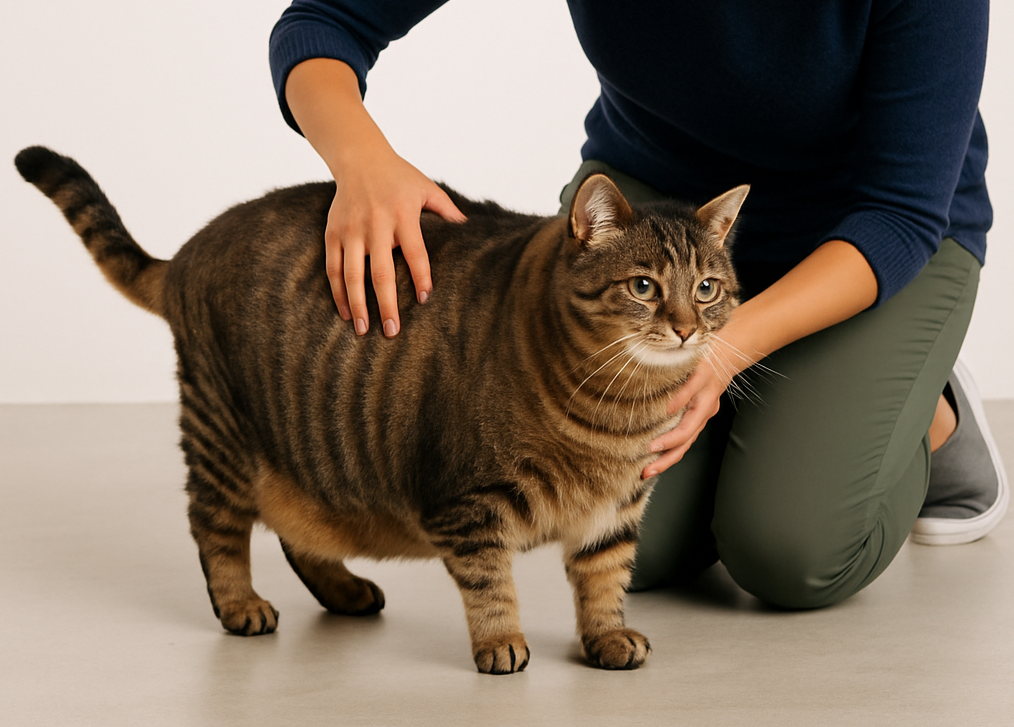
- Look at your cat’s current weight, body shape, and energy level.
- Note any known medical issues and current medications.
- If your cat is senior, overweight, or has health concerns, plan a vet check before making big changes.
Step 2: Prepare A Safe Play Environment
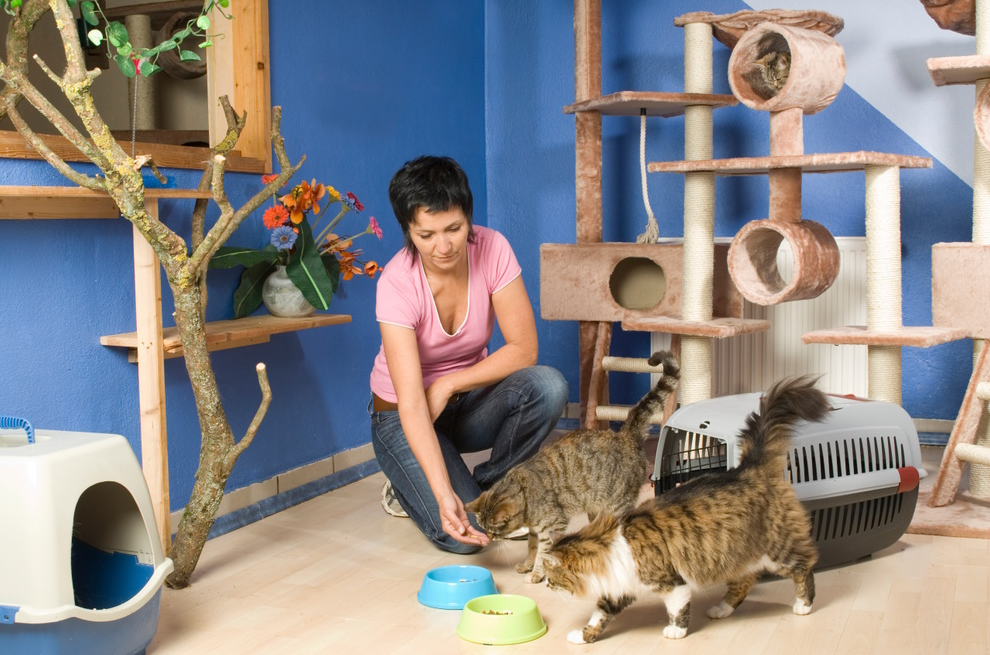
- Choose a room with limited breakable items and good traction on the floor.
- Put away loose strings or tiny objects that could be eaten.
- Set up a few safe spots where your cat can retreat, such as a bed or an open box.
Step 3: Choose The Right Toys
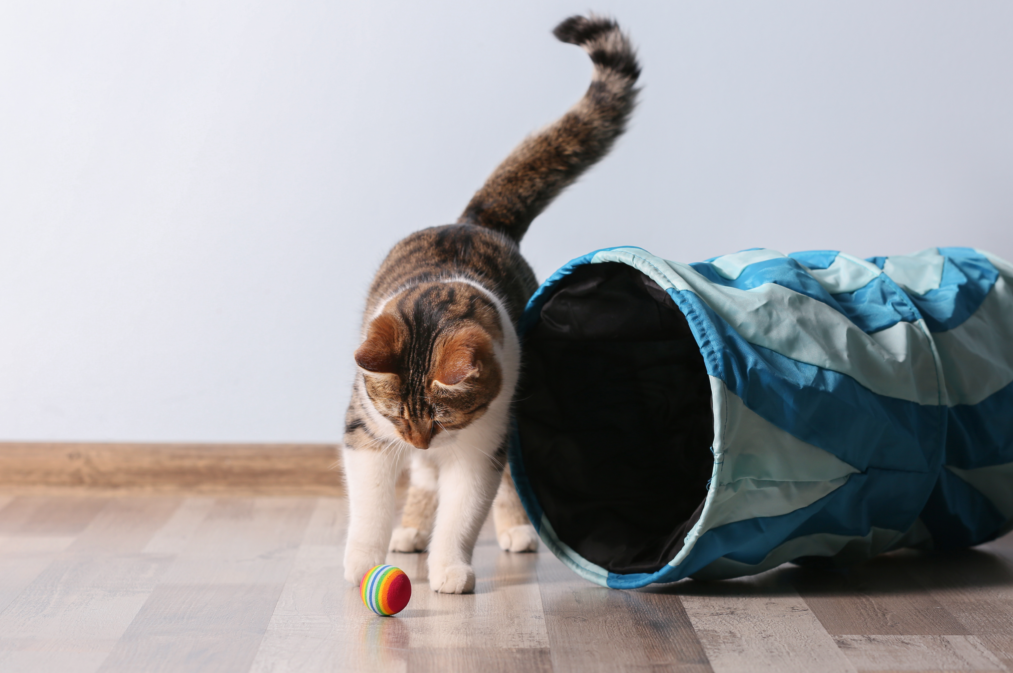
- Wand or teaser toys to mimic birds or small animals
- Soft balls or catnip mice for batting and chasing
- Puzzle feeders for food motivated cats
- A sturdy scratching post or cat tree nearby for stretching and climbing
Start with two or three options and swap them regularly so your cat does not get bored.
Step 4: Start With Short, Fun Sessions
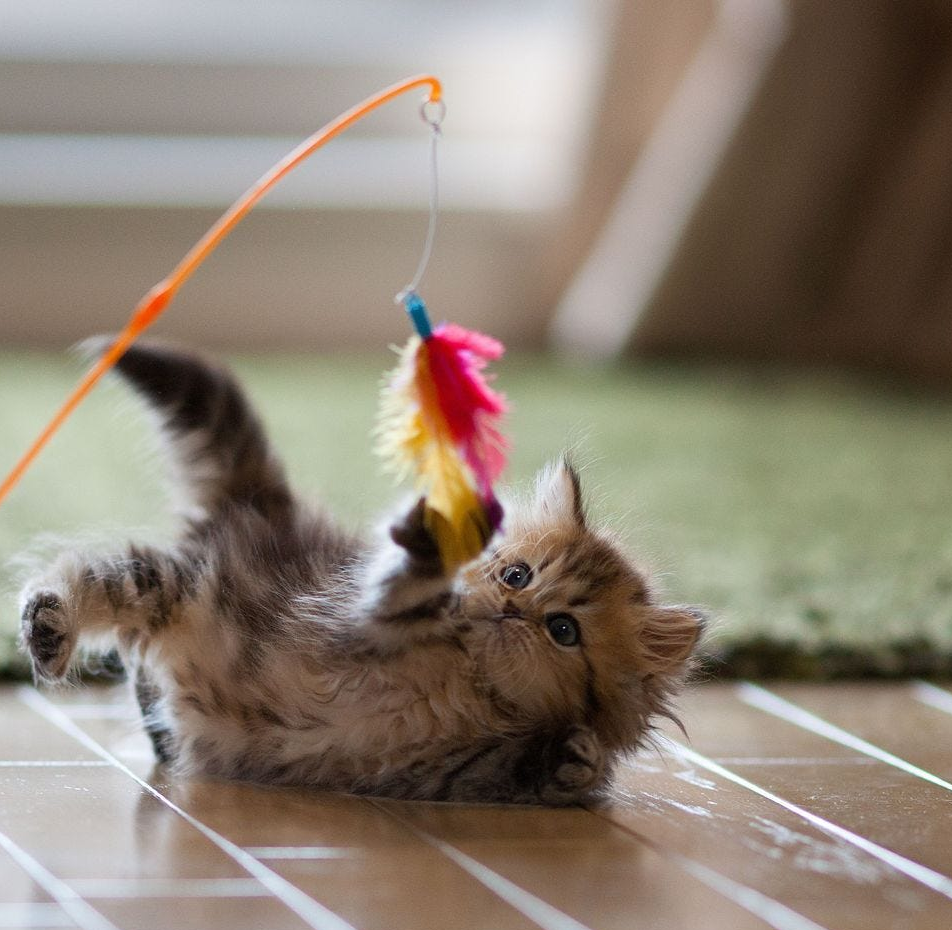
- Begin with about 5 to 10 minutes for adults and seniors, and slightly longer for kittens if they are still eager.
- Move the wand toy like prey, with short bursts of speed, changes in direction, and pauses that invite a pounce.
- Let your cat catch the toy from time to time so the game feels rewarding.
Step 5: Build Up Gradually
Over days and weeks, lengthen play sessions a little and add an extra one if your cat is keen, watching carefully for signs of fatigue. For many adult cats, the goal is two to three sessions per day that total about 30 minutes, while kittens often do best with more frequent, shorter bursts.
Step 6: Watch Body Language And Breathing

Stop or slow down if you see:
- Rapid breathing or open mouth panting
- Ears pinned back, tail flicking hard, or dilated pupils combined with hiding
- Limping, stiffness, or hesitation to jump
Offer water, a calm voice, and a safe space. If the signs are unusual or severe, contact your vet.
Step 7: End On A Positive Note
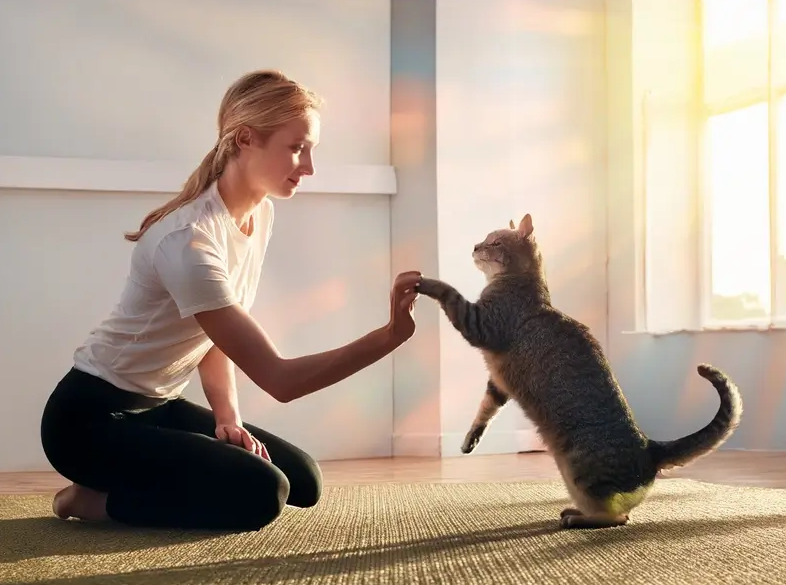
Near the end of the session:
- Gradually slow the toy so your cat can make a final successful catch.
- Offer a small treat or some gentle petting if they enjoy touch.
- Allow quiet cool down time on a bed, perch, or window seat.
Practical Ideas, Enrichment Examples, And Expert Tips
Here are realistic ways to build exercise into normal home life, even in small spaces.
Simple Daily Games
- Hunt the wand
Use a feather or ribbon wand and move it along the floor, behind furniture, and over chairs. Short, intense bursts copy real hunting and can be very satisfying. - Stair or hallway sprints
If it is safe, toss a soft toy or ball down a hallway or a few steps and let your cat chase. Only do this if your cat has healthy joints and good traction. - Treat toss
Toss a few pieces of their normal dry food across the room one at a time, so your cat has to run or walk after each piece.
Enrichment For Indoor Cats
- Cat trees and shelves
Place a cat tree near a window so your cat can climb and watch birds. This encourages natural climbing and stretching. - Scratching posts and mats
Offer both vertical posts and flat mats. Scratching is a kind of full body stretch that gently works muscles and keeps nails healthy. - Puzzle feeders and food toys
Hide part of your cat’s meal in puzzle feeders or rolling food toys so they have to move, bat, and think to get their food. - Exercise wheels
Some active cats enjoy running on a sturdy exercise wheel. Introduce it slowly with treats and praise.
Low Cost Or DIY Options
- Crumpled paper balls or cardboard toilet roll rings to bat and chase
- A cardboard box maze with cut out doors and windows
- Homemade treat trails where you hide small pieces of kibble under paper cups
Tips For Different Cats
- Shy or fearful cats
Start with quieter toys like slow moving ribbons on the floor or food puzzles. Play near hiding spots and keep sessions short and predictable. - Multi cat households
Give each cat individual playtime so one confident cat does not dominate all the fun. Have several scratching posts and resting places to reduce tension. - Senior cats
Focus on slow wand games at floor level, gentle climbing onto low platforms, and puzzle feeders that encourage movement without jumping.
On a typical day, you might have one play burst in the morning before work, a short lunchtime or afternoon game, and one or two in the evening when cats are naturally more active at dusk.
How To Tell If Your Cat’s Exercise Routine Is Working
Positive Signs
Your cat’s exercise plan is probably on track if you notice:
- A stable, healthy weight and waistline that you can see from above
- Good muscle tone along the legs and back
- Bright eyes, regular grooming, and interest in play
- Calm but content behavior between sessions with fewer destructive habits
Neutral Signs
These signs mean things are acceptable but could be improved:
- Your cat plays sometimes but loses interest quickly
- Weight is stable but your vet would like them a little leaner
- Some mild boredom signs such as meowing in the evening or chasing feet now and then
Try slightly longer or more frequent sessions, or add new toy types or puzzle feeders.
Warning Signs
Change the plan and call your vet if you see:
- Refusal to play or sudden drop in activity
- Limping, stiffness, or trouble jumping
- Panting, coughing, or rapid breathing during light activity
- Ongoing weight gain even with active play and appropriate food portions
- Aggression toward people or other pets during or after play
These may signal pain, illness, or stress that needs professional assessment.
Frequently Asked Questions
Q1: How much exercise does an indoor cat really need
Most healthy indoor adult cats benefit from about 30 minutes of active play per day, divided into two to three short sessions. Kittens and very active cats often need more frequent bursts, while seniors usually do best with shorter, gentler games. Always adjust based on your cat’s behavior and your vet’s advice.
Q2: Is it okay if my cat does not like to play much
Some cats are naturally calmer or less playful, but a sudden loss of interest can be a pain or illness sign. First, try different toy types, slower games, or food puzzles. If your cat still does not want to engage or seems uncomfortable when moving, schedule a vet visit to check for arthritis or other health issues.
Q3: Do indoor cats need walks on a leash
Leash walks can provide great mental and physical stimulation, but they are not essential for every cat. Some cats love them, others find them stressful. If you decide to try walking, use a secure harness, introduce it slowly indoors, and only walk in quiet, safe areas. Indoor cats who do not walk can still thrive with good play and enrichment at home.
Q4: How quickly will I see changes if I start playing with my cat more
Many owners notice behavior changes such as calmer evenings and less destructive scratching within a few days to a couple of weeks of consistent play. Weight and muscle changes take longer, often several weeks to a few months. The key is steady, daily effort rather than short bursts of intense exercise.
Q5: Can exercise cause problems if my cat has arthritis or heart disease
If your cat has a known medical condition, you should always ask your vet before changing their exercise routine. In many cases, gentle, frequent movement is very helpful, but intensity and duration need to be tailored to their condition. Your vet can suggest safe types of play and how long each session should be.
Conclusion
Exercise for cats does not have to look like human workouts. It is really about building small, regular moments of hunting style play, climbing, and exploring into your cat’s day. When you match the amount and type of activity to your cat’s age, lifestyle, and health, you support a healthy weight, stronger muscles and joints, and a calmer, happier companion.

You do not need to be perfect or buy every new toy. Start with a simple routine such as two short wand play sessions each day and a puzzle feeder for one meal. Watch how your cat responds, then slowly add new ideas from this guide. Over time, you and your cat will settle into a rhythm that feels natural and enjoyable.
Always consult a veterinarian or qualified pet professional for specific cases, especially if your pet has existing health issues or sudden behavior changes. Their guidance, combined with your daily observations, is the best way to keep your cat safely active and thriving.

Dr. Johnson Coleman is a dedicated veterinary expert with over 10 years of hands-on experience in animal health and wellness. His mission is to help pets live longer, happier lives through compassionate care, practical guidance, and a genuine love for animals.
After earning his Doctor of Veterinary Medicine (DVM) degree, Dr. Coleman spent a decade working in both private clinics and community shelters, where he gained deep expertise in preventive medicine, pet nutrition, and behavioral care.
He believes that pet owners deserve reliable, easy-to-understand information about their companions’ health. Through his writing, Dr. Coleman breaks down complex veterinary topics into friendly, actionable advice that helps readers make informed decisions for their pets.
Outside of his professional work, Dr. Coleman volunteers with local animal rescue groups and enjoys spending time outdoors with his two golden retrievers. His lifelong dedication to animal welfare continues to inspire his work and connect with pet lovers around the world.