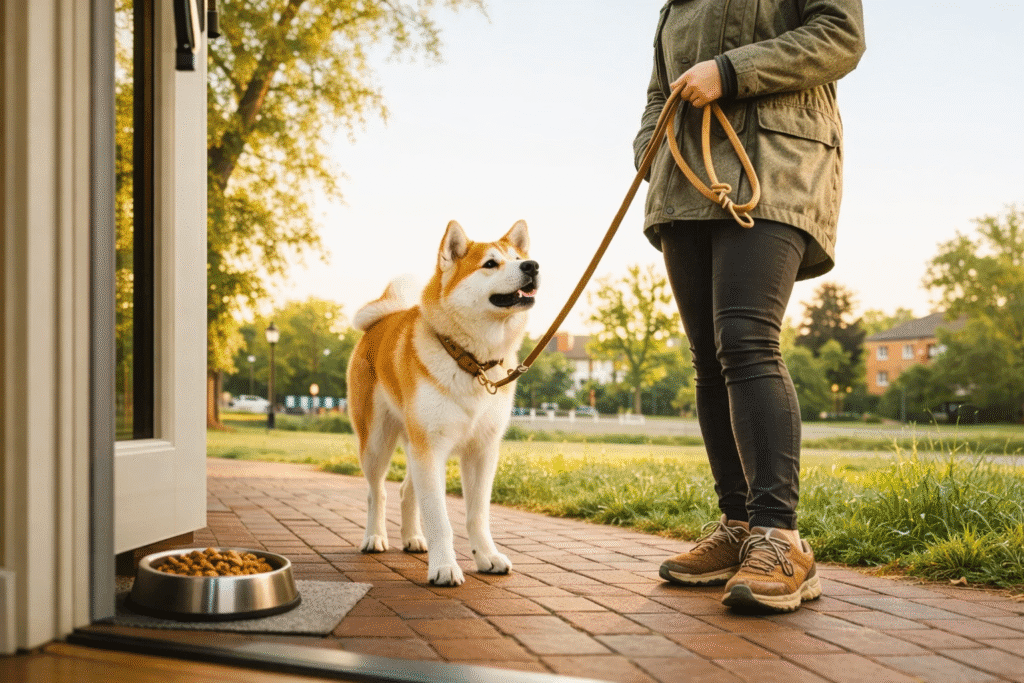
Dogs love predictable days, but many owners are not sure what should come first in the morning or evening: food or a walk. It can feel like a small detail, yet the order and timing around meals affects potty training, digestion, and even the risk of serious problems like bloat.
This guide walks you through how to plan feeding and walking so your dog can start and end each day feeling comfortable and calm. We will look at what veterinarians recommend, how age and health conditions change the plan, and how to design a routine that works in real life.
By the end, you will have a clear, flexible framework you can adjust for your own dog with confidence, backed by veterinary sources and real world examples.
Key Takeaways
- Most healthy dogs do best with a short potty break before breakfast and dinner, then their meal, then a longer rest, and later a proper walk or exercise session. American Kennel Club
- A consistent routine helps with potty training and reduces accidents because dogs learn that eating is followed by going outside to pee and poop.
- Short, calm leash walks to toilet are usually safe close to mealtime, but more intense exercise is safest at least one to two hours away from a full meal, especially for large or deep chested breeds at higher risk of bloat. Mission Veterinary Clinic
- Dogs with medical issues such as bilious vomiting syndrome often need several smaller meals and sometimes a small snack early in the morning and late at night to avoid long periods with an empty stomach.
- Puppies, adult dogs, seniors, and dogs with special health needs all require slightly different timing, so there is no single perfect schedule for every dog. When in doubt, ask your veterinarian for a plan tailored to your dog.
What Is The Mealtime Routine Debate And Why Routine Matters
The main question many owners ask is simple: should dogs eat before a walk or walk before a meal. On the surface it sounds like a small choice. In reality it is about building a predictable pattern of eating, bathroom breaks, and activity that works with a dog’s body rather than against it.

Veterinarians and behavior experts often remind owners that dogs are creatures of habit. A regular schedule for meals and walks helps their digestive system, sleep rhythm, and training. According to VCA Animal Hospitals, feeding dogs at set times, usually in at least two meals, supports both health and house training because dogs tend to need to relieve themselves shortly after eating. Vca
A veterinarian emphasized that planning the order of feeding and walking is part of building a consistent routine, especially when you are potty training or managing digestive issues.
In a daily routine, three pieces are tightly linked:
- Meals
- Potty breaks
- Exercise or play
When these three move around at random, dogs may feel uncertain. That can lead to accidents in the house, begging, restlessness, or digestive upset. When they are placed in a steady pattern, most dogs relax because they can predict what happens next.
A thoughtful mealtime routine is not just about avoiding problems. It also gives you many chances each day to reinforce good habits, reward calm behavior, and build trust between you and your dog.
Key Benefits And Advantages Of Getting The Routine Right
A smart schedule for feeding and walking gives you more than a tidy floor. Here are the main advantages, with a focus on how the order of events helps.
Better potty training and fewer accidents
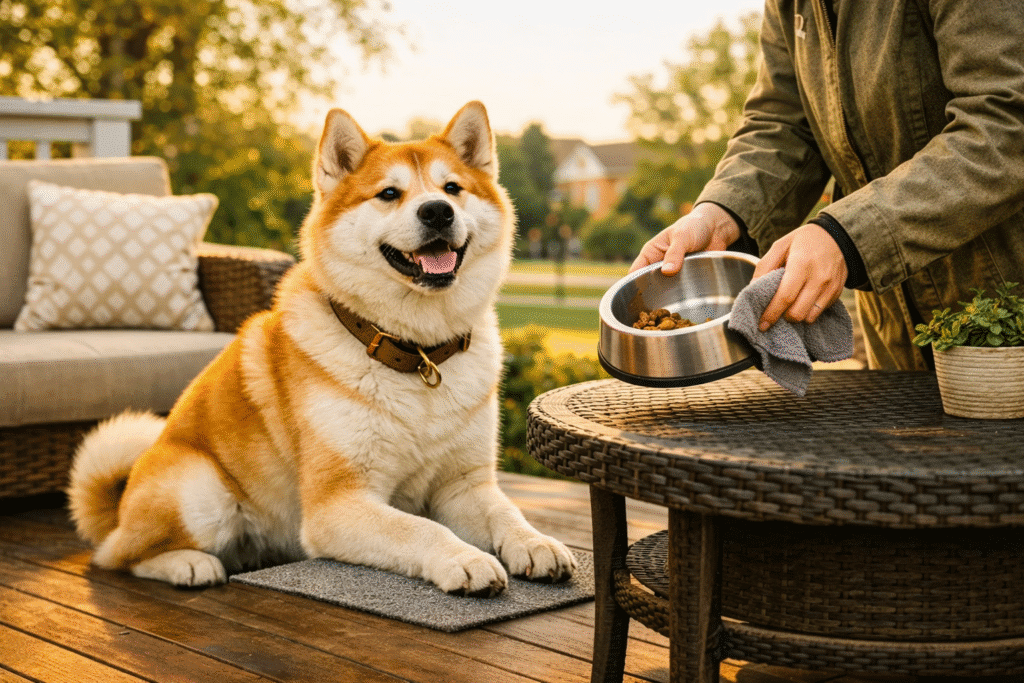
When meals and toilet breaks have a clear rhythm, dogs learn faster where and when to relieve themselves. The American Kennel Club notes that linking regular meals with trips outside makes house training more successful, since puppies usually need to go soon after eating. American Kennel Club
If you always offer a quick potty walk before breakfast when the bladder is full, you also reduce the chance of a morning accident indoors.
Improved digestion and less stomach upset
Dogs have stomachs that empty a few hours after a meal, and then hunger signals return eight to ten hours later. Regular meals and realistic gaps between exercise and eating give the digestive system time to work without extra stress. Vca
A good routine can help with:
- Gas and mild bloating
- Hunger vomiting in dogs with sensitive stomachs
- Loose stools from overexcitement around meals
Lower risk of serious conditions like bloat in at risk dogs
Large and deep chested breeds have a higher risk of gastric dilatation and volvulus, a life threatening twisting of the stomach. Veterinary sources point out that exercise right after eating a large meal or immediately after drinking a lot of water is one of several factors that may increase this risk. Veteris
A balanced schedule that separates hard play from mealtimes can therefore be an important safety step.
Calmer behaviour because the dog knows what to expect
When dogs know that a short toilet break, a meal, and then a longer walk will happen every morning at roughly the same times, they tend to rest more easily between events. This predictability can reduce:
- Pre meal whining and pacing
- Middle of the night restlessness
- Attention seeking barking around routine times
Easier management for busy households
A written routine also helps human family members. Everyone understands when to feed, when to offer toilet breaks, and when it is safe to schedule longer activities like a jog, a park visit, or a training class. This consistency is especially helpful in homes with children or multiple caregivers.
Risks, Warnings, And Common Mistakes To Avoid
Most dogs tolerate routine variations fairly well, but some patterns around meals and walks can cause problems.
Vigorous exercise too close to a large meal
Veterinary and pet health organisations repeatedly warn against intense exercise soon after eating because of the link with bloat in at risk breeds. Advice from sources such as VCA Animal Hospitals and several veterinary clinics includes avoiding athletic play for roughly one to two hours after a meal and leaving at least thirty minutes after hard exercise before feeding.
A calm toilet walk on a leash is usually considered low risk, but a game of fetch, running beside a bicycle, or rough play in a dog park right after eating is not wise, especially for big, deep chested dogs.
Very long gaps between meals in some dogs
Dogs with bilious vomiting syndrome often vomit yellow or greenish fluid after long periods on an empty stomach, usually late at night or early in the morning. Veterinary resources recommend feeding smaller, more frequent meals and sometimes adding a late evening snack or early morning snack so the stomach is not empty for too long.
Many healthy adult dogs can tolerate two meals a day without trouble, but if your dog often vomits yellow fluid on an empty stomach, your vet may suggest spreading the same total amount of food over more meals.
Inconsistent potty opportunities
Skipping a toilet break before bed or ignoring a dog’s signal to go out after dinner is a common cause of overnight accidents, especially in puppies and older dogs. Guidance from the AKC and other training sources stresses frequent, predictable trips outside as the foundation of potty training.
Overexcited transitions
If mealtime always starts with a door flying open, fast running, and a full bowl waiting, some dogs become over aroused. That can lead to gulping food, swallowing air, and rough play on a full stomach, which again is not ideal for digestion or bloat risk.
Age Specific Guidelines And Special Situations
Every dog is an individual, but age and health needs give useful starting points for your schedule.
Puppies
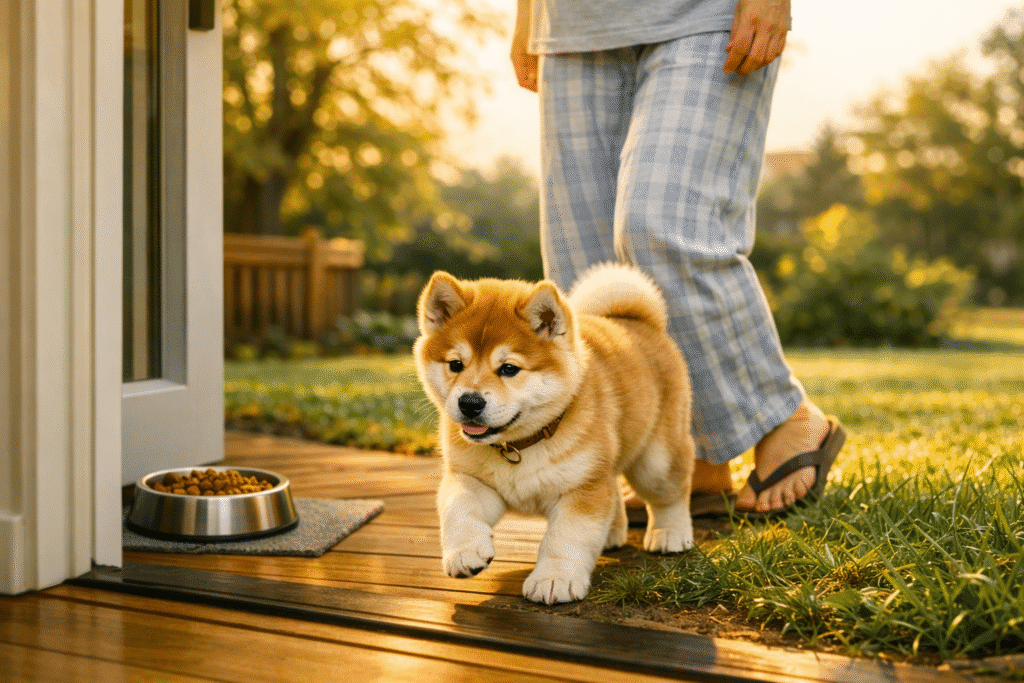
Young puppies have tiny bladders and developing digestive systems. Training sources and veterinary advice suggest taking puppies outside very frequently, including first thing in the morning, after every meal, after naps, after play sessions, and at least every one to two hours during the day.
Most puppies also need three to four meals per day in the early months. Animal welfare organisations and veterinary sources give general ranges such as:
- Under three months of age: roughly four small meals per day
- Around three to six months: three meals per day
- From about six months: usually two meals per day, unless your vet suggests otherwise oasy.com+3Dogs Trust+3years.com+3
Sample puppy morning
- Wake up and go straight outside for a toilet break
- Short calm sniff and walk until the puppy pees and, ideally, poops
- Back inside for breakfast
- After ten to fifteen minutes, take the puppy out again before playtime
This pattern teaches the pup that going outside is the right place to relieve themselves and that meals are part of a predictable chain of events.
Adult dogs
Most healthy adult dogs do well on two meals per day at regular times. Several veterinary and welfare organisations mention that twice daily feeding suits adult dogs and that many owners choose morning and evening meals around their own schedule. oasy.com
Many adults prefer to empty their bladder early, before breakfast, especially if they have been inside all night. They usually also need a chance to go out after work or after long periods alone.
Sample adult routine
- Early morning: short toilet walk
- After returning: breakfast, then quiet time to digest
- Later in the day: main walk or exercise session, well separated from meals
- Evening: toilet break, then dinner, then a final short toilet trip before bed
Senior dogs
Senior dogs often have:
- Slower digestion
- Reduced bladder control
- Joint pain or other mobility issues
They may need more gentle, shorter walks and possibly more frequent toilet breaks, even if the number of meals stays the same. For example, an older dog might appreciate:
- A gentle toilet walk before breakfast
- A slightly smaller breakfast to avoid a very full stomach
- Several short, easy walks spread through the day
- An early evening dinner and then one or two calm toilet trips before bed
Owners should watch for signs like pacing, restlessness, or accidents, which can signal that the current schedule is too demanding.
Dogs with medical needs
Certain health conditions change the usual advice.
Dogs at higher risk of bloat
Large and deep chested breeds such as Great Danes, German Shepherd Dogs, Standard Poodles, and some mixed breeds have a higher risk of life threatening gastric dilatation and volvulus. Veterinary sources recommend:
- Feeding several smaller meals rather than one heavy meal
- Using slow feeding bowls if the dog gulps food
- Limiting water intake right after a large meal
- Avoiding vigorous exercise, excitement, or stressful events directly before and after eating PetWell+6Vca+6PetMD+6
For these dogs, short toilet walks near mealtimes are usually fine, but runs, fetch sessions, or dog sport training should be planned for times well away from meals.
Dogs with bilious vomiting syndrome or sensitive stomachs
As noted earlier, dogs with this condition often benefit from shorter gaps between meals, such as three or more small feedings per day and a snack late at night or very early in the morning.
The total daily food amount should not increase, but each serving becomes smaller. For these dogs, the question is less about whether food or walk comes first and more about avoiding long stretches with no food in the stomach.
Your veterinarian may also adjust timing for other conditions, for example diabetes, medications that must be given with food, or joint issues that limit exercise.
Short Walks Versus Exercise Sessions Around Mealtime
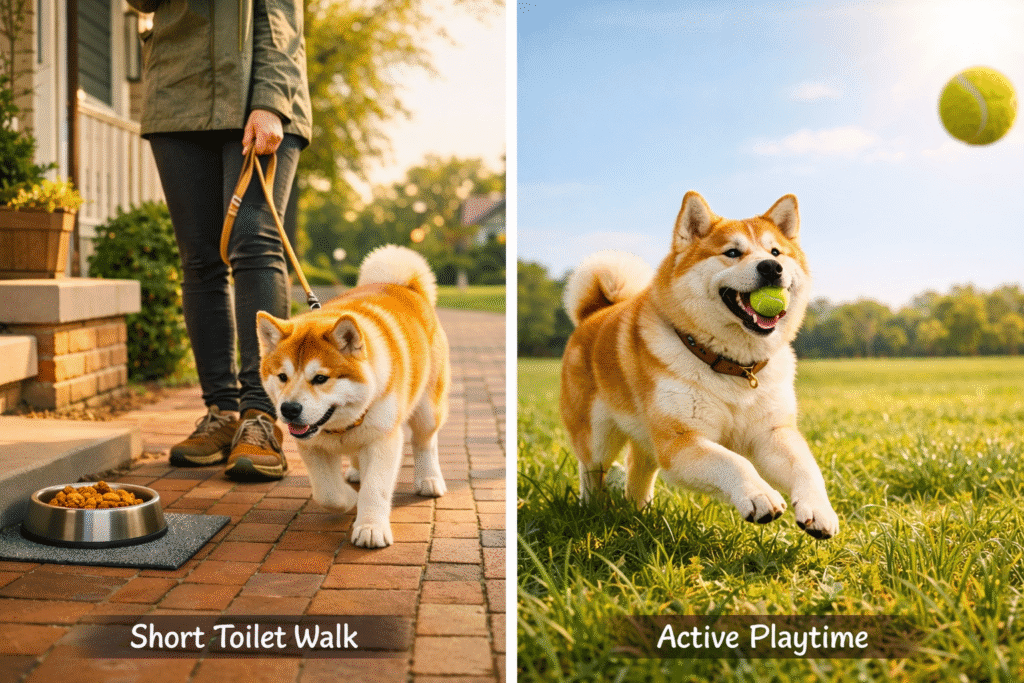
A key point in the mealtime debate is the difference between a quick toilet walk and true exercise.
Short toilet walk
- Usually ten to fifteen minutes on a leash
- Calm pace and controlled movements
- Main goal is to pee and poop
These short outings are typically safe before or after meals for most dogs. A quick walk before breakfast or dinner lets your dog relieve themselves comfortably. A brief trip out after eating helps with potty training.
Exercise session
- Longer duration, often thirty minutes or more
- Higher intensity such as running, fetch, agility practice, or rough play
- Heavy panting, jumping, or sudden twisting movements
Multiple veterinary sources advise leaving a clear gap between this kind of exercise and full meals, especially for large and deep chested breeds. Many recommend waiting at least one to two hours after eating before vigorous activity and avoiding intense exercise immediately before a meal as well.
Example day for a healthy adult dog
- Early morning: short toilet walk
- After returning: breakfast followed by quiet rest for at least one hour
- Late morning or afternoon: main exercise session or long walk
- Late afternoon or early evening: short toilet outing
- Evening: dinner followed by gentle family time
- Before bed: last quick toilet trip
This pattern respects the dog’s need for both bathroom breaks and safe timing around exercise and meals.
Step By Step Guide To Building A Healthy Daily Routine
You can build a personalised schedule in a few simple steps.
- Decide how many meals per day your dog needs
Many adult dogs thrive on two meals per day around twelve hours apart. Puppies often need three or four, and some seniors or dogs with medical issues may need smaller, more frequent meals. Follow your vet’s advice on this point. Wiley Online Library+7Vca+7Dogs Trust+7 - Choose approximate meal times that fit your lifestyle
For example, breakfast shortly after you wake up and dinner in the early evening. Try to keep the times reasonably consistent from day to day. - Place toilet breaks around those meals
Plan a short trip outside first thing in the morning, another soon after each meal, and a final toilet walk before bed. Puppies and some seniors will need more frequent breaks. - Set safe windows for longer exercise
Choose times well separated from meals for games, runs, or training classes. Many owners pick late morning or late afternoon, away from breakfast and dinner, especially for dogs at higher risk of bloat. - Layer in mental enrichment and rest
Add short training sessions, chew time, and quiet naps between walks and meals. A balanced day is not only about physical activity. - Write the plan down and share it with your household
A simple chart on the fridge or reminders on your phone help everyone follow the same routine. - Monitor your dog and tweak the plan
Watch stool quality, appetite, energy, and mood. If you notice vomiting, diarrhea, frequent accidents, or signs of discomfort, adjust the timing gently and speak with your veterinarian.
Expert Tips And Real Life Examples
Here are practical ideas that reflect what many vets and experienced owners find works well in daily life.
Tip 1: Start the morning with a quick toilet break
If your dog has been holding urine overnight, going straight outside avoids accidents and lets them relax before breakfast. This is especially important for puppies and senior dogs.
Tip 2: Use meals as training anchors
Feed at roughly the same times every day. Then always follow meals with a calm trip outside. Over time, your dog will learn that eating and toileting go together, which supports house training.
Tip 3: Create a gentle transition after meals
If your dog tends to zoom around right after eating, plan a quiet activity instead, such as cuddling, a stuffed food toy in a crate, or a rest on a mat. This reduces the chance of gulping air and helps protect dogs at risk of bloat.
Tip 4: Adjust for an early rising puppy
If your young pup wakes very early and has accidents, try this pattern: a toilet break as soon as you get up, a small early breakfast, another toilet break, then a calm chew or crate rest, and a nap. Add a second, slightly larger breakfast or snack later in the morning to keep total food appropriate but spread out.
Tip 5: Support dogs with sensitive stomachs
For a dog that vomits yellow fluid before breakfast, your vet may suggest splitting the daily ration into three to four smaller meals and giving a small snack late at night. Keep walks calm around these extra meals and avoid sudden schedule changes.
Tip 6: Be flexible around major routine changes
If your work schedule changes or you travel, shift your dog’s feeding and walking times gradually over several days where possible, rather than making big jumps overnight. Sources that discuss feeding schedules highlight that slow adjustments are easier on the digestive system. Whole Dog Journal
Tip 7: Check in with your vet when adding new exercise
If you start jogging with your dog or join a sport such as agility, ask your veterinarian how to time those sessions around meals, especially if your dog is a large, deep chested breed or has any health conditions.
Frequently Asked Questions
Q1: Is it bad to walk my dog right after eating
A short, calm leash walk to pee and poop is usually safe for most healthy dogs. However, veterinary sources advise avoiding vigorous exercise such as running, jumping, or rough play for at least one to two hours after a meal, especially in large and deep chested breeds at higher risk of bloat.
Q2: How long should I wait between feeding and hard exercise for a large breed dog
Based on veterinary advice, waiting at least one hour and preferably closer to two hours between a full meal and vigorous exercise is a cautious approach for large and deep chested dogs, along with feeding smaller meals and limiting very large water intake around mealtime.
Q3: Should puppies eat before or after a morning walk
Most puppies need an immediate toilet trip outside as soon as they wake. A good pattern is: quick toilet walk, breakfast, then another toilet break ten to fifteen minutes later, followed by play or rest. This supports both house training and digestion. oasy.com
Q4: What routine is best if my dog has a sensitive stomach or bilious vomiting syndrome
Dogs with these issues often do better with several small meals per day and a late night or early morning snack so the stomach is not empty for long periods. The exact plan should come from your veterinarian, who may also prescribe medication or special diets.
Q5: Can I feed my dog once a day if it suits my schedule
Some healthy adult dogs cope well with one meal per day, and there is ongoing discussion in veterinary and research communities about the pros and cons of different feeding frequencies. However, many veterinary organisations still recommend at least two meals per day for most adult dogs to support digestion, reduce hunger between meals, and make medication schedules easier. Always discuss major changes with your veterinarian. oasy.com
Q6: What should I do if my dog refuses breakfast but eats after a walk
Some dogs are more willing to eat after a short walk and toilet break. As long as the walk is calm and not strenuous, this pattern is often fine. Offer a brief toilet walk first, then breakfast, then a rest before any harder exercise. If your dog regularly refuses food, loses weight, or seems unwell, contact your veterinarian.
Conclusion
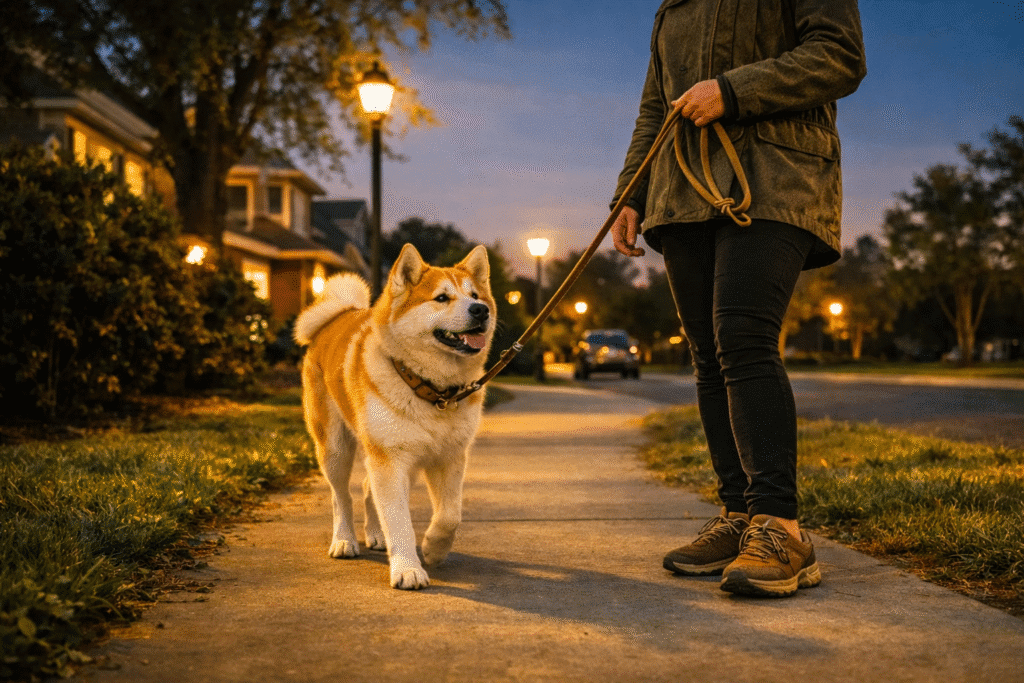
There is no single answer to the question of whether you should feed or walk your dog first, but there are clear principles that work for most dogs. A quick toilet break before meals, regular feeding times, and safe gaps between heavy exercise and full meals create a routine that supports digestion, training, and comfort.
By adjusting the details for your dog’s age, breed, and health, you can design a daily pattern that keeps them feeling secure and reduces the risk of problems such as accidents, stomach upset, or bloat. Watch your dog’s behaviour and body language, make thoughtful changes when needed, and use your veterinarian as a partner whenever you feel unsure.
Always consult your veterinarian for advice tailored to your dog’s age, breed, and medical history.

Dr. Johnson Coleman is a dedicated veterinary expert with over 10 years of hands-on experience in animal health and wellness. His mission is to help pets live longer, happier lives through compassionate care, practical guidance, and a genuine love for animals.
After earning his Doctor of Veterinary Medicine (DVM) degree, Dr. Coleman spent a decade working in both private clinics and community shelters, where he gained deep expertise in preventive medicine, pet nutrition, and behavioral care.
He believes that pet owners deserve reliable, easy-to-understand information about their companions’ health. Through his writing, Dr. Coleman breaks down complex veterinary topics into friendly, actionable advice that helps readers make informed decisions for their pets.
Outside of his professional work, Dr. Coleman volunteers with local animal rescue groups and enjoys spending time outdoors with his two golden retrievers. His lifelong dedication to animal welfare continues to inspire his work and connect with pet lovers around the world.