

Pumpkin is one of the easiest natural foods to use for digestive support in cats, but many owners still wonder whether it is truly safe. The good news is that most cats can enjoy pumpkin when it is prepared correctly and fed in moderation. This guide explains the benefits, how much to feed, the types of pumpkin to avoid, and when to call your veterinarian.
Is Pumpkin Safe for Cats?
Yes, plain pumpkin is generally safe for cats and is even recommended by many veterinarians for mild digestive problems. Safety depends on the form of pumpkin you use and how you prepare it.
Safe forms include:
- Cooked pumpkin flesh
- Plain canned pumpkin puree
- Steamed pumpkin
- Homemade pure pumpkin mash without seasoning
Unsafe forms include:
- Pumpkin pie filling
- Canned pumpkin with spices
- Raw pumpkin left out for a long time
- Pumpkin stems, leaves, or skin
- Whole seeds that may cause choking
Pumpkin should always be plain and free from spices such as cinnamon, nutmeg, or clove, which can irritate a cat’s stomach or be toxic in high amounts.
Health Benefits of Pumpkin for Cats
Pumpkin offers several digestive and nutritional advantages when fed in the right amounts.
1. Helps with Gastrointestinal Upset
Pumpkin contains gentle soluble fiber that supports normal stool formation. It can soothe mild stomach upset by absorbing excess water and helping the digestive tract function smoothly.
2. Relieves Constipation
Canned pumpkin has a high moisture content and contains fiber that softens stools. Many veterinarians recommend it for cats experiencing mild constipation, especially senior cats or indoor cats with low activity.
3. Helps Manage Diarrhea
While it may seem contradictory, pumpkin can also help with diarrhea. The soluble fiber helps form firmer stools and reduces loose bowel movements.
4. Reduces Hairballs
Longhaired cats or frequent groomers can benefit from pumpkin because fiber helps move swallowed hair through the intestines, reducing hairball frequency.
5. Supports Weight Control
Pumpkin is low in calories but high in volume. If you add small amounts to meals, your cat may feel fuller without overeating. It can be a helpful tool for overweight cats, as long as their main diet remains nutritionally complete.
How to Feed Pumpkin to Cats
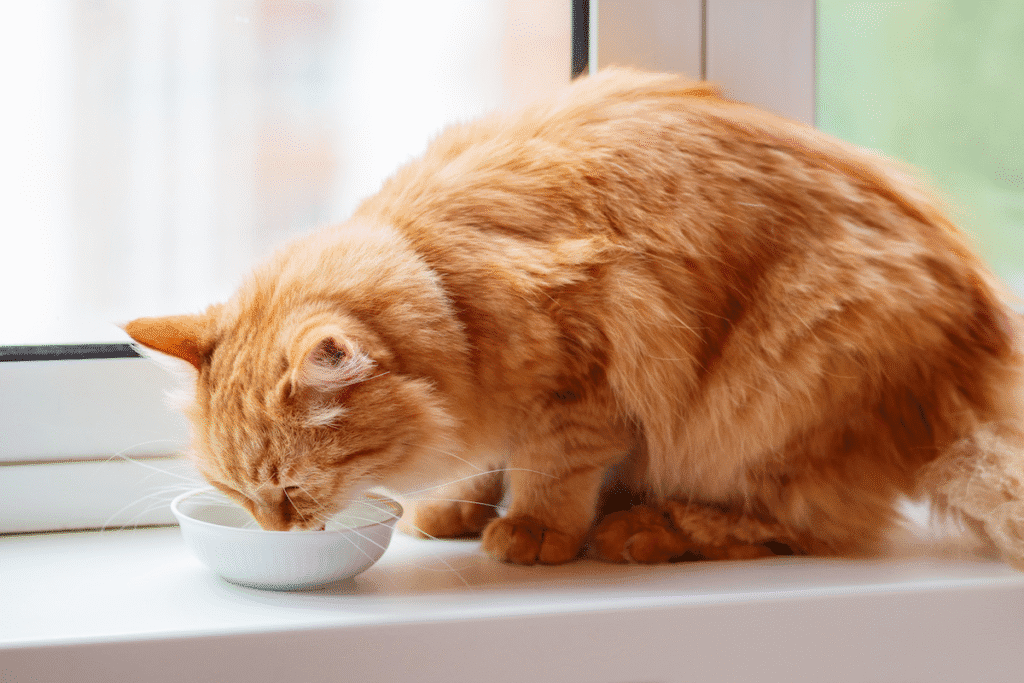
Pumpkin should be introduced slowly, as sudden diet changes can irritate a cat’s digestive system.
Safe Ways to Serve Pumpkin
- Mix plain canned pumpkin into your cat’s wet food
- Offer a small spoon of cooked pumpkin as a treat
- Steam and mash fresh pumpkin flesh
- Freeze small pumpkin portions in silicone trays for later use
Recommended Portions
- Adult cats: Start with 1 teaspoon twice a day
- Increase gradually up to 1 tablespoon twice a day if needed
- Kittens: Start with 1/2 teaspoon mixed into food
Important Feeding Notes
- Only feed the soft inner flesh of the pumpkin
- Do not feed skin, stem, leaves, or tough seeds
- Avoid pumpkin spice blends and pumpkin pie filling
- Avoid oils, butter, salt, sugar, and seasonings
If your cat refuses pumpkin alone, mix it well with their regular food. Some cats prefer it mixed with a small amount of tuna water or chicken broth (unsalted).
Precautions and Risks
1. Too Much Pumpkin
Even though pumpkin is healthy, it should not replace your cat’s main diet. Cats require a balanced, complete food made to meet AAFCO nutritional standards. Too much pumpkin can dilute essential nutrients.
2. Added Ingredients
Canned pumpkin with sugar, spices, or preservatives can lead to stomach upset. Ingredients like nutmeg and clove can be harmful in larger amounts and should always be avoided.
3. Food Allergies
Although rare, cats can develop allergies to pumpkin. Watch for:
- Vomiting
- Diarrhea
- Itching
- Skin rashes
- Excessive grooming
If these symptoms appear, stop feeding pumpkin and contact your vet.
4. Raw Pumpkin Risks
Raw pumpkin that has been sitting out may grow bacteria and cause gastrointestinal discomfort. Cooking or choosing canned pumpkin helps prevent both choking and contamination.
5. Underlying Medical Conditions
Pumpkin may not help with severe constipation or chronic diarrhea caused by medical issues like megacolon or inflammatory bowel disease. Veterinary guidance is always recommended.
Other Safe Fruits and Veggies for Cats
Cats are obligate carnivores, so plant foods should be treats, not meal replacements. Still, small portions of certain fruits and veggies can be safe.
Here are some cat-safe options:
- Apples
- Strawberries
- Blueberries
- Raspberries
- Cranberries
- Blackberries
- Green beans
- Carrots
- Zucchini
- Broccoli
- Celery
- Green bell peppers
Always wash produce, remove seeds or cores, and serve in tiny pieces.
Expert Tips and Real-Life Examples
Tip 1: Watch Stool Changes Closely
If pumpkin works, you will notice firmer stools in cases of diarrhea, or easier stool passage for constipation within one to two days.
Tip 2: Best for Hairball-Prone Cats
Cats with long coats, such as Persians or Maine Coons, often benefit the most. Pumpkin helps reduce how often hairballs form in the throat or stomach.
Tip 3: Senior Cats Often Respond Quickly
Older cats commonly experience mild constipation. Small daily amounts of pumpkin can make a noticeable difference in stool consistency and comfort.
Tip 4: A Good Low-Calorie Treat
For overweight cats, pumpkin can help reduce calorie intake while still satisfying appetite.
Frequently Asked Questions
Is pumpkin good for cats every day?
Yes, small daily amounts are usually safe, but pumpkin should not replace a balanced cat diet.
Can kittens eat pumpkin?
Kittens can safely eat pumpkin in very small amounts. Always start with half a teaspoon mixed into food.
Can pumpkin cause diarrhea in cats?
If too much pumpkin is given suddenly, it can loosen stools instead of firming them.
Is pumpkin pie filling safe for cats?
No, spices and sugar in pie filling can cause vomiting, stomach pain, and diarrhea.
Does pumpkin help cats with hairballs?
Yes, the fiber helps push swallowed hair through the digestive tract.
Conclusion
Pumpkin can be a helpful, gentle, and natural supplement for cats when fed in the correct form and amount. It can support digestion, decrease constipation, help control diarrhea, reduce hairballs, and promote weight management. Always start with small portions and observe your cat carefully while introducing any new food. If your cat develops stomach upset or unusual symptoms, contact your veterinarian for guidance.

Dr. Johnson Coleman is a dedicated veterinary expert with over 10 years of hands-on experience in animal health and wellness. His mission is to help pets live longer, happier lives through compassionate care, practical guidance, and a genuine love for animals.
After earning his Doctor of Veterinary Medicine (DVM) degree, Dr. Coleman spent a decade working in both private clinics and community shelters, where he gained deep expertise in preventive medicine, pet nutrition, and behavioral care.
He believes that pet owners deserve reliable, easy-to-understand information about their companions’ health. Through his writing, Dr. Coleman breaks down complex veterinary topics into friendly, actionable advice that helps readers make informed decisions for their pets.
Outside of his professional work, Dr. Coleman volunteers with local animal rescue groups and enjoys spending time outdoors with his two golden retrievers. His lifelong dedication to animal welfare continues to inspire his work and connect with pet lovers around the world.