Congestive heart failure, often shortened to CHF, can sound terrifying, especially when you are watching your dog breathe harder or slow down on walks. The good news is that CHF is usually manageable for a period of time with the right veterinary care and thoughtful home monitoring. This guide explains what CHF is, why it happens, what you might notice at home, what your veterinarian will do, and how to support your dog day to day.
Key Takeaways
• Congestive heart failure is not a single disease. It is a syndrome where fluid backs up in the lungs or body because the heart cannot keep up with circulation needs. MSD Veterinary Manual
• Common early clues include a new cough at rest, faster breathing when sleeping, reduced stamina, and less interest in food or play. Vca
• Many dogs feel noticeably better once fluid is controlled, often with diuretics and other heart medications chosen by your veterinarian. Merck Veterinary Manual
• Home monitoring matters. Tracking resting breathing rate and weight can help catch trouble earlier.
• Prognosis depends on the underlying heart disease, the stage at diagnosis, and how well the dog responds to therapy.
What Is Congestive Heart Failure in Dogs?
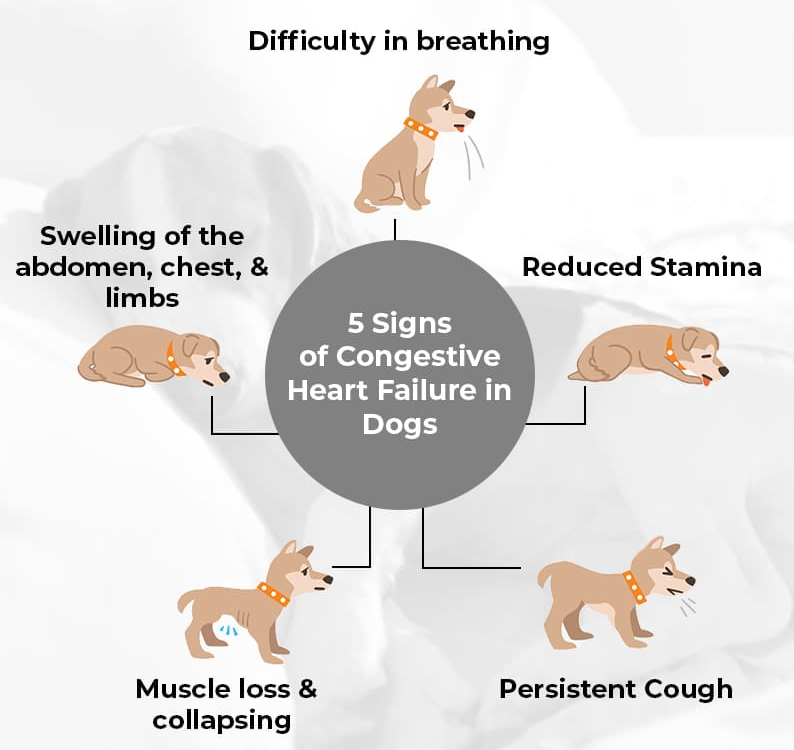
In simple terms, congestive heart failure means the heart is no longer pumping effectively enough that blood and fluid start backing up. That backup raises pressure in blood vessels, and fluid can leak into places it should not be.
In veterinary medicine, CHF is considered a syndrome rather than a single disease. It is the result of advanced heart disease that has progressed to the point where increased pressures cause fluid accumulation in the lungs or in body cavities such as the abdomen or chest. MSD Veterinary Manual
A helpful way to picture it: the heart is a pump with one job, keep blood moving forward. When parts of the heart fail to move blood forward efficiently, pressure builds behind the problem area. That pressure is what leads to congestion and fluid buildup.
Types and How It Affects the Body
Left sided congestive heart failure
What is happening inside: Pressure backs up toward the lungs. Fluid leaks into lung tissue and air spaces, which is called pulmonary edema.
What you might notice at home:
• Coughing, often worse at night or when resting
• Faster breathing during sleep
• Trouble catching breath after mild activity
• Less willingness to walk or play
These signs fit what many veterinarians see in dogs whose fluid is primarily in the lungs.
Right sided congestive heart failure
What is happening inside: Pressure backs up into veins returning blood to the heart, leading to fluid accumulation in the abdomen or chest, and sometimes swelling in limbs. Fluid in the abdomen is called ascites.
What you might notice at home:
• A belly that looks rounder or suddenly “bloated”
• Reduced appetite because the belly feels full
• Slower movement, discomfort when lying down
• Sometimes breathing difficulty if fluid builds around the lungs
Both sides can be involved
Some dogs have changes that affect both left and right sides over time. You might see a combination of lung related signs and belly swelling. Your veterinarian will use imaging and other tests to figure out where the fluid is and why.
Causes and Risk Factors in Dogs
CHF is caused by underlying heart disease. The most common underlying problems differ by dog size and breed.
Myxomatous mitral valve disease in small breeds
Myxomatous mitral valve disease, also called degenerative mitral valve disease or chronic valvular disease, is widely recognized as the most common heart disease in dogs in many regions. An ACVIM consensus document notes it accounts for approximately 75 percent of heart disease cases seen in dogs by veterinary practices in North America. PMC
Dogs at higher risk tend to be small breeds and older adults. Some breeds, such as Cavalier King Charles Spaniels, are well known to be predisposed, and ACVIM includes this breed as an example of a high risk group for screening. PMC
Important honesty note about a common number you may see online: some articles report that around 80 percent of CHF cases are caused by mitral valve insufficiency. Your reference article includes that claim. I was not able to confirm that exact CHF percentage from an ACVIM guideline or a veterinary textbook style source. What higher quality sources do support clearly is that degenerative mitral valve disease is the most common heart disease in dogs and a very common pathway to CHF in small breed dogs.
Dilated cardiomyopathy in medium and large breeds
Dilated cardiomyopathy is another major cause of CHF, especially in larger dogs. The Merck Veterinary Manual discusses CHF in the context of atrioventricular valve insufficiency and dilated cardiomyopathy, and it also notes pimobendan use for CHF in these scenarios. Merck Veterinary Manual
Congenital heart disease and other contributors
Some dogs are born with heart defects that can eventually lead to heart failure. Others develop rhythm problems (arrhythmias) or high blood pressure issues that strain the heart over time. MSD Veterinary Manual
Sometimes, owners never learn a single neat cause, especially if multiple heart changes are present or the dog is first diagnosed during a crisis.
Symptoms and Early Warning Signs
One reason CHF feels scary is that early signs can look like “normal aging” at first. Here is a practical way to think about what you may notice.
Early and subtle signs owners might miss
• Your dog slows down sooner on walks or asks to turn back early
• A mild cough that shows up after excitement, then starts appearing at rest
• Sleeping breathing becomes faster than it used to be
• Your dog seems less interested in food, play, or social time
• Panting is more frequent even when the room is not warm
VCA lists signs such as coughing at rest or sleeping, increased resting respiratory rate, swollen belly, and pale or bluish gums as concerns associated with CHF. Vca
More obvious or advanced signs
• Noticeable effort to breathe, especially when lying down
• Persistent cough
• Weakness, refusing stairs, stopping frequently
• Weight loss and muscle loss over time
Emergency warning signs that need immediate veterinary attention
• Blue tinged or very pale gums
• Severe breathing difficulty at rest
• Collapse or repeated fainting episodes
• A suddenly distended abdomen with weakness
• Breathing rate that is high and rising quickly while your dog is resting
When in doubt, it is safer to be seen urgently. Severe respiratory distress can become life threatening.
How Vets Diagnose Congestive Heart Failure
If you bring your dog in with possible CHF signs, a typical visit often includes:
Physical examination
Your veterinarian will listen to the heart and lungs, check gum color, measure temperature, feel the abdomen for fluid, look for limb swelling, check pulse quality, and record weight.
A heart murmur is often an early clue that triggers further testing, even before obvious signs show up.
Chest X rays
Chest radiographs help identify fluid patterns in the lungs, changes in heart size, and sometimes fluid in the chest cavity. This is often one of the fastest ways to confirm suspected pulmonary edema.
Echocardiogram
An echocardiogram is an ultrasound of the heart. It helps confirm the underlying disease, evaluate valve function, measure chamber size, and guide medication choices. This is the gold standard test to characterize many heart diseases, and an internist or cardiologist may be involved.
Electrocardiogram
An electrocardiogram helps identify arrhythmias and can be important if your dog collapses, has weakness episodes, or has an abnormal pulse rhythm on exam.
Blood and urine tests, plus blood pressure
Lab work supports safe medication use and monitoring, especially because diuretics and other heart drugs can affect kidney values and electrolytes. Blood pressure checks may be used when hypertension is suspected.
Treatment Options for Congestive Heart Failure in Dogs
Treatment is individualized, but the goals are consistent:
• Reduce fluid overload so breathing becomes easier
• Improve forward blood flow and reduce harmful pressures
• Support organ function and comfort
• Slow progression where possible
• Maintain quality of life
Diuretics to remove excess fluid
Veterinary references describe diuretics as the cornerstone of managing CHF when fluid accumulation is present, including pulmonary edema, pleural effusion, and ascites. Merck Veterinary Manual
Your veterinarian chooses the specific drug and dose based on severity, kidney values, and response.
Pimobendan and other heart support medications
The Merck Veterinary Manual for dog owners describes pimobendan as a medication that improves heart muscle contraction and dilates blood vessels, which can help in CHF caused by valve insufficiency or dilated cardiomyopathy.
Other medications may include drugs that affect blood vessels or hormones involved in heart disease progression. A veterinary cardiologist may follow ACVIM style staging and monitoring for mitral valve disease related CHF.
Oxygen therapy and hospital stabilization when needed
If a dog arrives in respiratory distress, oxygen support and fast acting therapies to reduce lung fluid may be necessary. Severe pulmonary edema can require hospitalization for close monitoring.
Fluid removal for some right sided cases
For dogs with significant belly or chest fluid, a veterinarian may drain fluid to relieve pressure and help breathing and comfort. This can provide short term relief, while long term management focuses on the underlying heart problem.
Diet changes when recommended
Some dogs benefit from a lower sodium diet plan, because salt can worsen fluid retention. Your veterinarian can recommend whether this is appropriate and how strict it needs to be.
Home Care, Monitoring, and Quality of Life
This is where owners make a huge difference. CHF home care is mostly about consistency and early detection of change.
Make medications easier to give
• Use a daily routine tied to meals or a set schedule
• Use a pill organizer or a simple checklist
• Ask your veterinarian about flavoring options or compounding if pills are hard
• Never change dose timing or stop a drug without guidance
Monitor resting breathing rate
A calm sleeping or resting breathing rate is a powerful early warning tool. VCA notes that a normal resting breathing rate for dogs and cats is typically between 15 and 30 breaths per minute. Vca
A practical routine:
• Count breaths for 30 seconds while your dog is asleep, then double it
• Track it once daily for a week to learn your dog’s baseline
• Call your veterinarian if the number is rising over several days or consistently exceeds your dog’s normal range
Veterinary Partner, associated with VIN, also emphasizes that an increase or values over 30 breaths per minute can indicate fluid building in the lungs and should prompt veterinary guidance. veterinarypartner.vin.com
Track weight and appetite
Fluid changes can show up as weight gain, while chronic illness can show up as weight loss and muscle loss. Weigh weekly if possible, and write down appetite changes.
Keep activity gentle and symptom led
Most dogs still benefit from calm movement, sniff walks, and gentle play, but exercise should be based on comfort. If your dog coughs, pants heavily, or lags, that is your cue to stop and rest.
Know when to call for an earlier recheck
Call your veterinarian if you notice:
• Higher sleeping breathing rate than usual
• New cough or cough becoming more frequent
• Less interest in food for more than a day
• Belly swelling or sudden weight gain
• Weakness, collapse, or confusion
Prognosis and Life Expectancy
CHF prognosis varies widely. It depends on the underlying disease, the stage at diagnosis, and response to therapy.
It is not responsible to promise a specific timeline for any individual dog online, because some dogs stabilize for many months while others progress faster. What you can control is follow up care, consistent medication, diet choices when recommended, and daily monitoring.
ACVIM staging for mitral valve disease related heart failure includes a stage for dogs with current or past clinical signs, and a later stage for refractory end stage disease, reflecting the reality that some dogs eventually stop responding to standard therapy. PMC
Prevention and Risk Reduction
You cannot prevent every cause of heart disease, but you can reduce risk and catch problems earlier.
• Routine veterinary exams, especially for small breed senior dogs and predisposed breeds
• Address dental disease, since oral inflammation can worsen overall health and may complicate heart conditions
• Maintain a healthy body weight
• Discuss screening if your dog is a high risk breed with a murmur history
• Use parasite prevention as recommended in your region, since some parasites can affect heart and lung health
When to Call Your Vet or an Emergency Clinic
Prompt but not emergency, schedule a visit soon
• Mild new cough, especially at rest or during sleep
• Reduced stamina on walks that is new
• Resting breathing rate trending upward over several days
• Appetite decrease that lasts more than 24 hours
• Mild belly enlargement without distress
Same day or emergency care
• Obvious breathing difficulty at rest
• Blue tinged or very pale gums
• Collapse or repeated fainting
• Extreme weakness or inability to get comfortable
• Sudden severe belly swelling with lethargy
If you are unsure, call an emergency clinic and describe what you see. It is always better to ask early.
Expert Tips and Real Life Examples
Example 1: The “new night cough” in a small senior dog
What the owner noticed: A small older dog started coughing at night and seemed slower on walks.
What the vet found: A heart murmur and signs consistent with fluid in the lungs on chest X rays.
What treatment looked like: Diuretics to reduce fluid, plus additional heart medications and a plan for home breathing rate tracking.
How home care helped: The owner tracked sleeping breathing rate daily and called early when it crept upward again, allowing medication adjustments before a crisis.
Example 2: The “bloated belly” in a dog with right sided signs
What the owner noticed: Belly looked swollen and the dog ate less.
What the vet found: Fluid in the abdomen and evidence of right sided congestion.
What treatment looked like: Fluid drainage for comfort plus long term heart failure medications and monitoring.
Example 3: The dog that “just seemed tired”
What the owner noticed: No cough, but energy dropped and panting increased with mild activity.
What the vet found: Underlying heart disease confirmed by echocardiogram, and early CHF risk discussion.
What treatment looked like: A staged plan with rechecks and clear instructions on what changes should trigger a call, following guideline style monitoring principles.
Quick veterinary style tips
• Count sleeping breaths weekly even when your dog looks fine
• Bring videos of coughing or breathing episodes to your appointment
• Ask your vet what change in breathing rate should trigger an emergency visit for your dog specifically
• Do not give over the counter cough medicines unless your veterinarian explicitly approves
Frequently Asked Questions
Q1: Can my dog live a normal life with congestive heart failure?
Many dogs can enjoy a good quality of life for a period of time when CHF is well controlled. The day to day routine often includes medications, rechecks, and monitoring, but many owners report their dog returns to comfortable walks, appetite, and normal family time once fluid is controlled. Merck Veterinary Manual
Q2: Is congestive heart failure painful for dogs?
CHF itself is not usually described as “pain” the way an injury is, but it can be very uncomfortable, especially when fluid makes breathing difficult. The goal of treatment is to reduce that discomfort and improve breathing and energy.
Q3: Can my dog still exercise or go on walks?
Often yes, but exercise should be calm and tailored to your dog’s comfort. Gentle walks are commonly fine when CHF is stable. If your dog coughs, pants heavily, or seems distressed, stop and rest, and check with your veterinarian.
Q4: How often will my dog need check ups?
It depends on stability. After medication changes or an episode of fluid buildup, rechecks may be closer together. Stable dogs may move to a regular monitoring schedule, which can include repeat imaging and lab work to ensure medications remain safe.
Q5: Is this condition hereditary or genetic?
Some underlying causes have breed predispositions, meaning genetics can play a role in risk. For example, ACVIM highlights certain predisposed breeds for myxomatous mitral valve disease screening considerations.
Conclusion
Congestive heart failure is a serious diagnosis, but it is also one where prompt care and careful home monitoring can meaningfully improve comfort and extend good quality time. Watch for changes like coughing at rest, rising sleeping breathing rate, belly swelling, and reduced stamina. Work closely with your veterinarian on medications, follow ups, and a realistic daily routine, and do not wait if your dog shows signs of breathing distress.
This article is for general information only and is not a substitute for professional veterinary advice, diagnosis, or treatment. Always consult your veterinarian or an emergency clinic for specific concerns about your dog.

Dr. Johnson Coleman is a dedicated veterinary expert with over 10 years of hands-on experience in animal health and wellness. His mission is to help pets live longer, happier lives through compassionate care, practical guidance, and a genuine love for animals.
After earning his Doctor of Veterinary Medicine (DVM) degree, Dr. Coleman spent a decade working in both private clinics and community shelters, where he gained deep expertise in preventive medicine, pet nutrition, and behavioral care.
He believes that pet owners deserve reliable, easy-to-understand information about their companions’ health. Through his writing, Dr. Coleman breaks down complex veterinary topics into friendly, actionable advice that helps readers make informed decisions for their pets.
Outside of his professional work, Dr. Coleman volunteers with local animal rescue groups and enjoys spending time outdoors with his two golden retrievers. His lifelong dedication to animal welfare continues to inspire his work and connect with pet lovers around the world.